If you are asking what is a good APR for a car loan, there is no single percentage that works for every borrower. Your credit profile, vehicle type, loan term, down payment, amount financed, and current lending conditions all influence the rate you may receive.
In 2026, knowing what is a good APR for a car loan requires comparing your offer with current market data and actual quotes from competing lenders. A rate that looks attractive for a borrower with fair credit could be expensive for someone with excellent credit.
The most important rule is to compare the complete transaction. APR matters, but so do the vehicle price, finance charge, repayment term, monthly payment, dealer add-ons, and total amount you will pay.
This guide explains what is a good APR for a car loan, current 2026 benchmarks, credit-score differences, new versus used financing, preapproval, dealer financing, and seven essential checks before you sign.
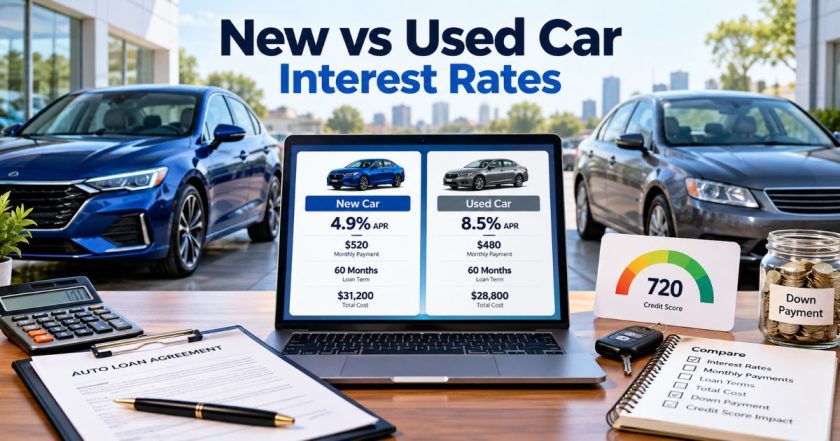
For related research, see our auto finance calculator, best auto finance deals, and new vs used car interest rates guide.
Key Takeaways
- There is no universal APR that is good for every car buyer.
- Recent 2026 averages vary significantly by credit profile.
- New-car financing generally carries lower average rates than used-car financing.
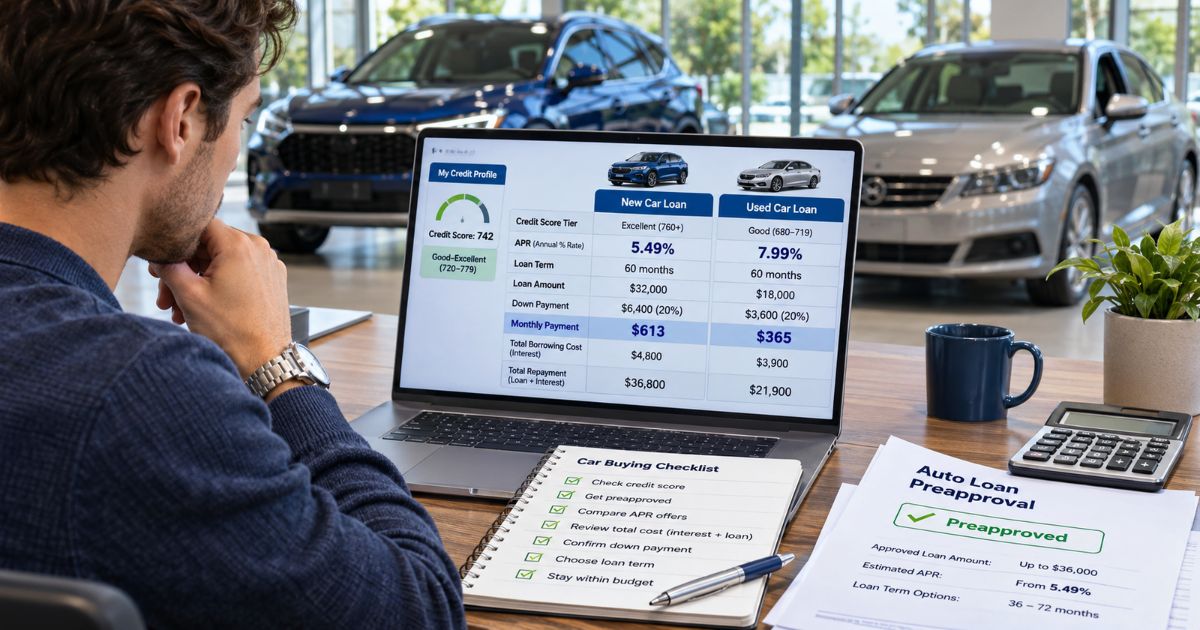
- Preapproval from multiple lenders can establish a useful benchmark.
- APR gives a broader cost measure than the stated interest rate alone.
- Longer terms can lower monthly payments while increasing total borrowing costs.
- A good offer should be affordable both monthly and over the full life of the loan.
1. What Is a Good APR for a Car Loan in 2026?
So, what is a good APR for a car loan in the current market? One useful starting point is to compare your quote with recent average rates for consumers with similar credit profiles.
Experian’s Q2 2026 automotive finance data reported an average interest rate of approximately 6.35% for new-car loans and 11.19% for used-car loans.
These figures do not mean that 6.35% or 11.19% automatically answers what is a good APR for a car loan for you. They are broad averages covering many different borrowers and transactions.

2026 average auto loan rates by credit profile
| Credit Profile | Score Range | New Car Average | Used Car Average |
|---|---|---|---|
| Super Prime | 781–850 | 4.41% | 6.29% |
| Prime | 661–780 | 6.15% | 8.81% |
| Near Prime | 601–660 | 9.71% | 13.93% |
| Subprime | 501–600 | 13.52% | 19.10% |
| Deep Subprime | 300–500 | 16.11% | 21.62% |
Source: Experian, Q2 2026 State of the Automotive Finance Market. VantageScore 4.0 ranges are used. These are averages, not guaranteed lender offers.
Review the latest published information on Experian’s auto loan rate page.
How to use these benchmarks
When deciding what is a good APR for a car loan, compare your approved rate with the recent average for a similar credit tier and the same general vehicle type.
If your quote is materially above the benchmark, do not automatically reject it, but ask why. Vehicle age, loan-to-value ratio, repayment term, lender type, and other underwriting factors may explain the difference.
For credit-score background, review our credit score calculation guide.
2. Your Credit Profile Has a Major Effect on APR
Understanding what is a good APR for a car loan begins with understanding the credit profile lenders see.
Super-prime and excellent credit
Consumers with the strongest profiles generally receive the lowest average financing rates.
They may also qualify for manufacturer-backed promotional financing that is unavailable to applicants with weaker histories.
Prime credit
Prime borrowers can often receive competitive offers from banks, credit unions, online lenders, and dealer-arranged finance providers.
Even with good credit, comparing multiple lenders is worthwhile.
Near-prime or fair credit
Borrowers in this range can see a noticeable jump in average APR.
This makes vehicle price and loan length especially important because a larger APR difference can create thousands of dollars in additional interest.
Subprime credit
If your credit history is weaker, the answer to what is a good APR for a car loan should be based on competing offers available to your specific profile rather than prime-market advertisements.
Our subprime auto loans guide explains higher-cost vehicle financing in more detail.

Lenders do not all use the same credit score
A lender might use:
- VantageScore;
- a general FICO Score;
- an auto-specific FICO Score;
- or a proprietary underwriting model.
Therefore, the score shown in your banking app may not be exactly the same score used to price your auto loan.
See our credit score range guide and credit improvement timeline guide.
3. Compare APR With the Interest Rate
To understand what is a good APR for a car loan, you also need to know why APR and interest rate are not identical.

Interest rate
The stated interest rate represents the basic charge for borrowing the principal.
APR
The annual percentage rate provides a broader annualized cost because it incorporates the interest rate and certain finance charges.
The Consumer Financial Protection Bureau explains the distinction in its interest rate vs APR guidance.
Why APR is useful when comparing lenders
Suppose two lenders advertise similar interest rates, but one requires additional finance charges that are included in APR.
The APR may reveal that the second loan actually costs more.
APR is still not the only number
When evaluating what is a good APR for a car loan, also compare:
- amount financed;
- finance charge;
- term;
- monthly payment;
- total of payments;
- and optional products.
For additional explanation, see our finance charge guide.
4. Loan Term Changes the Real Cost
A rate that appears competitive can still result in an expensive transaction if the term is unusually long.
Shorter loan terms
A shorter term generally creates a higher required monthly payment but can reduce total interest.
Longer loan terms
Terms of 72 or 84 months can reduce the monthly payment but keep the debt outstanding for much longer.
The Federal Trade Commission advises car buyers to compare total cost rather than focusing only on monthly payment because longer loans can cost substantially more overall.
See the FTC’s car financing guidance.
Example
| Feature | Shorter Loan | Longer Loan |
|---|---|---|
| Monthly Payment | Higher | Lower |
| Total Interest | Usually lower | Usually higher |
| Time in Debt | Shorter | Longer |
| Negative-Equity Risk | Generally lower | Generally higher |
When asking what is a good APR for a car loan, make sure you are comparing offers with similar loan terms.
Our 96-month auto loan guide explains the risks of extremely long financing periods.
5. New-Car and Used-Car Rates Can Be Very Different
Vehicle type can materially change the answer to what is a good APR for a car loan.

New vehicles
New cars generally carry lower average financing rates.
Manufacturers also sometimes subsidize rates on selected models.
Used vehicles
Used cars generally have higher average rates.
According to Q2 2026 Experian data, the overall used-car average of 11.19% was considerably higher than the 6.35% new-car average.
Why used rates can be higher
Potential factors include:
- older collateral;
- higher mileage;
- greater valuation uncertainty;
- shorter remaining vehicle life;
- and fewer manufacturer subsidies.
Promotional APRs
Manufacturers sometimes advertise extremely low rates for qualified buyers on selected new models.
These offers may require:
- strong credit;
- a particular model;
- a specific loan term;
- a purchase before a deadline;
- or giving up another incentive.
Low APR vs cash rebate
A manufacturer may offer a low promotional rate or cash back.
Do not assume the low rate automatically wins. Compare both scenarios using the same purchase price and down payment.
Read our new vs used interest-rate comparison and best auto finance deals guide.
6. Down Payment and Loan-to-Value Ratio Matter
Another part of determining what is a good APR for a car loan is understanding the amount you are asking the lender to finance relative to the vehicle’s value.
Loan-to-value ratio
Loan-to-value, or LTV, compares the financed amount with the vehicle’s value.
A high LTV may result from:
- a small down payment;
- financed taxes and fees;
- dealer add-ons;
- negative equity from another vehicle;
- or paying above market value.
A larger down payment can help
Putting additional money down reduces the principal balance.
This can reduce:
- monthly payment;
- amount of interest paid;
- LTV;
- and negative-equity risk.
A larger deposit does not guarantee a lower APR
The lender still considers your complete application.
However, reducing the amount financed can improve the overall economics of the transaction even if the percentage rate stays the same.
Keep emergency savings
Do not put every available dollar into the vehicle if it leaves you unable to handle repairs, medical expenses, insurance deductibles, or temporary loss of income.
Our Master Your Money guide covers emergency budgeting.
7. Get Multiple Preapproval Offers
The most practical way to find what is a good APR for a car loan for your personal situation is to obtain several real financing offers.
Start with direct lenders
Consider quotes from:
- credit unions;
- banks;
- online lenders;
- and other reputable auto finance companies.
The CFPB explains that direct lender preapproval lets you know your potential APR, term, and borrowing limit before negotiating with the dealership.
Use the same assumptions
Compare quotes using the same:
- vehicle price;
- down payment;
- amount financed;
- loan term;
- and vehicle type.
Keep rate shopping within a focused period
CFPB guidance notes that auto-loan inquiries completed during a relatively short rate-shopping window are generally grouped by scoring models.
Depending on the scoring model, that window can commonly range from about 14 to 45 days.
See the official CFPB rate-shopping guidance.
For loan preparation, see our first-time auto loan guide.
How to Compare Dealer Financing
If you arrive at the dealership with preapproval, you already have a useful benchmark for deciding what is a good APR for a car loan from the dealer.
Dealer-arranged financing
Dealerships commonly send applications to banks and finance companies and present one or more resulting offers.
This is convenient, but the dealer’s first offer does not automatically represent the lowest available rate.
Dealer markup
CFPB explains that the lender can provide the dealership with a buy rate and the dealership may offer the customer a higher contract rate.
The difference can compensate the dealer for arranging financing.
Read the official CFPB buy-rate explanation.
Negotiate the APR
The FTC advises consumers to negotiate financing terms just as they negotiate the vehicle price.
If the dealer can beat your outside preapproval without increasing other costs, its offer may be worthwhile.
See our car finance options guide and top auto finance guide.
Negotiate the Vehicle Price Separately
Do not determine what is a good APR for a car loan while ignoring the purchase price.
Get the out-the-door price
The FTC recommends getting the vehicle’s total out-the-door price in writing.
This should help you identify:
- vehicle selling price;
- taxes;
- registration;
- dealer fees;
- and other charges.
Why monthly-payment negotiation can mislead you
If you tell the dealer only that you want a $450 monthly payment, the term can be stretched until the payment reaches that number.
You may end up paying much more overall.
Negotiate in this order
- Vehicle out-the-door price.
- Trade-in value.
- Financing terms.
- Optional products.
Our auto finance calculator guide can help you test different scenarios.
Watch Dealer Add-Ons
A competitive rate can still become an expensive loan if thousands of dollars in optional products are added to the financed balance.
Common add-ons
- GAP coverage;
- service contracts;
- extended warranties;
- credit insurance;
- tire and wheel protection;
- appearance packages;
- and theft products.
Ask whether each product is optional
FTC guidance states that add-ons cost extra and consumers should ask the individual price of every proposed product.
Financing the product adds interest
If a $2,000 optional product is included in the loan, you can also pay interest on that $2,000.
This increases the total borrowing cost even though the APR itself may look competitive.
Understand the Truth in Lending Disclosure
Before deciding what is a good APR for a car loan, compare the actual numbers in the written disclosure.
APR
The annualized cost measure used to compare credit.
Finance charge
The dollar cost of the credit under the disclosure rules.
Amount financed
The amount of credit provided on your behalf.
Total of payments
The amount you will have paid after making all scheduled payments.
Payment schedule
The number, amount, and timing of required payments.
CFPB explains these items in its auto loan Truth in Lending guidance.
What About Negative Equity?
Negative equity means you owe more on your current vehicle than it is worth.
Example
If your loan payoff is $20,000 and the dealer offers $16,000 for your trade, you have $4,000 in negative equity.
If that amount is rolled into the next loan, you begin the new financing with additional debt.
Why this affects the APR decision
Even if you determine what is a good APR for a car loan and secure a competitive percentage rate, financing a large amount of negative equity can still make the transaction expensive.
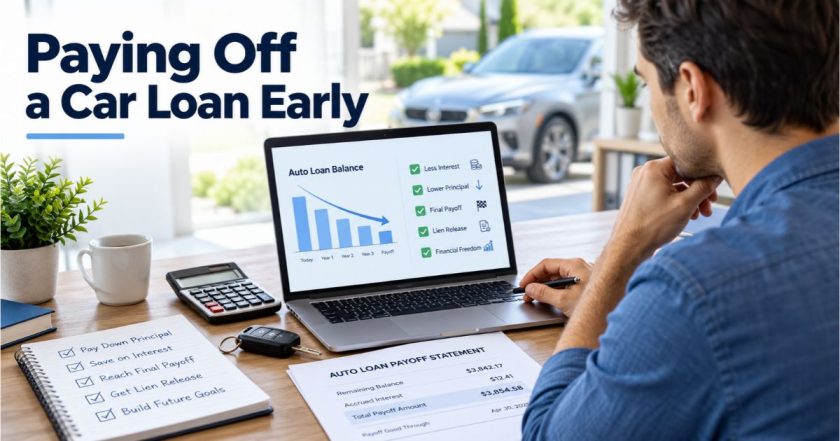
See our selling a financed car guide and early auto loan payoff guide.
Should You Consider a Longer Term for a Lower APR?
A lender may price different repayment terms differently.
However, never choose a term based only on the advertised percentage.
Calculate total repayment
Compare:
- APR;
- monthly payment;
- term;
- finance charge;
- and total of payments.
Think about the vehicle’s useful life
An extremely long loan on an older vehicle can leave you making payments while expensive repairs begin to appear.
That combination can strain household cash flow.
How to Improve Your Position Before Applying
If available offers make you question what is a good APR for a car loan, improving your application before buying may produce better results.
Review your credit reports
Check for legitimate errors and dispute inaccurate information.
Reduce revolving balances
Lower credit-card balances can reduce utilization and overall debt pressure.
Avoid unnecessary new accounts
Additional applications can add hard inquiries and new debt just before an auto lender reviews your file.
Save a larger down payment
Reducing the amount financed can improve affordability even when APR does not change.
Consider a less expensive car
Reducing the purchase price can sometimes improve your finances more than chasing a slightly lower interest rate.
See our affordable auto loans guide and credit improvement guide.
When Is an APR Too High?
There is no universal percentage at which an auto loan becomes automatically unacceptable.
Instead, compare the offer with:
- current averages for your credit tier;
- offers from other lenders;
- the age and value of the vehicle;
- your monthly budget;
- and total borrowing cost.
Look beyond approval
Being approved does not mean the deal is financially comfortable.
If the only available financing requires an unaffordable payment or extremely high total cost, alternatives include:
- delaying the purchase;
- choosing a cheaper vehicle;
- increasing your down payment;
- improving credit;
- or comparing additional lenders.
Can You Refinance a High-APR Auto Loan?
If today’s offer is expensive, refinancing may become an option later.
Potential reasons to refinance
- Your credit profile improves.
- Your income becomes more stable.
- Your other debts decline.
- Market rates fall.
- Your original rate was unusually high.
Do not refinance based only on monthly payment
Compare the new APR, new term, fees, payoff balance, monthly payment, and total remaining cost.
Our auto loan refinancing guide explains the process.
Questions to Ask Before Signing
- What is the out-the-door price?
- What APR am I receiving?
- What is the interest rate?
- What is the finance charge?
- What amount is being financed?
- How many months is the term?
- What is the monthly payment?
- What is the total of payments?
- Is the APR negotiable?
- Is financing final?
- Are optional products included?
- What is the cost of each add-on?
- Is negative equity included?
- Can I repay early?
- Does any prepayment charge apply?
- Can I receive a completed copy of every signed document?
Related Best Finance Live Guides
- Auto Finance Calculator
- Best Auto Finance Deals
- Affordable Auto Loans
- New vs Used Car Interest Rates
- First-Time Auto Loan
- Subprime Auto Loans
- Car Finance Options
- Top Auto Finance Options
- 96-Month Auto Loan
- Paying Off a Car Loan Early
- Refinance Auto Loan
- How to Sell a Financed Car
- In-House Car Financing
- Finance Charges Explained
- How Credit Scores Are Calculated
- How Long to Raise Your Credit Score
- Highest Credit Score Guide
- Master Your Money
- CarMax Auto Finance
- CarMax Auto Finance Login
- Exeter Finance
- Capital One Auto Finance
- California Auto Finance
- Fusion Auto Finance
- Ford Financing
- Nissan Auto Finance
- Charter One Auto Finance
- Big Motoring World Finance
- Personal Loans for Bad Credit
- Personal Loan Rates
- Complete Personal Finance Guide
- Top Financial Tips
Conclusion
So, what is a good APR for a car loan? A good rate is one that is competitive for your credit profile, vehicle type, repayment term, and current market environment.
Recent 2026 market averages provide a useful benchmark, but they should not replace real quotes. The strongest way to determine what is a good APR for a car loan for you is to obtain several preapprovals using the same vehicle price, down payment, and term.
Then compare APR, finance charge, amount financed, monthly payment, and total payments. Do not let a low monthly payment hide an overly long or expensive contract.
Finally, remember that knowing what is a good APR for a car loan is only one part of buying responsibly. Vehicle price, insurance, repairs, maintenance, fuel, depreciation, and emergency savings all matter too.