
Personal loan rates can vary significantly from one borrower and lender to another. Your credit history, income, existing debts, requested loan amount, repayment term, lender requirements, and other underwriting factors can all influence the offer you receive.
That is why the lowest advertised interest rate should not be your only consideration. A personal loan can include interest and fees, and the repayment term can materially affect both your monthly payment and total borrowing cost.
This guide explains eight practical steps to compare personal loan rates, understand APR and fees, evaluate lenders, and choose an offer that fits your budget.
Key Takeaways
- Compare actual loan offers rather than relying only on advertised starting rates.
- APR can provide a broader measure of borrowing cost than the interest rate alone.
- Review origination and other applicable fees before accepting a loan.
- A longer repayment term can reduce the monthly payment while potentially increasing total interest.
- Prequalification procedures and credit-check policies can vary by lender.
- Never assume that a low advertised rate is guaranteed for your credit profile.
- Review the final loan agreement and disclosures before accepting an offer.
How Personal Loan Rates Work

Personal loan rates represent part of the price you pay to borrow money. Personal installment loans generally require repayment over a specified period through scheduled payments.
Many personal loans are unsecured, meaning they do not require specific collateral. However, personal loan products and lender requirements vary, so always review the actual terms of the offer.
Interest Rate vs. APR
The interest rate is the cost charged for borrowing the principal. The annual percentage rate, or APR, provides a broader measure of credit cost because it incorporates the interest rate and applicable additional loan fees.
When comparing two similar loan offers, APR can therefore provide useful context that the interest rate alone may not show.
If you want a deeper explanation of borrowing costs, see our guide to the finance charge on a loan.
Why the Lowest Advertised Rate May Not Be Your Rate
A lender may advertise a starting or minimum rate that is available only to applicants who satisfy its eligibility and underwriting requirements.
Your actual offer may depend on factors such as your credit profile, income, existing debt, loan amount, repayment period, and lender-specific standards.
For this reason, treat advertised personal loan rates as a starting point for research rather than a guaranteed quote.
Step 1: Decide How Much You Actually Need to Borrow

Before searching for the best personal loan rates, calculate the amount you genuinely need.
Borrowing more than necessary increases the principal balance on which borrowing costs may be calculated.
Create a Clear Borrowing Target
List the expenses the loan needs to cover. Depending on your situation, these might include a major planned expense, eligible debt consolidation, repairs, or another legitimate financial need.
Then distinguish the amount you need from the maximum amount a lender may be willing to offer.
Account for Fees That May Reduce Loan Proceeds
Some personal installment loans include origination or other applicable fees. Depending on the loan structure, a fee may affect the amount of money you actually receive.
For example, do not assume that approval for a particular principal amount automatically means that the same amount will be deposited into your account. Review the lender’s disclosures for the actual proceeds and applicable charges.
Estimate an Affordable Monthly Payment
Compare the expected payment with your regular income, housing costs, utilities, food, transportation, insurance, existing debt obligations, savings goals, and other essential expenses.
A loan is not necessarily affordable simply because a lender approves the application.
Our personal finance guide provides additional information about budgeting and money management.
Step 2: Understand What Can Affect Personal Loan Rates

Different borrowers can receive different personal loan interest rates because lenders evaluate risk using their own underwriting criteria.
Credit History and Credit Score
Your credit history can play an important role in loan pricing and approval. Lenders may review factors such as previous payment behavior, outstanding accounts, and other information in your credit profile.
A stronger credit profile may improve your chances of receiving more competitive terms, but a particular credit score does not guarantee a specific APR.
Income and Existing Debts
Lenders may evaluate whether your income appears sufficient to support the requested debt alongside your existing financial obligations.
That is one reason your current debts can matter when applying for a new loan.
Loan Amount and Repayment Term
The amount you request and the time allowed for repayment can also affect the terms offered.
A longer term may lower the scheduled monthly payment because repayment is spread across more months. However, keeping debt outstanding longer can increase the total interest paid, depending on the loan’s terms.
Secured vs. Unsecured Loans
Some loans require collateral while others do not. Collateral changes the risk structure of the transaction, but it also means an asset may be at risk if the borrower fails to satisfy the agreement.
Do not choose secured borrowing based only on a potentially lower rate. Consider the consequences of pledging the asset as well.
Lender-Specific Underwriting
Two lenders can evaluate the same borrower differently. Their eligibility requirements, pricing models, fees, available terms, and risk standards can vary.
This is one of the main reasons comparing multiple legitimate offers can be useful.
Step 3: Check Current Personal Loan Rates Carefully
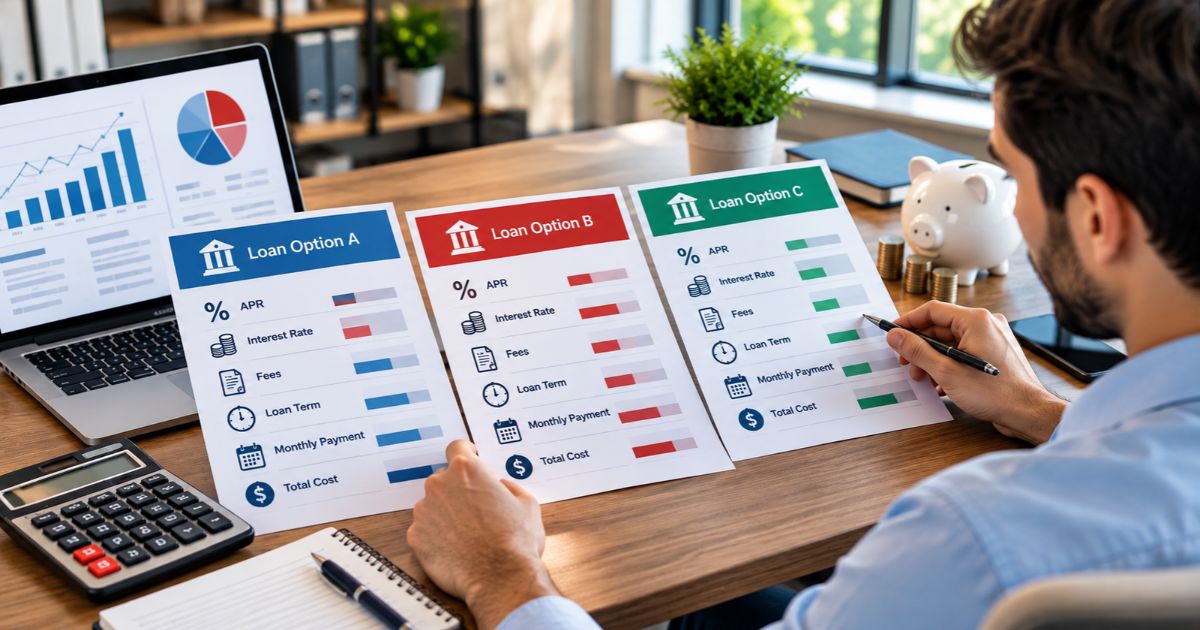
Current personal loan rates can change, and advertised offers may not represent the APR ultimately available to you.
Avoid building your borrowing decision around a single headline rate.
Read the Conditions Attached to Advertised Rates
Check whether a displayed rate depends on:
- creditworthiness;
- a particular repayment term;
- a particular loan amount;
- automatic payment enrollment;
- other eligibility requirements.
The important question is not simply, “What is the lender’s lowest rate?” It is, “What terms will this lender actually offer me?”
Fixed and Adjustable Rates
Personal installment loan interest rates can be fixed or adjustable. Before accepting a loan, confirm which structure applies to your agreement.
If the rate can change, understand how and when adjustments can occur and what those changes could mean for your payment and overall cost.
Do Not Compare Unlike Numbers
If one lender advertises an interest rate and another shows an APR, those figures are not directly equivalent.
Compare APR with APR wherever possible and then review the underlying fees and loan terms.
The same principle applies when evaluating other credit products. Our car finance options guide explains how APR and terms affect vehicle financing decisions.
Step 4: Use Prequalification Carefully
Some lenders offer prequalification tools that allow potential borrowers to view estimated terms before completing a full application.
However, terminology and processes can vary by lender. Check exactly what information the lender will review and whether the process involves a soft or hard credit inquiry before proceeding.
Prequalification Is Not Final Approval
A prequalified offer should not automatically be treated as a final loan approval.
Terms can change after a lender verifies information or completes its full underwriting process.
Ask About the Credit Inquiry
Before submitting information, determine whether the lender says the request will involve a soft inquiry or a hard inquiry.
A formal application may involve a hard credit inquiry, so avoid submitting unnecessary applications simply to see what might happen.
Verify the Website Before Sharing Sensitive Information
Make sure you are dealing with the lender’s legitimate website before entering personal, income, bank-account, or identification information.
Be particularly cautious with unexpected loan messages, emails, or calls asking for financial information.
Step 5: Compare APR, Fees, Term and Total Cost
The best personal loan rates cannot be evaluated properly without looking at the rest of the loan.
For each offer, compare the same major factors.
| Loan Factor | Offer A | Offer B |
|---|---|---|
| Loan Amount | _____ | _____ |
| Interest Rate | _____ | _____ |
| APR | _____ | _____ |
| Origination Fee | _____ | _____ |
| Other Applicable Fees | _____ | _____ |
| Repayment Term | _____ | _____ |
| Monthly Payment | _____ | _____ |
| Amount Received | _____ | _____ |
| Total Scheduled Payments | _____ | _____ |
APR
Personal loan APR is useful because it provides a broader annual measure of credit cost than the interest rate by itself.
Do not automatically choose the lowest monthly payment without considering why that payment is lower.
Origination and Other Fees
Personal installment loans can include fees such as origination, documentation, late-payment, or other charges depending on the product and lender.
Review the disclosures and agreement to determine which fees actually apply to your loan.
Repayment Term
Consider both monthly affordability and total cost.
For example, extending repayment can reduce the monthly obligation but leave the loan outstanding for longer. Compare total scheduled payments rather than using the monthly payment as your only decision point.
Understanding this relationship is also important in auto lending; our auto finance calculator guide demonstrates how term, amount financed, and rate interact.
Step 6: Compare Banks, Credit Unions and Online Lenders
Consumers looking for online personal loan rates may encounter banks, credit unions, online lenders, and other financial institutions.
No lender category should automatically be assumed to provide the lowest rate for every borrower.
Banks
Banks may provide personal loans with their own eligibility requirements, rate ranges, terms, and fees.
Credit Unions
Credit unions may also offer personal loans, although membership or other eligibility requirements can apply.
Online Lenders
Online application and account-management tools can be convenient, but convenience alone does not establish that a lender is the best or safest choice.
Compare the actual terms and investigate the lender before providing sensitive information.
Watch for Loan Scam Warning Signs
Be cautious when someone guarantees a loan regardless of your financial history and demands payment in advance for that promise.
Also be wary of unexpected messages asking for Social Security, bank-account, or other sensitive information.
Use official consumer-protection resources if an offer seems suspicious.
Step 7: Review the Final Loan Agreement Before Accepting
Once you have compared personal loan rates and selected a potential lender, review the final agreement carefully.
Do not assume that the final contract automatically matches an earlier advertisement or estimate.
Confirm the Core Loan Terms
Before accepting the loan, verify:
- principal or loan amount;
- APR;
- interest rate;
- applicable fees;
- amount of loan proceeds you will receive;
- repayment term;
- payment amount;
- payment schedule;
- late-payment provisions;
- early-repayment terms;
- default provisions.
Check Early-Repayment Terms
If you expect to make additional principal payments or repay the loan early, review the agreement for any applicable restrictions or charges.
Do not assume that every lender handles extra payments in the same way.
Review Payment and Late-Fee Rules
Know when payments are due, which payment methods are accepted, and what the agreement says about late or returned payments.
This can help prevent avoidable fees after the loan begins.
Consider Whether Borrowing Is the Best Option
Before signing, compare the personal loan with realistic alternatives available to you.
Depending on the purpose and circumstances, alternatives might include delaying a nonessential purchase, using available savings while preserving an appropriate emergency reserve, or exploring another suitable form of financing.
For broader budgeting strategies, see our guide to strategies for financial success.
Step 8: Manage the Personal Loan After Funding
Finding competitive personal loan rates is only part of the borrowing process. Properly managing the debt after funding can help you avoid unnecessary charges and payment problems.
Pay on Time
Use reminders or an appropriate automatic-payment option to help keep payments on schedule.
If you use automatic payments, continue checking your account to confirm transactions are processed correctly and sufficient funds are available.
Monitor Your Balance
Review statements and account information regularly. Check payments, outstanding balance, applicable interest, and any unexpected fees.
Understand How Extra Payments Are Applied
If you decide to pay more than the scheduled amount, confirm how the lender applies additional money and review the agreement for any relevant early-payment provisions.
Contact the Lender Early if You Cannot Pay
If you expect difficulty making a payment, contact the lender promptly to ask what options, if any, are available.
Possible options depend on the lender, loan agreement, and circumstances and should never be assumed to be guaranteed.
Common Personal Loan Rate Mistakes to Avoid
Choosing a Loan Only Because of the Advertised Rate
The lowest advertised rate may not be the rate you qualify for. Compare the actual offer you receive.
Looking Only at the Monthly Payment
A lower monthly payment can result from a longer repayment term. Compare total scheduled payments and borrowing costs as well.
Ignoring Fees
Fees can affect both your total borrowing cost and, in some cases, the amount of loan proceeds you receive.
Confusing APR With Interest Rate
APR and interest rate are related but not identical. Make sure you know which figure you are comparing.
Applying to Every Lender You Find
Research lenders and understand their inquiry process before submitting multiple formal applications.
Trusting Guaranteed-Approval Claims
Be skeptical of anyone promising guaranteed credit while demanding money upfront for the promise.
Borrowing More Than You Need
A larger loan may mean more debt and higher total borrowing costs. Start with the amount required for your legitimate financial need.
How to Compare Personal Loan Rates Side by Side
When you compare personal loan rates, use the same criteria for every lender.
| Question | Why It Matters |
|---|---|
| What APR am I actually offered? | Helps compare annual borrowing costs. |
| What fees apply? | Fees can increase the cost of borrowing. |
| How much money will I receive? | Some fees may affect net proceeds. |
| What is the repayment term? | Affects payment size and total borrowing period. |
| What is the monthly payment? | Determines the impact on your monthly budget. |
| What are total scheduled payments? | Provides additional context about overall repayment. |
| Can the rate change? | Important if the loan has an adjustable rate. |
| What happens if I pay late? | Shows potential fees and other consequences. |
| What are the early-payment terms? | Important if you plan to repay faster. |
Personal Loan Rates vs. Other Financing
A personal loan is not necessarily the right financing product for every purchase.
For example, vehicle buyers can compare secured vehicle financing separately through our Auto Finance Center, auto finance guide, and auto finance deals guide.
If you are specifically financing a used vehicle, see our used car loan guide. First-time vehicle borrowers can also review our first-time auto loan guide.
The important principle is to compare financing products based on their actual purpose, risks, APR, fees, repayment terms, and total costs rather than assuming one type of borrowing is always cheaper.
Frequently Asked Questions
What are personal loan rates?
Personal loan rates describe the cost associated with borrowing through a personal loan. The rate offered to a particular applicant can depend on credit history, income, debts, loan amount, repayment term, lender standards, and other factors.
What is the difference between a personal loan interest rate and APR?
The interest rate represents the cost charged for borrowing the principal. APR is a broader annual measure that incorporates the interest rate and applicable additional loan fees.
How can I find the best personal loan rates?
Research multiple legitimate lenders and compare the actual APR, fees, term, monthly payment, loan proceeds, and total scheduled payments available to you. The lowest advertised rate is not necessarily the rate you will receive.
Do personal loans have fees?
They can. Depending on the lender and product, personal installment loans may include origination, documentation, late-payment, or other fees. Review the lender’s disclosures and agreement to identify the charges that apply.
Does prequalification affect my credit score?
It depends on the lender’s process. Some prequalification processes may use a soft credit inquiry, while formal applications may involve a hard inquiry. Check the lender’s stated policy before submitting information.
Are online personal loan rates lower?
Not necessarily. Online lenders may offer competitive products, but banks, credit unions, and other lenders use different pricing and underwriting standards. Compare actual offers rather than assuming one lender category is always cheaper.
Is a lower monthly payment always better?
No. A lower payment may result from a longer repayment term, which can keep you in debt longer and potentially increase total interest. Compare both monthly affordability and overall repayment cost.
Can I repay a personal loan early?
Early-repayment rules depend on the loan agreement. Review the contract for applicable restrictions or charges and confirm how additional payments are applied.
What should I do if I cannot make a personal loan payment?
Contact your lender as soon as possible and ask what options may be available. Potential arrangements vary by lender and circumstances, so do not assume that deferment, forbearance, or another modification is guaranteed.
How can I recognize a personal loan scam?
Be cautious of guaranteed-loan promises tied to upfront payment demands, unexpected loan messages requesting sensitive financial information, or pressure to act immediately. Verify the lender independently before providing personal information or money.
Official Consumer Resources
- Consumer Financial Protection Bureau – Personal Installment Loans
- Consumer Financial Protection Bureau – Personal Loan Fees
- Consumer Financial Protection Bureau – Interest Rate vs. APR
- Federal Trade Commission – Advance-Fee Loan Scams
Final Thoughts
Comparing personal loan rates requires more than finding the lowest number in an advertisement. Start with the amount you actually need, understand the factors that can affect your offer, and compare multiple legitimate lenders using consistent criteria.
Pay particular attention to APR, applicable fees, repayment term, monthly payment, loan proceeds, and total scheduled payments. Then review the final agreement carefully before accepting the debt.
The right loan is not simply the one with the lowest advertised rate. It is an offer whose complete costs, repayment requirements, and risks you understand and can reasonably manage within your budget.
Continue building your financial knowledge with our complete personal finance guide, financial success strategies, and guide to understanding finance charges.