

The National Finance Commission, commonly known as the NFC, is one of the most important constitutional mechanisms governing financial relations between Pakistan’s federal government and its four provinces.
Its central purpose is to recommend how specified federal revenues should be distributed between the Federation and the provinces and how the provincial portion should then be divided among Punjab, Sindh, Khyber Pakhtunkhwa, and Balochistan.
The framework is established under Article 160 of the Constitution of Pakistan. It plays a major role in fiscal federalism Pakistan, provincial autonomy, public-service financing, and the wider relationship between national and provincial budgets.
The topic is different from ordinary household or business finance. Readers who want broader financial education can also review our personal finance guide, money-management guide, and financial planning roadmap.
This guide explains seven important aspects of the NFC system, including Article 160, the divisible pool, the 7th NFC Award, the provincial distribution formula, the current 11th NFC process, implementation challenges, and its importance for Pakistan’s public finances.
Key Takeaways
- The National Finance Commission is established under Article 160 of Pakistan’s Constitution.
- The Commission recommends how specified revenues should be shared between the Federation and provinces.
- Vertical distribution and horizontal distribution are two separate parts of the NFC system.
- The 7th NFC Award introduced a multi-indicator provincial distribution formula.
- Population carries the largest weight, but poverty, revenue generation, and inverse population density also matter.
- The 11th NFC was constituted in 2025 and began formal deliberations in December 2025.
- A future award depends on federal-provincial negotiation and consensus.
1. What Is the National Finance Commission?

The National Finance Commission is a constitutional body that deals with important financial arrangements between Pakistan’s federal and provincial governments.
Article 160 provides for the Commission to include the Federal Finance Minister, provincial finance ministers, and other members appointed by the President after consultation with provincial governors.
The official constitutional framework can be reviewed through the Finance Division NFC Secretariat.
What does Article 160 cover?
The NFC can make recommendations concerning:
- distribution of specified tax proceeds between the Federation and provinces;
- grants-in-aid to provincial governments;
- exercise of borrowing powers by federal and provincial governments;
- and other financial matters referred to the Commission.
Article 160 also contains an important protection for provinces: the provincial share in a new award cannot be lower than the share given to provinces in the previous award.
Why the institution matters
Provincial governments finance major public services, including education, healthcare, infrastructure, administration, and development programs.
The amount and timing of intergovernmental transfers therefore affect provincial budgeting and fiscal planning.
Readers interested in general budgeting principles can compare these concepts with our financial planning tips and personal finance education guide.
2. How the NFC Revenue Sharing System Works
The NFC revenue sharing formula deals with how eligible revenues move between different levels of government.
The easiest way to understand the system is to divide it into two stages.
Vertical distribution
Vertical distribution answers the question:
How much of the relevant revenue pool goes to the Federal Government and how much goes to the provinces collectively?
Horizontal distribution
Horizontal distribution answers a different question:
How is the provincial portion divided among Punjab, Sindh, Khyber Pakhtunkhwa, and Balochistan?
| Distribution Type | Main Question |
|---|---|
| Vertical Distribution | Federation versus provinces collectively |
| Horizontal Distribution | Division among individual provinces |
What is the divisible pool?
The divisible pool refers to specified federal tax revenues that are distributed according to the constitutional and NFC framework.
These arrangements are part of Pakistan’s broader public-finance system. They should not be confused with ordinary lending, although readers studying finance concepts can also explore our finance charge guide and interest-rate comparison guide.
3. Why the 7th NFC Award Was Important

The National Finance Commission framework changed significantly with the 7th NFC Award agreed in 2009 and implemented from July 2010.
Earlier provincial distribution relied heavily on population. The 7th Award introduced a multi-indicator formula.
Official Finance Division monitoring records confirm that the 7th Award was signed on 30 December 2009 and given legal effect through the Distribution of Revenues and Grants-in-Aid Order, 2010.
7th NFC Award criteria
| Criterion | Weight |
|---|---|
| Population | 82.0% |
| Poverty and backwardness | 10.3% |
| Revenue collection / generation | 5.0% |
| Inverse population density | 2.7% |
Population — 82%
Population remains the largest factor because a larger population generally creates greater demand for schools, healthcare, transport, administration, and other public services.
Poverty and backwardness — 10.3%
This component gives some recognition to differences in economic development and social needs across provinces.
Revenue collection and generation — 5%
This criterion recognizes the role of provincial revenue contribution and collection within the broader fiscal system.
Inverse population density — 2.7%
This factor recognizes that providing public services across large and sparsely populated regions can be expensive.
For readers interested in how financial resources are planned and allocated in organizations rather than governments, our business finance guide and business financial planning guide explain similar budgeting principles at the business level.
4. What Are the Provincial Shares Under the 7th NFC Award?

Under the 7th Award arrangements, the provincial portion was distributed using the agreed multi-factor formula.
| Province | Provincial Pool Share |
|---|---|
| Punjab | 51.74% |
| Sindh | 24.55% |
| Khyber Pakhtunkhwa | 14.62% |
| Balochistan | 9.09% |
These percentages are associated with the 7th Award framework and should not be interpreted as permanent constitutional percentages that can never change.
A future award can revise the horizontal formula if a new agreement is reached.
Why multiple criteria matter
Population alone does not capture every fiscal need.
For example:
- poverty affects demand for social services;
- geography affects infrastructure and service-delivery costs;
- revenue contribution affects debates over fiscal incentives;
- and population size affects the scale of basic public services.
This is one reason the NFC Award criteria remain central to federal-provincial negotiations.
5. What Is the Current Status of the 11th NFC?

The current process involves Pakistan’s 11th NFC.
The 11th Commission was constituted in August 2025, and its inaugural meeting was held on 4 December 2025.
According to the Finance Division, the meeting included federal and provincial representatives, reviewed fiscal positions and priorities, and agreed to form technical sub-groups for detailed work.
What happened at the inaugural meeting?
The Commission discussed:
- federal and provincial fiscal positions;
- the schedule for future meetings;
- technical work on NFC mandates;
- the Newly Merged Districts / former FATA issue;
- and the need for consensus on a sustainable award.
The official meeting summary emphasized transparency, collaboration, mutual respect, and consensus.
Has a completely new formula replaced the 7th Award?
Readers should not assume that a new formula has replaced the existing framework merely because a new Commission has been constituted.
The Finance Division continues to maintain official 7th NFC monitoring material while the 11th NFC process works through consultations and technical deliberations.
This distinction is important when discussing current Pakistan public finance.
6. Why NFC Negotiations Can Be Difficult
The National Finance Commission affects how major public revenues are divided, so disagreements are not surprising.
Federal expenditure needs
The Federal Government has national responsibilities, including debt servicing, defence, federal administration, national infrastructure, and other expenditures.
Provincial expenditure needs
Provincial governments must fund large areas of service delivery, including education, healthcare, provincial infrastructure, administration, and development spending.
Different provincial interests
Changes to the weighting of population, poverty, revenue effort, geography, or another criterion can affect provinces differently.
Data challenges
A multi-factor formula depends on reliable statistics.
Potential areas of disagreement include:
- population data;
- poverty measurement;
- revenue attribution;
- service-delivery costs;
- geographic indicators;
- and regional development measures.
Consensus is essential
The Commission operates through negotiation among governments with different fiscal priorities.
The 11th NFC’s inaugural meeting explicitly emphasized consultation and consensus as the way forward.
7. Why the National Finance Commission Matters for Pakistan
The National Finance Commission is not simply an accounting mechanism. Its outcomes affect the fiscal capacity of provincial governments and the resources available for public services.
Provincial autonomy
A predictable provincial share gives provinces greater capacity to plan their own budgets and development priorities.
Healthcare
Provincial fiscal resources help finance hospitals, public-health programs, staffing, medicines, and other health services.
Education
Provincial budgets support schools, colleges, teachers, administration, and education-development programs.
Infrastructure
Roads, irrigation, urban services, public buildings, and other provincial projects also depend on fiscal capacity.
Regional development
Poverty and inverse population density in the 7th formula reflect an attempt to account for regional differences rather than relying only on population.
National fiscal stability
Federal-provincial revenue distribution also affects the Federal Government’s own fiscal position.
This creates an important link between provincial finance, national fiscal policy, and overall budget sustainability.
Readers interested in financial sustainability at a smaller scale can compare these ideas with our business loans guide, business borrowing cost guide, and business loan payment calculator.
Historical Development of NFC Awards in Pakistan
The National Finance Commission process has evolved over several decades.
Earlier awards and revenue-sharing arrangements relied more heavily on population, while later negotiations expanded discussion of other indicators.
1970s framework
Following the 1973 Constitution, Pakistan developed its modern constitutional framework for federal-provincial revenue sharing.
1990s NFC arrangements
Further awards in the 1990s adjusted provincial revenue sharing and continued the development of Pakistan’s intergovernmental fiscal system.
2009 breakthrough
The 7th Award became particularly important because it introduced multiple criteria for horizontal distribution.
Later Commissions
Subsequent Commissions were constituted as required, but reaching a replacement award requires agreement on difficult fiscal issues.
The current process is centered on the 11th NFC.
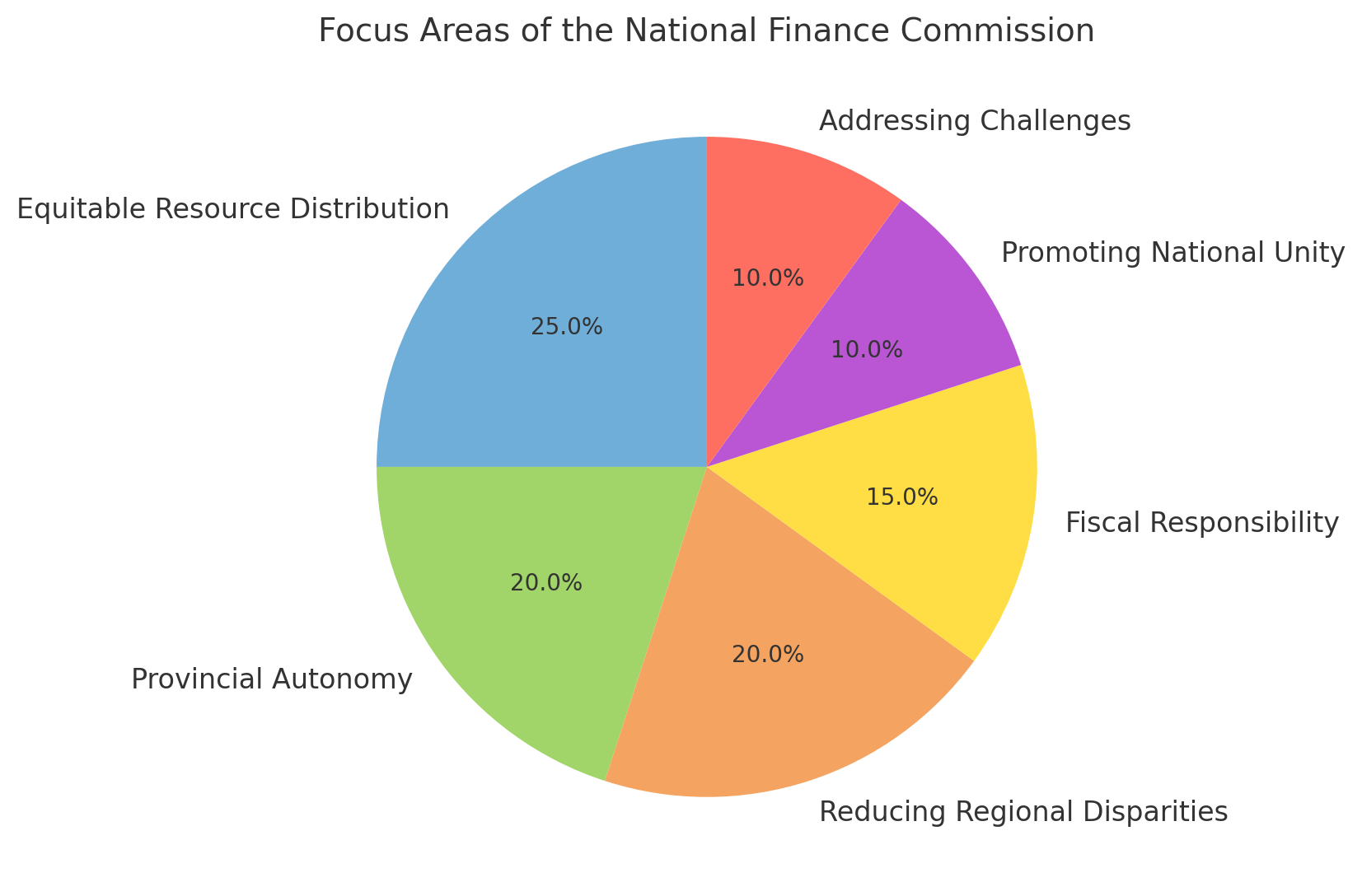
Current NFC Formula at a Glance
| Criterion | 7th NFC Weight |
|---|---|
| Population | 82.0% |
| Poverty and Backwardness | 10.3% |
| Revenue Collection / Generation | 5.0% |
| Inverse Population Density | 2.7% |
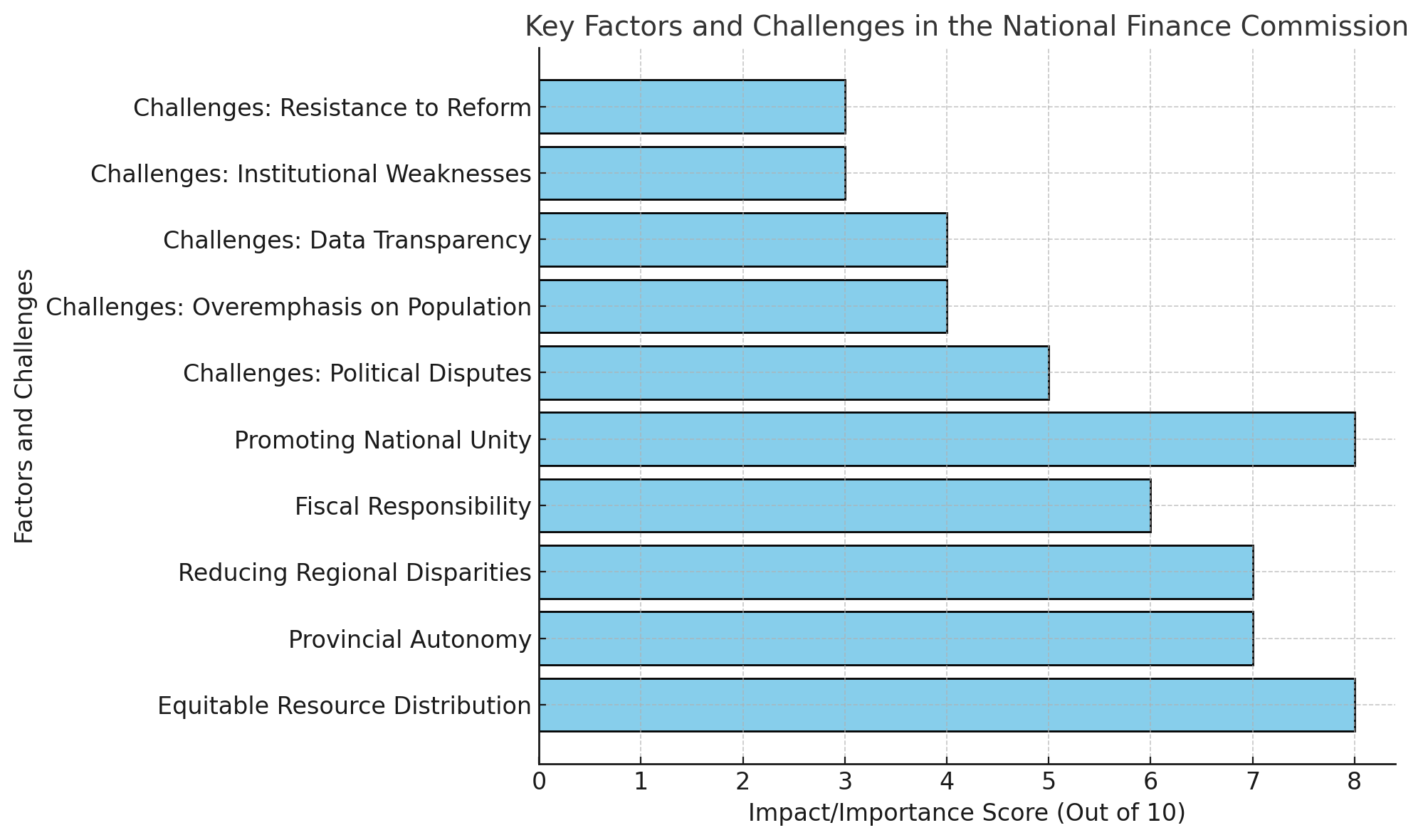
What Could Future NFC Reform Consider?
Future negotiations may debate whether the existing criteria remain appropriate or whether additional indicators should be considered.
Possible policy issues include:
- updated population figures;
- poverty and human-development measures;
- revenue effort;
- urbanization;
- climate vulnerability;
- geographic service-delivery costs;
- Newly Merged Districts;
- and federal-provincial expenditure responsibilities.
These are policy possibilities, not predictions about the final 11th NFC formula.
Why Reliable Data Is Essential
The National Finance Commission can only apply a multi-indicator formula fairly when governments have credible and comparable data.
Better information can improve:
- calculation of provincial shares;
- transparency;
- technical negotiations;
- monitoring;
- and public understanding.
NFC Award vs Federal Budget
The NFC framework is not the same thing as Pakistan’s annual federal budget.
The annual budget sets out expected federal revenues, spending, financing needs, and policy measures for a fiscal year.
The NFC framework establishes important rules for federal provincial revenue distribution.
The two interact, but they perform different functions.
For readers learning general finance terminology, see our finance education hub, finance course guide, and personal finance books guide.
How Revenue Sharing Differs From Personal and Business Borrowing
Public revenue distribution should not be confused with credit or lending.
The NFC deals with government revenue relationships, while personal and business loans involve contractual borrowing between borrowers and lenders.
For comparison, readers can explore:
- how personal loans work;
- personal loan rates and APR;
- secured personal loans;
- personal loans for bad credit;
- borrowing for moving expenses;
- business loans;
- unsecured business financing;
- business financing with weaker credit;
- and startup business financing.
These guides cover borrowing rather than government revenue sharing, but they help readers distinguish different areas of finance.
How Fiscal Planning Connects With Broader Financial Management
Government fiscal management and household or business finance operate at very different scales, but several broad principles overlap.
These include:
- matching resources with obligations;
- forecasting revenue;
- managing debt;
- prioritizing spending;
- maintaining liquidity;
- and evaluating long-term sustainability.
For practical financial-management education, readers can continue with our Master Your Money guide, financial tips, and business finance overview.
Related Finance Guides
If you are researching other areas of finance, these Best Finance Live resources provide additional context:
- Auto Finance Calculator
- First Time Auto Loan
- Refinance Auto Loan
- 96 Month Auto Loan
- What Is a Finance Charge?
- Business Loan Payment Calculator
- Business Loan Interest Rates
- How to Succeed in Business Finance
Conclusion
The National Finance Commission is a central institution in Pakistan’s fiscal federal system. Article 160 provides the constitutional framework for determining how specified revenues are shared between the Federation and the provinces.
The 7th NFC Award was particularly important because it introduced a multi-factor provincial distribution formula based on population, poverty and backwardness, revenue collection or generation, and inverse population density.
Pakistan is now working through the 11th NFC process. Its inaugural meeting in December 2025 began a new phase of federal-provincial consultation, with technical work and consensus-building continuing around major fiscal issues.
The outcome matters because revenue sharing directly affects provincial budgets, national fiscal capacity, public services, development spending, and the wider balance of fiscal responsibilities within Pakistan.
As discussions continue, readers should rely on official Finance Division notifications and reports for the latest information rather than assuming that proposed changes have already become a new award.
Frequently Asked Questions
What is the National Finance Commission in Pakistan?
What is an NFC Award?
What is Article 160?
What criteria are used in the 7th NFC Award?
What are the provincial shares under the 7th Award?
What is the 11th NFC?
Has the 11th NFC issued a completely new revenue-sharing formula?
Why does population carry the largest NFC weight?
What does inverse population density mean?
Why is the NFC important for provincial autonomy?
Where can I verify NFC information?