Some lenders serve applicants with excellent credit, while others consider borrowers with fair credit, limited credit histories, or previous financial difficulties. However, approval depends on more than a three-digit score. Income, existing debt, repayment history, and borrowing capacity can all influence the final decision.
Understanding the minimum credit score for a personal loan can help you compare realistic borrowing options before submitting formal applications. It can also help you avoid unnecessary credit inquiries, expensive interest rates, and unaffordable repayment obligations.
This guide explains typical credit score ranges, seven practical ways to improve loan readiness, lender eligibility requirements, soft versus hard credit checks, secured loan alternatives, and the total cost of borrowing.
For related information, review our 650 credit score personal loan guide, credit score calculation guide, and personal loans without origination fees.
Key Takeaways
- No universal minimum credit score applies to every personal loan lender.
- Stronger credit histories generally improve access to competitive interest rates.
- Income, debt-to-income ratio, and repayment history also affect eligibility.
- Some lenders offer soft-inquiry prequalification, but not all do.
- Secured loans and cosigners may provide alternatives for qualifying applicants.
- Origination fees and longer repayment terms can increase borrowing costs.
- Reviewing credit reports before applying can help identify errors.
- Loan approval is never guaranteed solely by having a particular score.
1. What Is the Minimum Credit Score for a Personal Loan?
The minimum credit score for a personal loan varies because individual lenders establish their own underwriting standards.
A national bank may prefer applicants with established credit histories, while a local credit union or specialized lender may consider additional financial information when evaluating borrowers.

Why lenders have different credit requirements
Financial institutions have different business models, funding costs, risk policies, and customer eligibility requirements.
Some lenders specialize in consumers with strong credit. Others may consider applications from borrowers with less established credit profiles.
Even when two lenders evaluate the same applicant, they may reach different approval decisions or offer different APRs.
Common credit score ranges
The following ranges provide a general illustration of commonly discussed consumer credit categories. Exact classifications vary by scoring model and lender.
| Credit Category | Illustrative Score Range | Possible Lending Outcome |
|---|---|---|
| Excellent | 800–850 | Potentially competitive offers |
| Very Good | 740–799 | Broad financing opportunities |
| Good | 670–739 | May qualify with competitive terms |
| Fair | 580–669 | Possible higher APRs |
| Poor | 300–579 | More limited financing options |
These are illustrative FICO-style general score bands, not universal personal loan approval thresholds. Different scoring models may use different categories.
Can you qualify with a 600 credit score?
Some lenders may consider applications from borrowers with a score around 600.
However, approval depends on income, existing debt, employment circumstances, and the lender’s underwriting policies.
Applicants may encounter higher interest rates or smaller approved loan amounts.
Can you get a loan with a 650 credit score?
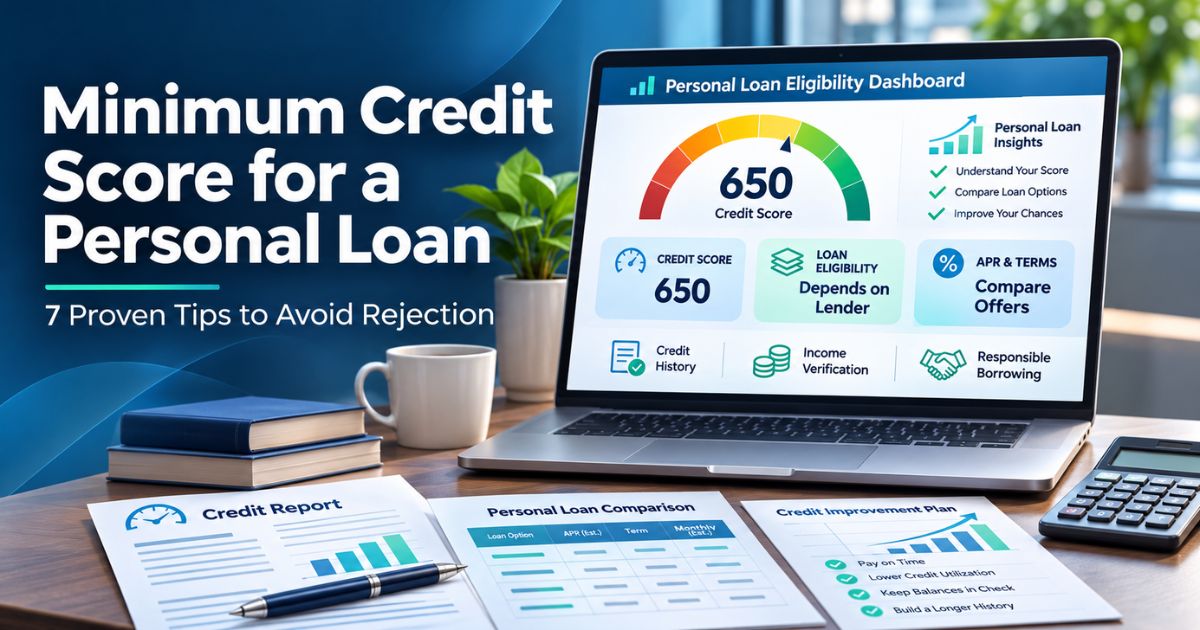
A score around 650 may qualify for certain personal loan products, although rates and eligibility vary considerably.
Borrowers should compare multiple written offers and confirm whether preliminary eligibility checks use soft inquiries.
Does a 700 credit score guarantee approval?
No. A relatively strong score does not override insufficient income, excessive debt obligations, unverifiable information, or lender-specific restrictions.
Credit score vs overall creditworthiness
Creditworthiness includes more than a score. Lenders may consider payment patterns, income stability, outstanding obligations, and the amount requested.
Therefore, determining the minimum credit score for a personal loan is only the first part of evaluating eligibility.
2. How Lenders Evaluate Personal Loan Applications
When reviewing an application, lenders generally consider whether the borrower is likely to repay the proposed debt under the agreed terms.

Credit score and repayment history
Credit reports contain information about accounts, balances, payment history, and certain negative events.
Late payments, collection accounts, or serious delinquencies can affect a borrower’s overall credit profile.
A consistent history of making required payments on time may strengthen an application.
Income and employment
Lenders often request documentation showing that an applicant has sufficient income to meet loan payments.
Acceptable income sources and verification requirements depend on the institution.
Self-employed borrowers may need tax returns, bank statements, or other records demonstrating income.
Debt-to-income ratio
The debt-to-income ratio, or DTI, compares qualifying monthly debt payments with gross monthly income.
DTI = Monthly Debt Payments / Gross Monthly Income × 100
For example, a borrower earning $5,000 in gross monthly income with $1,500 in monthly debt obligations has a DTI of 30%.
Individual lenders may calculate the ratio differently and apply their own acceptable limits.
Loan amount and repayment period
A larger loan creates a larger repayment obligation. Lenders may assess whether the requested principal and term fit the applicant’s income and existing commitments.
Choosing a smaller amount can sometimes improve affordability, although it does not guarantee approval.
Purpose of the loan
Personal loans can be used for various permitted expenses, including certain debt consolidation, emergency costs, and home improvement projects.
Some lenders restrict particular uses, such as certain investment, business, or education-related expenses.
Why lender requirements differ
Two borrowers with identical credit scores may receive different loan offers because their income, obligations, borrowing amounts, and repayment histories differ.
Likewise, two lenders may evaluate the same borrower differently.
When investigating the minimum credit score for a personal loan, confirm current lender-specific requirements instead of relying on generic approval promises.
For related borrowing concepts, see our first-time business loan guide and finance charge explanation.
3. Check Your Credit Reports Before Applying
Reviewing your credit information can help you identify potential obstacles before requesting financing.
It is especially useful when you are uncertain whether your score meets a lender’s advertised eligibility requirements.

Get your credit reports
The three major nationwide U.S. credit reporting companies are Equifax, Experian, and TransUnion.
Consumers can request free credit reports through the authorized reporting system.
The Federal Trade Commission explains that the nationwide credit reporting companies provide free weekly online reports through AnnualCreditReport.com.
Review the official FTC guide to free credit reports for current instructions.
Check for inaccurate information
Review your reports for:
- Accounts you do not recognize.
- Incorrect balances.
- Payments inaccurately marked late.
- Duplicate collection accounts.
- Incorrect personal information.
- Outdated negative information.
- Potential identity theft indicators.
Dispute genuine errors
If information is incorrect, you can dispute it through the appropriate credit reporting company.
Supporting documentation, such as account statements or payment confirmations, may help establish the facts.
Accurately reported negative information generally cannot be removed simply because it affects your score.
Checking your own report is a soft inquiry
Reviewing your own credit report does not lower your credit score.
This allows borrowers to investigate potential problems without creating a hard credit application inquiry.
Understand scoring model differences
Credit monitoring services may display scores calculated using different FICO or VantageScore models.
The score available through a consumer application may differ from the version a lender evaluates.
Credit reports and scores are different
A credit report contains information about your borrowing history, while a credit score summarizes certain aspects of that information using a mathematical model.
Free credit reports do not necessarily include every credit score used by lenders.
Correct errors before submitting unnecessary applications
If you discover a significant reporting problem, consider addressing it before applying when circumstances allow.
This can help ensure that the lender evaluates accurate information.
Improving report accuracy may support your efforts to meet the minimum credit score for a personal loan required by a particular lender.
Read our credit scoring factors guide and credit improvement timeline.
4. Compare Personal Loans Using Prequalification
Prequalification may help borrowers estimate their financing eligibility before completing a formal loan application.
However, inquiry procedures differ by lender, and prequalification does not guarantee approval.

What is personal loan prequalification?
Prequalification is an initial process in which a financial institution estimates whether an applicant may be eligible for a loan.
The lender may request basic financial information and conduct a preliminary credit assessment.
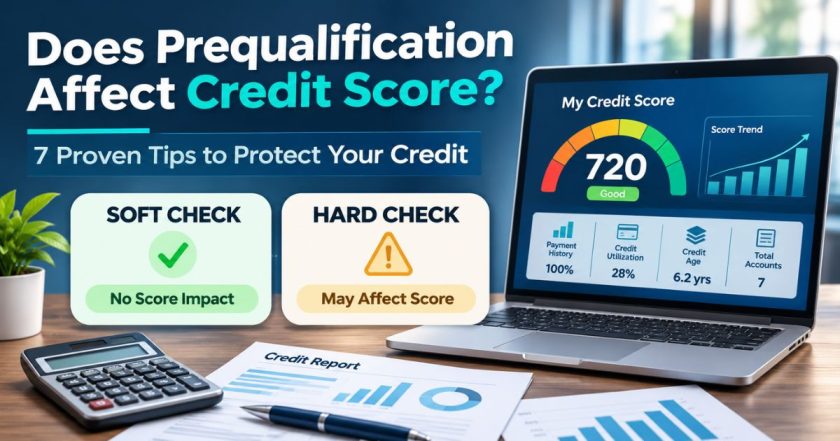
Soft credit inquiries
A soft inquiry does not affect credit scores.
Many lenders offer soft-inquiry eligibility checks, but applicants should review the specific lender’s disclosures before submitting information.
Hard credit inquiries
Formal loan applications commonly involve hard inquiries.
Hard inquiries may temporarily affect credit scores, although the amount of the change depends on the consumer’s credit profile and scoring model.
Confirm the credit check before applying
Ask the lender whether the current step triggers a soft or hard inquiry and whether another credit check occurs before funding.
Do not assume every financial institution follows the same application process.
Prequalification is not guaranteed approval
An estimated offer can change when the lender verifies income, reviews additional credit information, or applies final underwriting requirements.
Compare the important loan details
| Loan Feature | Why It Matters |
|---|---|
| APR | Measures annualized borrowing cost |
| Amount Financed | Shows the principal obligation |
| Origination Fee | May reduce available loan proceeds |
| Monthly Payment | Determines scheduled budget impact |
| Repayment Term | Affects payment size and interest |
| Total Payments | Shows scheduled repayment cost |
Evaluate lender eligibility requirements
Before choosing an offer, check the lender’s stated residency, age, income, credit, and account requirements.
Understanding the minimum credit score for a personal loan at each institution can help narrow your options.
See our prequalification and credit score guide and no-origination-fee personal loan comparison.
5. How Credit Scores Affect Interest Rates and Loan Costs
Credit scores can influence the interest rates and terms a lender offers.
Borrowers with stronger credit histories may qualify for lower APRs, while applicants with weaker credit may face higher financing costs.
Why APR matters
The annual percentage rate reflects the borrowing rate together with certain finance charges.
It is useful for comparing offers because a loan’s advertised interest rate may not show its full annualized cost.
Illustrative loan payment comparison
Consider a hypothetical $10,000 fixed-rate personal loan repaid over 36 months.
The following example assumes monthly amortizing payments, no extra financed fees, and that the stated APR equals the annual interest rate.
| APR | Approx. Monthly Payment | Approx. Total Interest |
|---|---|---|
| 8% | $313.36 | $1,281 |
| 15% | $346.65 | $2,479 |
| 25% | $397.60 | $4,314 |
These are rounded educational estimates, not available lender offers. Actual repayment costs may differ because of fees, payment dates, and lender calculations.
Why higher interest rates are expensive
At 25% APR, the same principal and term require substantially more interest than at 8% APR.
This difference can strain monthly budgets and increase the total cost of obtaining funds.
Loan term length matters
Longer terms generally reduce scheduled monthly payments when other factors remain equal.
However, borrowers often pay more interest over the full repayment period.
Compare total repayment, not only monthly cost
A smaller installment may appear attractive but could produce greater long-term borrowing expenses.
Evaluate the complete repayment schedule and any additional fees.
Credit score is not the only pricing factor
Lenders also consider income, debt obligations, loan purpose, requested amount, and other underwriting information.
Even borrowers above a lender’s minimum credit score for a personal loan may receive different rates.
Read our finance charge guide and fair-credit borrowing guide.
6. Options if Your Credit Score Is Too Low
Applicants who do not satisfy one lender’s preferred requirements may still have alternative financing options.
However, alternatives should be evaluated carefully because they can introduce additional fees, risk, or legal responsibility.
Consider a secured personal loan
A secured loan requires collateral, such as qualifying savings or other property.
Offering collateral may affect underwriting eligibility and pricing.
But default can result in the loss of the pledged asset according to the contract and applicable law.
Consider a qualified co-applicant or cosigner
Some lenders permit applications with a cosigner or joint borrower.
A financially qualified second applicant may improve eligibility, depending on lender policy.
However, cosigners or joint borrowers can become legally responsible for repayment and may experience credit consequences if payments are missed.
Compare credit unions
Credit unions may offer a different underwriting approach from large commercial banks.
Membership eligibility and lending requirements vary.
Do not assume every credit union automatically approves borrowers with weak credit.
Ask about a smaller loan
A smaller requested amount may reduce monthly debt obligations.
This can make a loan more affordable, although approval still depends on lender requirements.
Consider a longer preparation period
If the borrowing need is not urgent, improving credit or saving additional cash may produce more favorable options later.
Evaluate nonprofit credit counseling
Borrowers experiencing serious financial difficulty may benefit from a reputable nonprofit credit counselor.
Counselors can review household budgets, creditor obligations, and possible repayment alternatives.
Avoid expensive short-term alternatives
Payday loans, title loans, and other high-cost products can create substantial repayment pressure.
Some arrangements also put important property at risk.
When struggling to meet the minimum credit score for a personal loan, avoid replacing a manageable financial problem with an unsustainable borrowing obligation.
For additional options, see our debt consolidation guide and household budgeting guide.
7. Seven Proven Tips to Improve Personal Loan Readiness
Improving financial readiness can support more informed borrowing decisions and may strengthen eligibility over time.
Tip 1: Pay accounts on time
Payment history is an important component of commonly used credit scoring models.
Paying existing obligations by their due dates can help prevent additional negative credit information.
Tip 2: Reduce revolving credit balances
Credit utilization compares outstanding revolving balances with available credit limits.
Paying down high credit-card balances may improve this aspect of a credit profile.
Tip 3: Review reports for errors
Check credit reports for inaccurate balances, unfamiliar accounts, and incorrectly reported payments.
Dispute genuine inaccuracies with the appropriate organizations.
Tip 4: Avoid unnecessary formal applications
Repeated unrelated credit applications can create additional hard inquiries.
Use clearly disclosed soft-inquiry prequalification tools when they are available and suitable.
Tip 5: Improve debt-to-income ratio
Reducing outstanding monthly obligations may improve borrowing capacity.
A lower DTI can help demonstrate that your budget has room for additional scheduled payments.
Tip 6: Prepare accurate financial documents
Gather income verification, identification, and relevant bank records before applying.
Accurate information helps prevent unnecessary underwriting delays.
Tip 7: Compare realistic loan offers
Review APR, fees, repayment period, and total payments across suitable lenders.
Do not choose a loan solely because an advertisement promises fast approval.
These habits may help you meet the minimum credit score for a personal loan or other lender eligibility conditions over time, but they do not guarantee approval or a specific rate.
Documents Needed for a Personal Loan Application
Lenders may request different documents depending on employment status, loan size, and underwriting requirements.
Common application documents
- Government-issued identification.
- Proof of current address.
- Recent pay statements.
- Bank statements.
- Employment information.
- Tax returns where requested.
- Existing debt details.
- Information about the requested loan.
Self-employed applicants
Self-employed borrowers may need additional records demonstrating business income and cash flow.
The documents required depend on the lender’s underwriting methods.
Identity verification
Financial institutions may verify names, addresses, identification numbers, and other personal information before funding a loan.
Protect personal information
Apply through verified lender websites and secure communication channels.
An HTTPS connection encrypts data in transit but does not, by itself, guarantee that a website or lender is legitimate.
Check the business identity and contact information before sharing financial details.
Review the complete offer
Before signing, confirm that the contract identifies the lender, principal, APR, payment schedule, applicable fees, and repayment obligations.
Preparation matters even when your credit exceeds a stated minimum credit score for a personal loan.
Personal Loan Fees and Risks to Understand
Borrowing expenses can extend beyond the advertised interest rate.
Origination fees
Some lenders charge origination fees to process or establish a loan.
These charges may be deducted from loan proceeds or otherwise incorporated into the financing arrangement.
Origination fee example
Suppose a lender approves a $10,000 loan and deducts a 5% origination fee.
The borrower may receive $9,500 while remaining obligated to repay the contractual loan principal and interest.
Late payment fees
Missing a due date may result in charges according to the agreement and applicable law.
Late payments may also affect credit reporting.
Returned-payment charges
Some lenders impose fees when an attempted payment fails because of insufficient funds or another account issue.
Prepayment conditions
Review whether the loan permits early repayment without additional charges.
The effect of early payoff depends on the contract and how interest is calculated.
Fixed versus variable interest
Fixed-rate installment loans generally provide predictable scheduled payments under the agreed terms.
Variable-rate loans may change with an index or other contractual adjustment mechanism.
Verify lender disclosures
The Consumer Financial Protection Bureau’s personal installment loan fee guidance explains that borrowers should review origination charges, documentation fees, insurance products, and other possible financing costs.
Recognize warning signs
Be cautious of lenders or intermediaries that:
- Guarantee approval without evaluating eligibility.
- Demand suspicious advance payments.
- Refuse to provide clear loan terms.
- Pressure you to sign immediately.
- Provide unverifiable company information.
- Request banking passwords.
- Misrepresent the APR or repayment amount.
Meeting the minimum credit score for a personal loan does not mean you should accept an offer with unaffordable costs or questionable terms.
How to Compare Banks, Credit Unions, and Online Lenders
Different institutions serve different groups of borrowers.
Traditional banks
Banks may offer established account services, online applications, and potentially favorable rates for qualified borrowers.
However, not all banks provide unsecured personal loans, and eligibility requirements differ.
Credit unions
Credit unions are member-based financial institutions.
Some offer flexible loan structures or competitive terms, but membership and underwriting requirements still apply.
Online lenders
Online lenders may offer digital applications and preliminary eligibility checks.
Some specialize in particular credit profiles, though borrowers should verify licensing, business identity, and all lending terms.
Compare the same loan amount
When possible, compare offers for the same principal amount and repayment period.
This makes APR and total cost differences easier to understand.
Ask whether the APR is fixed
Check whether the interest rate stays constant throughout the term or may change under contractual conditions.
Check total repayment
Add the required payments and account for relevant fees to understand the full scheduled borrowing cost.
Evaluate the lender’s service procedures
Review payment methods, customer support channels, account access, and payoff procedures.
A competitive APR is valuable, but reliable servicing and transparent disclosures also matter.
Do not select a lender solely because it advertises a low minimum credit score for a personal loan. Consider the complete financing offer.
When a Personal Loan May Not Be the Best Choice
Even if you qualify for a loan, borrowing may not be appropriate for every financial situation.
When repayment is unaffordable
If a new monthly installment would interfere with housing, food, utilities, healthcare, or other essential costs, additional borrowing could create financial instability.
When the APR is excessive
Very high interest rates can make small loans expensive over time.
Compare the total cost with other available choices before accepting an offer.
When debt consolidation increases costs
Replacing existing debt with a new personal loan may simplify payments.
However, a higher APR or longer term can increase overall repayment costs.
When a purchase can wait
If the expense is not urgent, saving money before buying may avoid borrowing costs.
When credit counseling could help
A reputable nonprofit credit counselor may assist with budgeting and evaluating creditor repayment arrangements.
When collateral creates too much risk
A secured personal loan can place savings, a vehicle, or another pledged asset at risk.
Do not accept collateral requirements without understanding the consequences of default.
Alternatives to consider
Depending on the circumstances, alternatives may include:
- Saving before making a purchase.
- Negotiating a payment arrangement with an existing creditor.
- Employer or community hardship assistance.
- Nonprofit credit counseling.
- Reducing nonessential spending.
- Requesting a smaller loan amount.
Understanding the minimum credit score for a personal loan is useful, but deciding whether new debt is financially necessary is equally important.
Seven-Step Personal Loan Application Checklist
Step 1: Determine the borrowing purpose
Identify the exact expense and calculate how much money is genuinely needed.
Step 2: Review your credit reports
Check personal information, payment histories, account balances, and potential errors.
Step 3: Calculate your budget
Estimate essential expenses and the amount available for a new monthly payment.
Step 4: Check lender requirements
Review current credit, income, residency, and loan amount criteria.
Step 5: Compare preliminary offers
Use suitable prequalification tools and verify whether they involve soft credit inquiries.
Step 6: Review the loan disclosures
Compare APR, principal, fees, repayment term, and total scheduled payments.
Step 7: Apply only when terms are affordable
Submit a formal application after identifying a realistic lender and understanding the potential credit inquiry.
Following this process can help make your search for the minimum credit score for a personal loan more productive and financially responsible.
Related Best Finance Live Guides
- Personal Loan With a 650 Credit Score
- Personal Loans Without Origination Fees
- Does Prequalification Affect Your Credit Score?
- Debt Consolidation With Bad Credit
- How Long to Raise Your Credit Score
- How Credit Scores Are Calculated
- Highest Credit Score Guide
- What Is a Finance Charge?
- Complete Personal Finance Guide
- Master Your Money
- Top Financial Tips
- First-Time Business Loan Guide
- Average Credit Card Debt
- Affordable Auto Loans
- Auto Finance Calculator
Conclusion
The minimum credit score for a personal loan varies from one lender to another. There is no universal approval threshold that applies to all borrowers or financial institutions.
Credit history is important, but lenders may also review income, existing debt, employment information, and overall repayment ability.
Before applying, review your credit reports, correct genuine errors, evaluate your monthly budget, and compare available financing offers.
Pay particular attention to APR, origination fees, repayment length, and total borrowing costs.
Applicants with limited or damaged credit may consider secured loans, eligible cosigner arrangements, credit unions, or a period of credit improvement, depending on their circumstances.
Ultimately, understanding the minimum credit score for a personal loan should help you identify suitable lenders while avoiding unnecessary borrowing costs and financial strain.