
This guide explains how a 650 credit score personal loan works, what lenders look for, how to compare APRs and origination fees, and seven practical steps to improve your application. It also covers monthly payments, credit union lending, soft credit inquiries, co-signers, and alternatives to expensive borrowing.
Before applying, review our personal loan with no origination fee guide and credit score calculation guide.
Key Takeaways
- A 650 score is generally considered fair credit under common FICO scoring ranges.
- Approval is possible, but no lender is required to approve every applicant with this score.
- Income, existing debt, credit history, and requested loan size influence underwriting.
- Compare APR rather than relying only on the advertised interest rate.
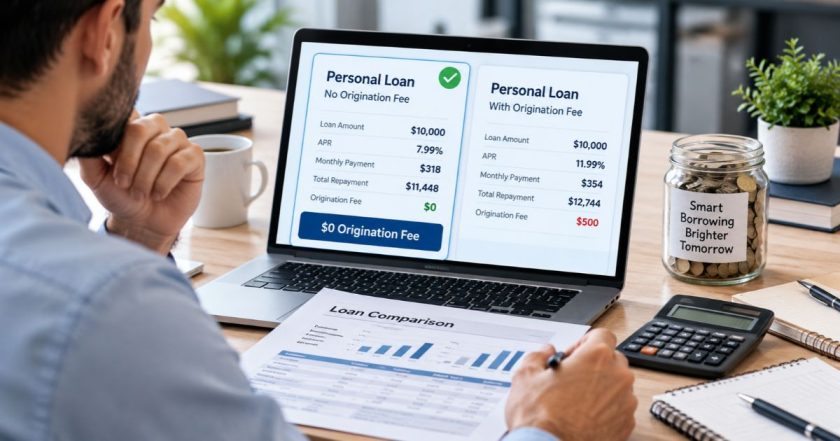
- Origination fees can reduce the amount of money you actually receive.
- Prequalification with a soft inquiry can help compare potential terms when offered.
- Secured loans and co-signed loans have additional risks that borrowers should understand.
- A manageable monthly payment and reasonable total borrowing cost are more important than obtaining the maximum loan amount.
1. Understanding a 650 Credit Score Personal Loan
A 650 credit score personal loan is a personal installment loan offered to an applicant whose credit score is approximately 650.
Personal loans are commonly used for debt consolidation, necessary home repairs, medical expenses, and other permitted personal purposes. A typical installment loan provides a fixed amount that is repaid through scheduled payments.

Is 650 a good credit score?
Under commonly used FICO scoring ranges, a score between 580 and 669 is classified as fair. A score of 650 therefore generally falls within the fair-credit category.
However, different lenders use different credit scoring models, and an applicant may have multiple scores.
Some lenders also evaluate additional information rather than relying on a single numerical score.
Can you qualify with fair credit?
Some banks, credit unions, and online lenders consider applicants with fair credit. Eligibility depends on each institution’s policies.
A lender may review:
- Credit score and credit history.
- Gross monthly income.
- Employment or other income stability.
- Debt-to-income ratio.
- Recent credit inquiries.
- Current payment obligations.
- Requested loan amount.
- Repayment period.
There is no universal approval guarantee for a 650 credit score personal loan.
How credit scores influence loan pricing
A higher credit score can indicate a lower expected credit risk, although the final decision depends on the lender’s underwriting model.
Borrowers with fair credit may receive higher APRs than borrowers with stronger credit profiles.
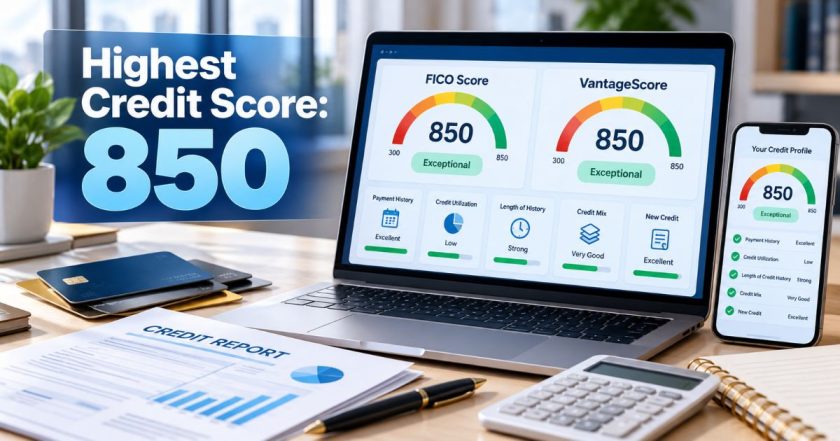
Read our highest credit score guide and credit improvement timeline for more background.
2. Personal Loan Rates and Approval Factors
The cost of a 650 credit score personal loan varies by lender and applicant. A score alone cannot reliably predict the APR you will receive.
Interest rate vs APR
The interest rate represents the basic cost of borrowing principal.
Annual percentage rate, or APR, generally includes the interest rate plus certain required finance charges. This makes APR more useful when comparing competing loan offers.
Why the lowest advertised rate may not apply
Lenders may reserve their lowest advertised APRs for applicants with strong credit histories, sufficient income, favorable debt levels, or other qualifying characteristics.
A fair-credit applicant should compare personalized offers instead of assuming an advertised minimum APR is available.
Compare loan costs
| Factor | What It Means | Why It Matters |
|---|---|---|
| Interest Rate | Basic borrowing charge | Affects interest cost |
| APR | Annualized credit cost | Helps compare lenders |
| Origination Fee | Loan processing charge | May reduce proceeds |
| Loan Term | Repayment period | Affects payment and interest |
| Late Fee | Charge for late payment | Can increase costs |
| Prepayment Terms | Early repayment conditions | May affect flexibility |
Review lender disclosures
Before accepting a 650 credit score personal loan, check the complete loan disclosure and agreement.
The Consumer Financial Protection Bureau explains that personal installment loans may include origination, documentation, late-payment, and other charges.
Review the official CFPB personal installment loan fee guidance.
You can also read our no-origination-fee loan comparison and finance charge guide.
3. What Lenders Review Beyond Your Credit Score
A fair credit score represents only one part of the overall lending decision.
When evaluating a 650 credit score personal loan, a lender may consider financial information that helps determine whether the applicant can afford the requested payment.

Debt-to-income ratio
Your debt-to-income ratio, or DTI, compares monthly debt obligations with gross monthly income.
The formula is:
DTI = Monthly Debt Payments / Gross Monthly Income x 100
For example, if your monthly debt payments total $1,200 and your gross monthly income is $4,000, your DTI is 30%.
Some lenders may prefer lower DTI ratios, but exact requirements vary.
Income and employment stability
Lenders may request recent pay stubs, tax documents, bank statements, or other evidence of income.
A traditional full-time job is not always required. Some lenders may accept qualifying self-employment, retirement, or other verifiable income sources.
Payment history
A history of making required payments on time can help demonstrate responsible repayment behavior.
Recent missed payments, defaults, or collection accounts may influence approval even when the numerical credit score remains around 650.
Credit utilization
Credit utilization generally measures revolving balances relative to available revolving credit limits.
High utilization may affect credit scoring and can also indicate financial pressure.
Requested loan amount
Smaller loan requests may be easier to fit within a borrower’s budget, but approval depends on the lender.
Requesting less does not guarantee a lower APR.
Bank vs credit union underwriting
Credit unions and banks can both use automated or manual underwriting.
Some credit unions may consider membership history or other relationship information, but they are not automatically more flexible or cheaper than banks.
Compare actual offers rather than relying on the lender category alone.
4. Prepare Before Applying for a Personal Loan
Preparing your finances can help you make informed decisions before submitting a formal application.
For someone considering a 650 credit score personal loan, preparation should focus on credit report accuracy, affordability, documentation, and responsible borrowing limits.

Check your credit reports
Review the information reported by Equifax, Experian, and TransUnion through authorized credit-report sources.
Look for:
- Accounts you do not recognize.
- Incorrect payment history.
- Duplicate accounts.
- Inaccurate balances.
- Incorrect personal information.
- Potential identity-theft indicators.
If you identify inaccurate information, follow the appropriate dispute process.
Correcting genuine errors may improve your credit profile, although the effect and timing are not guaranteed.
Estimate your affordable payment
Calculate your existing debt obligations and household expenses.
Your repayment budget should include:
- Housing.
- Utilities.
- Food.
- Transportation.
- Insurance.
- Existing debt payments.
- Emergency savings.
- Other necessary living expenses.
Do not assume a lender’s maximum loan approval is the amount you should borrow.
Gather necessary documentation
Depending on lender requirements, prepare:
- Government-issued identification.
- Proof of income.
- Employment information.
- Housing expense information.
- Bank account details when required.
- Current debt information.
Borrow only what you need
A larger principal generally creates a larger repayment obligation when the other loan terms remain unchanged.
Calculate the required amount before comparing loan offers.
For budgeting guidance, review our Master Your Money guide, top financial tips, and personal finance planning guide.
5. Compare Lenders for a 650 Credit Score Personal Loan
Comparing lenders is one of the most important steps when searching for a 650 credit score personal loan.
Different lenders can offer different APRs, fees, loan amounts, repayment periods, and eligibility requirements.

Compare banks, credit unions, and online lenders
Each lender type has different strengths and limitations.
| Lender Type | Potential Benefits | What to Check |
|---|---|---|
| Traditional Bank | Established servicing and account tools | Credit and income requirements |
| Credit Union | Member-focused services | Eligibility and membership rules |
| Online Lender | Digital application and comparison | APR, fees, privacy, and servicing |
| Secured Loan Provider | Collateral-backed borrowing | Risk of losing collateral |
Use prequalification when available
Some lenders allow applicants to review potential offers through a soft credit inquiry.
A soft inquiry does not affect your credit score, but the lender’s exact prequalification process should be confirmed before proceeding.
Prequalification is not a guarantee of approval.
Compare the same amount and term
For meaningful comparisons, try to keep the requested loan amount and repayment period consistent.
Otherwise, differences in payment amounts may reflect different terms instead of better pricing.
Review fees and total repayment
For every 650 credit score personal loan offer, compare:
- APR.
- Loan principal.
- Origination fee.
- Amount actually received.
- Monthly payment.
- Term.
- Total payments.
- Late-payment charges.
- Prepayment conditions.
Do not compare personal and auto loans as equivalent products
Auto loans generally use the vehicle as collateral, while unsecured personal loans do not.
That difference can affect rates, underwriting, lender remedies, and repayment conditions.
For general borrowing comparisons, see our car financing options and subprime loan guide, while keeping the distinction between personal and vehicle loans clear.
6. Calculate Monthly Payments and Total Loan Costs
Understanding the payment helps determine whether a 650 credit score personal loan fits your budget.
Three main loan payment factors
A standard fixed-rate installment loan payment depends mainly on:
- Principal borrowed.
- Periodic interest rate.
- Number of scheduled payments.
Example: $10,000 personal loan
The following example assumes:
- Loan principal: $10,000.
- Fixed annual interest rate: 12%.
- Monthly amortizing payments.
- No additional loan fees.
- No prepayment or late-payment charges.
| Term | Monthly Payment | Total Interest |
|---|---|---|
| 24 months | $470.73 | $1,297.63 |
| 36 months | $332.14 | $1,957.15 |
| 48 months | $263.34 | $2,640.24 |
Figures are hypothetical calculations rounded to the nearest cent. Actual lender offers and final payment schedules may differ.
What the example shows
Extending the loan from 24 months to 48 months reduces the required monthly payment.
However, total interest rises because the balance remains outstanding longer.
This is why comparing monthly payments alone can be misleading.
Understand origination fees
Suppose a lender approves a $10,000 loan and deducts a 5% origination fee.
The fee would be $500, leaving $9,500 in proceeds if deducted from the principal disbursement.
You could still be obligated to repay the full $10,000 principal plus applicable interest.
The disclosed APR should reflect qualifying finance charges according to applicable rules.
Check how much cash you will receive
Do not assume the approved principal equals the amount deposited into your bank account.
Review fees and the actual disbursement amount before accepting an offer.
Monthly affordability matters
A 650 credit score personal loan should support a necessary financial purpose without making existing obligations unmanageable.
If the payment strains your budget, consider requesting less, delaying a nonessential expense, or exploring an alternative.
7. Apply for a Personal Loan Responsibly
Once you have compared potential offers, use a structured application process.
Step 1: Check lender eligibility
Review stated credit, income, age, residency, and other application requirements.
Step 2: Request prequalification
Use a soft-inquiry option when available and appropriate.
Confirm whether the lender will perform a hard inquiry during the next stage.
Step 3: Compare personalized offers
Evaluate APR, fees, term, total repayment, and amount disbursed.
Step 4: Submit accurate information
Provide truthful income, employment, housing, and debt information.
Incorrect or incomplete information may delay underwriting or cause a denial.
Step 5: Review the formal loan agreement
Check all financial terms before signing.
Step 6: Confirm funding information
Make sure you understand how funds will be disbursed, which account will receive the proceeds, and whether fees will be deducted.
Step 7: Set up a repayment plan
Track due dates and maintain sufficient funds for required payments.
Automatic payment tools may help, but you should continue reviewing statements.
Secured Loans and Co-Signer Alternatives
If an unsecured 650 credit score personal loan is unavailable or too expensive, alternatives may be worth considering.
Secured personal loans
A secured loan uses collateral, such as qualifying savings or other eligible property.
Collateral may reduce the lender’s exposure, but it creates additional risk for the borrower.
If you default, the lender may be able to claim the pledged asset according to applicable law and contract terms.
Co-signed loans
A co-signer agrees to take legal responsibility for repayment if the borrower does not pay as required.
A qualified co-signer may strengthen an application, but approval and rates still depend on the lender.
Missed payments can damage both parties’ credit histories.
Joint applications
Some lenders permit joint borrowers, allowing both applicants’ financial information to be considered.
Joint borrowing also creates shared repayment obligations.
Credit union small-dollar loans
Some credit unions offer small-dollar personal loans or alternatives designed for short-term financial needs.
Compare eligibility, APR, fees, repayment term, and total cost.
Other repayment alternatives
Depending on your needs, consider:
- Negotiating a payment plan with an existing creditor.
- Using available savings when doing so will not compromise financial security.
- Employer emergency assistance where available.
- Reputable nonprofit credit counseling.
- Delaying a nonessential purchase.
Using a Personal Loan for Debt Consolidation
Debt consolidation involves replacing multiple debts with one new obligation.
A personal loan may be useful when the new agreement offers manageable payments and a competitive total cost.
Compare the new APR with existing debts
Do not assume consolidation automatically saves money.
Compare the new loan’s APR and fees with the borrowing costs of the debts being consolidated.
Evaluate the repayment period
A longer term may reduce the monthly payment while increasing total interest.
Consider the underlying budget
If credit-card balances accumulated because spending exceeded income, consolidation alone may not resolve the issue.
Maintain a repayment budget and avoid unnecessary new debt.
For related education, see our average credit card debt guide and complete personal finance guide.
Common Mistakes When Borrowing With Fair Credit
Applying to too many lenders without checking inquiry rules
Multiple formal applications may create several hard credit inquiries.
Use soft-inquiry comparisons when appropriate before choosing a formal application.
Accepting the first approved offer
Approval does not necessarily mean you received the most competitive available terms.
Ignoring origination fees
A lower advertised interest rate may not result in a lower APR once qualifying fees are considered.
Choosing an unnecessarily long term
A lower monthly payment may come with higher total interest.
Borrowing more than necessary
Additional principal increases the obligation you must repay.
Ignoring collateral risk
Secured borrowing may put savings or property at risk.
Believing guaranteed approval promises
No reputable lender should promise unconditional approval without evaluating an applicant’s eligibility and repayment ability.
Avoid Personal Loan Scams
Consumers seeking a 650 credit score personal loan should be careful when responding to unsolicited lending offers.
Warning signs
- Guaranteed approval without meaningful review.
- Pressure to act immediately.
- Demands for gift cards or cryptocurrency.
- Promises that an advance payment guarantees funding.
- Requests for sensitive information through suspicious links.
- Unclear lender identity or contact details.
Legitimate lenders can charge certain application-related fees, but an advance-fee scam commonly involves demanding money in return for a promised or guaranteed loan that never arrives.
Read the Federal Trade Commission’s advance-fee loan warning.
Do not provide bank credentials or identity information to an unverified business.
How to Strengthen Your Credit Before Applying
If the available offers are expensive, improving your credit profile before applying may be beneficial.
Make required payments on time
Payment history is a major factor in common consumer credit scoring models.
Reduce revolving credit balances
Lower balances can improve credit utilization, although scoring effects depend on the full credit profile and reporting timing.
Dispute genuine credit-report errors
Review reports and challenge inaccurate information through the appropriate procedures.
Avoid unnecessary new accounts
Opening new credit accounts immediately before a major application can affect some scoring factors.
Maintain realistic expectations
There is no guaranteed number of days required to increase a credit score.
Changes depend on account activity, credit reporting, and the scoring model.
Read our how long to raise your credit score guide for additional information.
Questions to Ask Before Signing
- What APR am I being offered?
- What is the interest rate?
- Is the interest rate fixed or variable?
- What is the approved principal?
- How much money will I actually receive?
- Is there an origination fee?
- What is the repayment term?
- How much is the monthly payment?
- What is the total of payments?
- Are late fees charged?
- Are there prepayment charges?
- Is collateral required?
- Is a co-signer required?
- Will the application cause a hard inquiry?
- When will funds be disbursed?
- What happens if I miss a payment?
Related Best Finance Live Guides
These resources provide further information about credit scores, responsible borrowing, debt management, and financing comparisons.
- Personal Loan With No Origination Fee
- Personal Loans for Bad Credit
- Personal Loan Rates
- How Credit Scores Are Calculated
- How Long to Raise a Credit Score
- Highest Credit Score
- Average Credit Card Debt in 2026
- Finance Charges Explained
- Master Your Money
- Top Financial Tips
- Complete Personal Finance Guide
- First-Time Business Loan Guide
- Car Finance Options
- Subprime Auto Loans
- Affordable Auto Loans
- Auto Loan Refinancing
- Good Car Loan APR Guide
- Auto Finance Calculator
- Best Auto Finance Deals
- Average Car Payment 2026
- Long-Term Auto Loans
- Paying Off a Car Loan Early
Conclusion
Qualifying for a 650 credit score personal loan is possible, but approval and financing costs depend on your entire financial profile.
A 650 score generally falls within the fair-credit range, so lenders may closely review income, existing debt, payment history, and the requested loan amount.
Before signing, compare APR, origination fees, repayment periods, monthly payments, and the total amount you will repay.
Prequalification may help you evaluate potential offers, but it is not final approval. A formal application may involve additional verification and a hard credit inquiry.
If available terms are too expensive, consider reducing debt, improving your credit profile, requesting a smaller amount, or exploring other responsible alternatives.
The right financing decision should meet a genuine need while leaving enough room in your budget for essential expenses and savings.