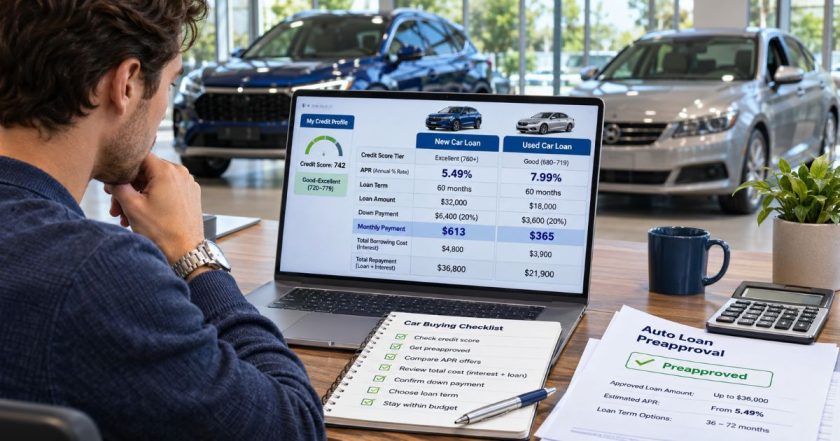

Ford Financing gives eligible car buyers several ways to purchase or lease a Ford through Ford Credit. Current choices include Standard Purchase, Flex Buy, Red Carpet Lease, used-vehicle loans, promotional offers, first-time buyer programs, and commercial vehicle solutions.
The best option is not necessarily the one with the lowest monthly payment. APR, vehicle price, down payment, repayment term, mileage, incentives, credit history, and how long you plan to keep the vehicle all affect the real cost.
This guide explains the major Ford Financing choices available in 2026 and shows what to compare before signing a loan or lease agreement.
For additional planning, use our auto finance calculator, new vs used car interest rates guide, and best auto finance deals guide.
1. What Is Ford Financing?
Ford Financing generally refers to purchase and lease products available through Ford Motor Credit Company, commonly known as Ford Credit.
Ford Credit works with participating dealerships and provides financial products for eligible new, used, and certified used vehicles.
Its main consumer choices currently include:
- Standard Purchase;
- Flex Buy;
- Red Carpet Lease;
- used and certified used vehicle credit;
- first-time buyer assistance;
- and selected promotional programs.
Buyers are not required to assume that a manufacturer-backed offer will always be the cheapest. Banks and credit unions may also provide competitive auto credit.
Current program details can be checked on the official Ford Credit finance-options page.
2. Standard Purchase
Standard Purchase is the traditional ownership option within Ford Financing.

Ford Credit currently lists fixed-rate purchase contracts for qualifying new, used, and certified used vehicles.
Available loan terms
Current Standard Purchase terms can range from 12 to 84 months, depending on approval and vehicle eligibility.
A longer term normally lowers the required monthly payment, but it can increase the total amount of interest paid.
Why buyers choose Standard Purchase
- No contractual mileage limit.
- Vehicle customization is generally allowed.
- Scheduled monthly payments are predictable.
- Equity can build as principal is repaid.
- The customer owns the car after the contract is paid in full.
Be careful with long repayment periods
A seven-year vehicle loan may look affordable because the payment is spread across many months. However, the balance may remain high while the vehicle continues to depreciate.
This can create negative equity, meaning you owe more than the car is worth.
Read our long-term auto loan guide before selecting an unusually long contract.
3. Ford Flex Buy

Flex Buy is another Ford Financing structure offered through Ford Credit.
It is designed for customers who want to own the vehicle but prefer lower payments during the first portion of the contract.
How Flex Buy works
The program generally provides lower scheduled payments for the first 36 months.
Beginning in month 37, the payment increases so the remaining balance can be repaid within the agreed term.
Current terms
Ford currently lists:
- 66-month Flex Buy contracts;
- 75-month Flex Buy contracts.
Who may benefit?
This structure can be useful when a buyer expects income or available monthly cash flow to improve over the next several years.
However, do not focus only on the first three years.
Before signing, confirm that the later scheduled payment will remain manageable within your expected budget.
4. Red Carpet Lease
Red Carpet Lease is Ford Credit’s principal consumer leasing option.

This Ford Financing alternative is designed for drivers who may prefer replacing their vehicle every few years rather than keeping it for the long term.
Lease length
Current Red Carpet Lease terms generally range from 24 to 48 months.
Mileage choices
Ford currently offers multiple annual mileage options.
Selecting the correct mileage allowance is important because driving above the contractual limit can result in additional charges when the vehicle is returned.
Potential benefits
- Potentially lower monthly payment than a comparable purchase contract.
- Several contract lengths.
- Multiple mileage choices.
- GAP protection included in the lease program.
- Access to newer vehicles more frequently.
Lease-end options
Depending on your agreement, you may be able to:
- return the vehicle;
- replace it with another Ford;
- or purchase it where a purchase option applies.
Always check the actual lease agreement for the residual value, purchase option, excess-mileage charge, and vehicle-condition requirements.
5. Used and Certified Used Vehicle Loans
Ford Financing can also be available for eligible used vehicles.
Standard Purchase is not limited to brand-new cars and trucks.
Ford Blue Advantage
Ford Blue Advantage is the company’s certified used-vehicle program.
Qualified vehicles may include inspection standards and warranty benefits depending on certification level.
Special credit offers can sometimes be available on selected certified inventory, but promotions change regularly.
Used-car rates can differ
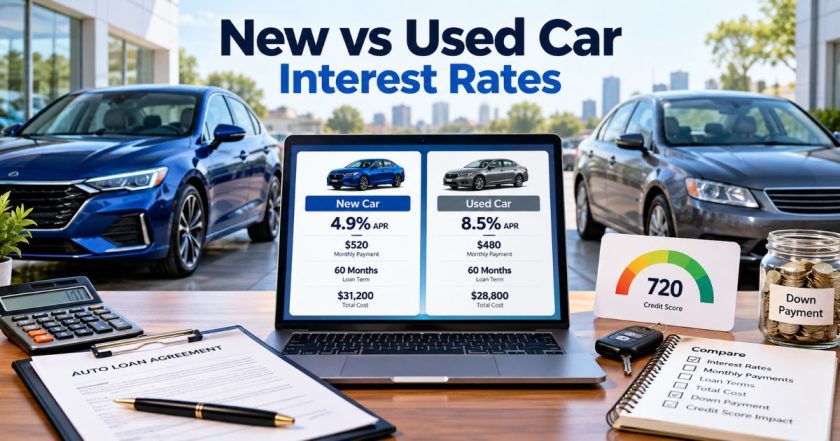
Used vehicles may cost less than new ones, but their loan APR can sometimes be higher.
Compare:
- vehicle price;
- APR;
- amount financed;
- term;
- mileage;
- warranty;
- and expected maintenance.
See our new and used vehicle rate comparison.
6. Ford Financing Offers and Incentives
Promotional Ford Financing can sometimes provide reduced APRs, bonus cash, special lease payments, or other incentives on selected vehicles.

These offers are temporary and can change by vehicle, location, and date.
Why advertised rates vary
Your available offer may depend on:
- model;
- model year;
- trim;
- ZIP code;
- loan term;
- credit profile;
- dealer participation;
- and promotion expiration date.
Do not publish one permanent Ford APR
Manufacturer rates change too frequently for one percentage to remain accurate indefinitely.
Check Ford’s official current offers page when you are ready to buy.
Low APR vs cash incentive
Sometimes a customer must compare a promotional interest rate with an alternative cash incentive.
For example, a rebate plus an outside credit-union loan could produce a lower overall cost than a manufacturer APR offer—or the opposite could be true.
The only reliable method is to calculate both scenarios.
Our auto finance calculator guide can help.
7. First-Time Buyer and Recognition Programs
The Ford Financing ecosystem also includes programs aimed at certain eligible customers.
First-Time Buyer Program
Ford Credit currently promotes a First-Time Buyer Program for consumers entering vehicle credit for the first time.
Approval is still subject to program requirements and underwriting.
Read our first-time auto loan guide if you have limited borrowing history.
Military Recognition
Eligible service members, qualifying veterans, retirees, and certain family members may qualify for Ford’s Military Recognition program.
Reward amounts and eligible vehicles can change, so verify current program rules before purchase.
First Responder Recognition
Eligible police officers, firefighters, EMTs, and other qualifying first responders may have access to separate incentives.
College Student Recognition
Ford also periodically provides benefits for qualifying college students, trade-school students, and recent graduates.
How to Apply for Ford Credit
Customers interested in Ford Financing can begin through Ford’s online credit application or through a participating dealership.
Information that may be required
- Social Security number or qualifying ITIN;
- date of birth;
- address;
- housing status;
- monthly housing payment;
- employment status;
- income;
- and email address.
Approval is not automatic
Submitting an application does not guarantee approval, a particular APR, or a specific amount financed.
The lender reviews the complete application and transaction.
Prequalification vs Full Credit Application
Prequalification can help a buyer understand possible budget ranges before selecting a vehicle.
What prequalification can do
It may provide a preliminary indication of potential credit availability.
What it cannot guarantee
Final approval can still depend on:
- full credit review;
- income verification;
- vehicle selection;
- loan amount;
- down payment;
- and lender underwriting.
Do not treat a preliminary result as a guaranteed contract.
What Credit Score Do You Need?
There is no universal published score that guarantees Ford Financing approval.
A number such as 620 should not be presented as an official minimum for every applicant.
Lenders can consider several aspects of a credit profile, including previous payment history, outstanding debt, available credit, account age, inquiries, and other factors.
See our guide to how credit scores are calculated.
You can also review our highest credit score guide.
What Can Affect Your Loan Offer?
Credit history
A stronger profile can improve access to competitive terms, although it does not guarantee a specific rate.
Vehicle choice
A promotion may apply to one model but not another.
Term length
Different contract lengths can produce different monthly payments and interest costs.
Down payment
More cash down reduces the amount borrowed.
Trade-in equity
Positive equity can reduce your new balance.
Negative equity can increase it.
Current promotions
Manufacturer incentives can materially change the economics of a transaction.
Buying vs Leasing
| Feature | Purchase | Lease |
|---|---|---|
| Ownership | You own after payoff | Lessor owns during contract |
| Mileage | No contractual limit | Mileage allowance applies |
| Customization | Generally allowed | May be restricted |
| Long-Term Goal | Ownership | Temporary vehicle use |
| End of Term | Keep, trade, or sell | Return, replace, or potentially buy |
| Wear Charges | No lease-return standard | Excess wear can create charges |
Buying can make sense when:
- you want to keep the vehicle for many years;
- you drive high annual mileage;
- you want customization freedom;
- or you want an asset after completing payments.
Leasing can make sense when:
- you prefer driving newer vehicles;
- your annual mileage is predictable;
- you are comfortable with return standards;
- and long-term ownership is not important.
How Down Payment Affects Ford Financing
A larger down payment can reduce the amount covered by Ford Financing.
This can lower both the required payment and total interest expense.
Possible benefits
- Smaller principal balance.
- Lower monthly payment.
- Reduced interest expense.
- Lower negative-equity risk.
Do not use all your savings
Putting a very large amount down can be counterproductive if it leaves your household without an emergency fund.
Keep enough savings for insurance deductibles, repairs, medical expenses, and income interruptions.
Our Master Your Money guide covers emergency savings and budgeting.
Monthly Payment vs Total Cost
A small payment does not automatically mean a good deal.
Extending a vehicle loan can lower the monthly amount while increasing total interest.
Compare all major figures
- selling price;
- out-the-door price;
- down payment;
- trade-in value;
- amount financed;
- APR;
- finance charge;
- contract length;
- monthly payment;
- and total payments.
Our finance charge guide explains these numbers in more detail.
Managing a Ford Credit Account

After completing Ford Financing, borrowers can use Ford Credit servicing resources for ongoing account management.
Current support topics include:
- online payments;
- automatic payments;
- account numbers;
- payoff quotes;
- principal-only payments;
- titles;
- lease servicing;
- and financial-hardship support.
Use the official Ford Credit customer support center for current instructions.
Can Ford Credit Defer a Payment?
Ford Credit provides support resources for eligible customers facing financial difficulty.
However, an extension or deferment is not automatically available to every customer.
Available options depend on account status, contract terms, and current servicing policies.
If you expect difficulty making the next payment, contact the servicer before missing the due date.
Can You Refinance a Ford Credit Loan?
A normal Ford Financing contract should not be assumed to include automatic refinancing through Ford Credit.
If your credit improves or market rates fall, you may compare refinancing with another lender.
Compare the following:
- current payoff amount;
- new APR;
- new term;
- new payment;
- fees;
- and total remaining interest.
Our auto refinance guide explains when refinancing may be worthwhile.
Commercial Vehicle Options
Businesses purchasing Ford trucks, vans, or fleet vehicles can explore separate commercial solutions through Ford Pro FinSimple.
Commercial buyers should consider:
- business cash flow;
- vehicle use;
- tax treatment;
- fleet size;
- replacement cycle;
- and total operating cost.
For broader commercial borrowing guidance, see our business loans guide and first-time business loan guide.
Compare Ford Credit With Other Lenders
Before accepting Ford Financing, get at least one outside quote if practical.
A bank or credit union may provide a useful comparison point.
Compare identical scenarios
Use the same:
- vehicle selling price;
- down payment;
- amount borrowed;
- term;
- trade-in;
- and optional products.
Include incentives
If accepting a promotional manufacturer rate changes your eligibility for a cash rebate, calculate both options before choosing.
See our car finance options guide.
Common Mistakes to Avoid
Focusing only on monthly payment
A very long term can make an expensive vehicle appear affordable.
Assuming every promotional APR applies
Advertised rates normally have eligibility requirements.
Ignoring total vehicle price
Financing should never distract you from negotiating and reviewing the actual purchase price.
Underestimating lease mileage
Excess mileage can create additional cost at return.
Ignoring optional products
Adding optional products to the contract increases the amount borrowed.
Rolling negative equity forward
Adding unpaid debt from an old vehicle to a new contract can significantly increase the new balance.
Our car loan early payoff guide explains strategies for reducing an existing balance.
Questions to Ask Before Signing
- What is the out-the-door price?
- What APR am I receiving?
- What amount will be financed?
- What is the contract term?
- What is the monthly payment?
- What is the total finance charge?
- Which incentives are included?
- Am I giving up a rebate?
- Which optional products are included?
- Can I repay early?
- For a lease, what mileage allowance applies?
- What is the excess-mileage fee?
- What are the wear-and-tear rules?
- What options are available at lease-end?
Related Auto Finance Guides
- Auto Finance Calculator
- Car Finance Options
- Top Auto Finance Options
- Best Auto Finance Deals
- Affordable Auto Loans
- New vs Used Car Interest Rates
- First-Time Auto Loan
- Refinance Auto Loan
- 96-Month Auto Loan
- Paying Off a Car Loan Early
- How to Sell a Financed Car
- In-House Car Financing
- CarMax Auto Finance
- CarMax Auto Finance Login
- Exeter Finance
- Capital One Auto Finance
- California Auto Finance
- Fusion Auto Finance
- Charter One Auto Finance
- Nissan Auto Finance
- Finance Charges Explained
- How Credit Scores Are Calculated
- Highest Credit Score Guide
- Master Your Money
Conclusion
Ford Financing gives eligible buyers several ways to purchase or lease a vehicle through Ford Credit.
Standard Purchase provides traditional ownership financing, Flex Buy offers lower initial payments followed by higher payments, and Red Carpet Lease provides a leasing alternative for drivers who prefer changing vehicles more frequently.
Used and certified vehicles may also qualify for credit, while promotional APRs, recognition programs, and other incentives can reduce costs for some customers.
Before choosing Ford Financing, compare the APR, vehicle price, amount borrowed, down payment, repayment term, incentives, optional products, and total cost.
The strongest deal is not simply the smallest monthly payment. It is the option that fits your budget while keeping the overall borrowing cost reasonable.