
Subprime auto loans can help borrowers with weaker or limited credit histories finance a vehicle when prime financing is difficult to obtain. However, getting approved does not automatically mean a particular vehicle or loan is affordable.
Your annual percentage rate, amount financed, loan term, down payment, vehicle value, insurance cost and existing debts can all change the real cost of ownership. For that reason, compare several offers rather than focusing only on the monthly payment.
Before accepting subprime auto loans, calculate the total repayment, review every fee and make sure the vehicle itself fits your household budget. You can also compare our best auto finance deals, affordable auto loans and auto finance calculator guide before applying.
Key Takeaways
- There is no single universal credit-score cutoff for subprime vehicle financing.
- APR and total repayment matter more than monthly payment alone.
- A larger down payment can reduce the amount financed and loan-to-value ratio.
- Comparing multiple lenders may produce substantially different offers.
- Dealer add-ons can increase both principal and interest costs.
- Repossession procedures and borrower rights vary by state.
- Refinancing may become useful if your credit or financial circumstances improve.
1. What Are Subprime Auto Loans?
Subprime auto loans are generally vehicle loans offered to borrowers who do not meet a particular lender’s prime-credit criteria.
The term “subprime” is not based on one legally fixed credit score. Different banks, credit unions, finance companies and dealerships can use different underwriting systems.

Credit score is only one factor
A lender can also consider:
- income;
- employment history;
- existing monthly debt;
- housing expenses;
- recent payment history;
- vehicle age and mileage;
- down payment;
- loan-to-value ratio;
- and the amount requested.
For more background, read our credit score calculation guide and credit score range guide.
Approval is different from affordability
A lender’s approval simply means it is willing to offer credit under specified terms. It does not prove the resulting payment will fit your household comfortably.
Calculate the complete monthly cost of the car, including:
- loan payment;
- insurance;
- fuel;
- maintenance;
- repairs;
- registration;
- parking where applicable;
- and emergency expenses.
Our money-management guide can help you compare the proposed car payment with the rest of your budget.
2. How Subprime Auto Loan Rates Work in 2026
Rates on subprime auto loans vary significantly. There is no single APR that accurately represents every borrower or lender.
Annual percentage rate
The annual percentage rate, or APR, helps show the annualized cost of credit. It incorporates the interest rate and certain finance charges.
The federal Truth in Lending disclosures for an auto loan generally show important figures such as:
- APR;
- finance charge;
- amount financed;
- total of payments;
- and payment schedule.
The CFPB provides additional guidance on different ways to finance a vehicle.
Finance charge
The finance charge expresses borrowing cost in dollars. This can help you see how much the financing itself costs beyond the amount borrowed.
See our finance charge guide for a detailed explanation.
Why your rate may differ
A lender may consider:
- credit history;
- income;
- debt-to-income ratio;
- vehicle age;
- new versus used status;
- loan term;
- down payment;
- loan-to-value ratio;
- and lender-specific underwriting.

Compare the same transaction
| Feature | Offer A | Offer B |
|---|---|---|
| Amount Financed | $20,000 | $20,000 |
| APR | 12% | 16% |
| Term | 48 months | 72 months |
| Monthly Payment | Higher | Potentially lower |
| Total Interest | Lower | Higher |
A longer term can make the monthly payment look easier while substantially increasing total borrowing costs. Our long-term auto loan guide explains this risk in more detail.
3. Check Your Credit Before Applying
Review your credit before shopping for subprime auto loans. Knowing what lenders are likely to see helps you identify errors and prepare realistic expectations.

Review your credit reports
You can obtain your official reports through AnnualCreditReport.com.
Look for:
- accounts that do not belong to you;
- incorrect late payments;
- wrong balances;
- duplicate accounts;
- and outdated information that should no longer appear.
No universal minimum score exists
A particular score does not guarantee approval or rejection across every auto lender.
A lender may weigh your full credit history, income, debts and vehicle transaction differently from another lender.
Estimate your debt burden
Before adding a new car payment, list your existing obligations, including:
- housing;
- credit cards;
- student loans;
- personal loans;
- existing vehicle debt;
- and other required payments.
If you are also comparing unsecured borrowing, see our personal loan rates guide and secured vs unsecured loan comparison.
4. Understand Down Payments and Loan-to-Value Ratio
The loan-to-value ratio, or LTV, compares how much you borrow with the vehicle’s value.
What can increase LTV?
- Small down payment.
- Dealer add-ons.
- Taxes and fees financed into the loan.
- Negative equity from a previous vehicle.
- Paying substantially above market value.
Why a down payment can help
A larger down payment reduces the amount financed and can potentially lower:
- monthly payment;
- interest expense;
- LTV;
- and negative-equity risk.
Keep emergency savings
Do not put every available dollar into the car simply to increase the down payment. Keep cash available for insurance deductibles, repairs and unexpected household expenses.
If this is your first vehicle loan, our first-time auto loan guide provides a useful preparation checklist.
5. Compare Several Lenders Before Buying
Shopping among lenders can be especially important with subprime auto loans because pricing can differ materially.
Credit unions
Credit unions may offer competitive auto financing to eligible members.
Banks
A bank preapproval can provide a useful benchmark before you visit a dealership.
Online lenders
Online lenders can provide another source of offers, including options designed for different credit profiles.
Dealer-arranged financing
Dealers can submit applications to finance companies on your behalf, but the dealer offer is not automatically the lowest-cost option.
The CFPB recommends comparing lenders before purchasing and explains that dealer-arranged financing may include an interest-rate markup. See the CFPB’s auto-loan rate guidance.
You can also compare our car finance options guide and top auto finance overview.
What happens to your credit when you shop?
A formal application generally causes a hard inquiry.
However, auto-loan rate shopping is treated differently from repeatedly applying for unrelated credit. The CFPB states that multiple auto-loan inquiries made within roughly 14 to 45 days generally count as one inquiry for scoring purposes.
See the official CFPB auto-loan shopping guidance.
Ask about prequalification
Some lenders allow consumers to check possible terms using a soft inquiry before making a formal application.
Always confirm whether the step you are taking uses a soft or hard inquiry.
6. Understand Buy Here Pay Here Financing
Buy here pay here dealerships may serve consumers who have difficulty obtaining traditional auto credit.

How the structure can differ
In a common buy here pay here structure, the dealership itself extends credit rather than arranging a conventional bank loan.
However, structures vary. Confirm who is actually named as creditor and who services the account.
Questions to ask before signing
- Who is the creditor?
- What is the APR?
- What is the amount financed?
- What is the total of payments?
- How often are payments due?
- Where are payments made?
- Is payment history reported to credit bureaus?
- What constitutes default?
- What repossession rules apply?
For additional information, read our in-house car financing guide.
Do not assume the loan builds credit
Reporting practices vary by creditor. Ask whether positive and negative information is reported and to which consumer reporting companies.
7. Calculate the True Cost Before You Sign
Evaluate subprime auto loans from the vehicle’s out-the-door price rather than starting with a monthly-payment target.
Start with the total vehicle price
Include:
- negotiated vehicle price;
- sales tax;
- registration;
- title charges;
- dealer documentation fees;
- and products you intentionally purchase.
Subtract cash and positive trade equity
Your cash down payment and positive equity reduce the amount financed.
Watch negative equity
If you owe more on your old car than its trade-in value, the difference may be rolled into the new financing.
This increases your balance before you even begin paying for the replacement vehicle.
Read our selling a financed car guide before trading a vehicle with an existing loan.
Compare term and repayment
| Loan Structure | Monthly Payment | Total Interest | Negative-Equity Risk |
|---|---|---|---|
| Shorter Term | Higher | Generally lower | Usually lower |
| Longer Term | Lower | Generally higher | Usually higher |
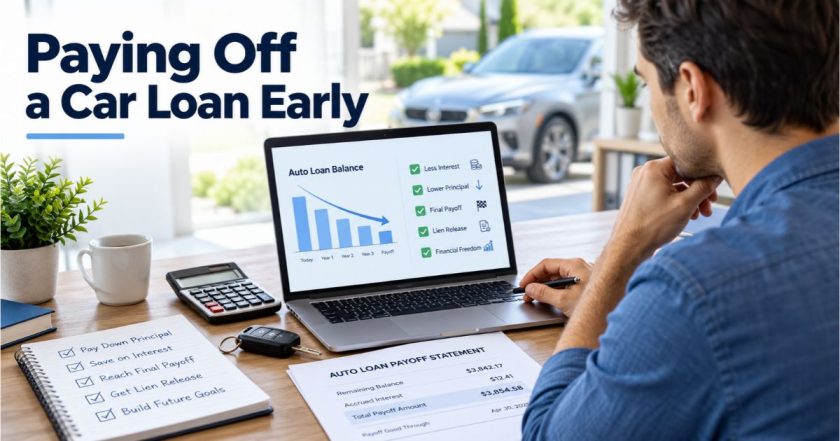
For payoff planning, see our paying off a car loan early guide.
Dealer Add-Ons Can Increase the Amount Financed
Products offered in the dealership finance office can substantially change the final loan balance.
Examples of add-ons
- GAP products;
- service contracts;
- extended warranties;
- credit insurance;
- tire and wheel plans;
- paint or fabric protection;
- and theft-protection products.
The FTC explains that dealer add-ons cost extra, many are optional, and buyers should request the individual price before agreeing to them. See the FTC’s car financing guidance.
Financing an add-on increases its real cost
If a $1,500 product is added to the loan, you may also pay interest on that $1,500 throughout the term.
Before buying an add-on, ask:
- Is it required?
- What is the cash price?
- What does it cover?
- What exclusions apply?
- Can it be cancelled?
- Will it be financed?
Consider a Cosigner Carefully
A lender may permit a cosigner or joint borrower when the primary applicant has weaker credit.
No universal cosigner score exists
Do not assume every cosigner must meet one specific credit-score threshold. Individual lenders set their own requirements.
The cosigner can owe the full debt
A cosigner becomes legally responsible for repayment if the borrower fails to meet the contractual obligations.
Missed payments can also affect both consumers’ credit histories when reported.
Discuss the risks before signing
Both people should understand:
- loan amount;
- APR;
- monthly payment;
- term;
- late-payment consequences;
- and responsibility after default.
Negotiate the Vehicle Price Before the Monthly Payment
Do not negotiate only around a target monthly payment.
A dealer can often reduce a monthly number simply by extending the loan term.
Negotiate out-the-door price first
Determine the actual vehicle price before discussing how that purchase will be financed.
Then compare identical loan scenarios
Use the same:
- vehicle price;
- down payment;
- trade-in;
- amount financed;
- and term.
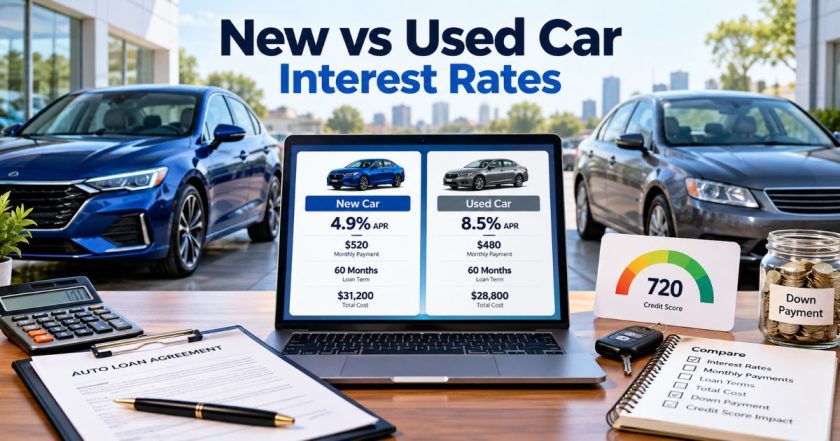
Our new vs used car interest-rate guide can help you compare financing structures.
Main Risks of Subprime Auto Loans
Higher-risk borrowing can create several challenges that deserve careful planning.
High borrowing cost
A high APR can add thousands of dollars to the cost of a vehicle.
Negative equity
Long loan terms, small down payments and rolled-in prior debt can keep the loan balance above the vehicle’s market value.
Older vehicles with long repayment terms
A used vehicle may require significant repairs while the borrower still owes years of payments.
Financed optional products
Add-ons increase the amount financed and therefore may increase interest charges.
Insurance requirements
Auto finance contracts generally require borrowers to maintain specified insurance coverage while the lender has a lien.
Get an insurance quote before choosing the vehicle so the premium does not unexpectedly break your budget.
Vehicle Repossession Rules
Vehicle repossession rules depend on state law and your contract.
Repossession may occur quickly
The CFPB explains that in many states a lender may repossess a vehicle after a missed payment without advance warning or a court order, while other states require additional notice or provide time to cure the default.
See the official CFPB repossession guidance.
You may still owe money after repossession
If the lender sells the repossessed vehicle for less than your outstanding debt plus permitted expenses, you may still owe a deficiency balance.
If the sale produces a surplus after the applicable debt and expenses are satisfied, you may be entitled to the excess.
State protections differ
Depending on state law, you may have rights involving:
- notice;
- cure;
- redemption;
- sale procedures;
- personal property left in the vehicle;
- and deficiency collection.
What to Do If You May Miss a Payment
Contact the lender or servicer as early as possible if the payment is becoming unaffordable.
Ask about account-specific options
Depending on the creditor and your circumstances, possible options may include:
- payment extension;
- temporary hardship assistance;
- due-date adjustment;
- voluntary sale;
- trade-in;
- or another servicing arrangement.
None of these options is guaranteed.
Get agreements in writing
Keep copies of emails, letters and any modified payment agreement.
Refinancing an Auto Loan
Refinancing an auto loan may become worth comparing if your financial profile improves after the original purchase.
Possible reasons to refinance
- Your credit score improved.
- Your debt declined.
- Your income became more stable.
- Market rates changed.
- Your original APR was particularly high.
Compare total remaining cost
Do not refinance solely because the new payment is lower.
Compare:
- current payoff balance;
- new APR;
- new term;
- fees;
- monthly payment;
- and total remaining repayment.
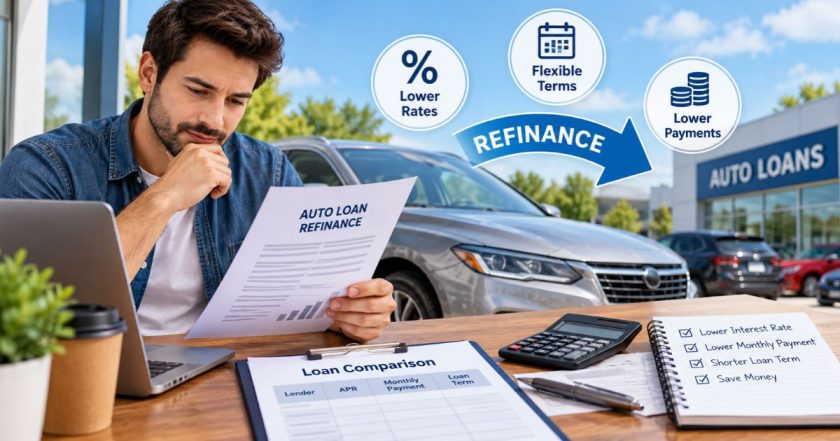
See our refinance auto loan guide.
Managing Your Loan After Purchase
Confirm the first payment date
Check the lender’s welcome letter, agreement or online portal.
Set up reliable payments
Automatic payment can help prevent accidental late payments, but continue checking each statement.
Monitor account activity
Verify that payments are posted correctly and contact the servicer promptly if something appears wrong.
Track credit reporting
Review your reports periodically and dispute inaccurate loan information when necessary.
Compare payoff balance with vehicle value
This helps determine whether you have positive or negative equity.
Maintain a repair fund
A car payment does not eliminate maintenance and repair costs.
Compare Different Auto Finance Providers
Researching different finance companies can help you understand how servicing, underwriting and loan products differ.
Relevant Best Finance Live guides include:
- CarMax Auto Finance
- CarMax Auto Finance Login
- Exeter Finance
- Capital One Auto Finance
- California Auto Finance
- Fusion Auto Finance
- Ford Financing
- Nissan Auto Finance
- Charter One Auto Finance
Questions to Ask Before Signing
- What is the vehicle’s out-the-door price?
- What is the APR?
- What is the finance charge?
- What is the amount financed?
- What down payment is required?
- How long is the repayment term?
- What is the monthly payment?
- What is the total of payments?
- Which fees are mandatory?
- Which products are optional?
- Is negative equity being rolled into the loan?
- Who is the creditor?
- Who services the loan?
- Does the creditor report payments?
- What happens after a missed payment?
- What constitutes default?
- What repossession provisions apply?
- Can I pay off the loan early?
- Are any early-payoff charges permitted?
- Can I receive copies of every document before leaving?
More Best Finance Live Resources
- Best Auto Finance Deals
- Affordable Auto Loans
- Auto Finance Calculator
- Car Finance Options
- Top Auto Finance Options
- New vs Used Car Interest Rates
- First-Time Auto Loan
- 96-Month Auto Loan
- Paying Off a Car Loan Early
- How to Sell a Financed Car
- In-House Car Financing
- Refinancing an Auto Loan
- Finance Charges Explained
- How Credit Scores Are Calculated
- Highest Credit Score Guide
- Master Your Money
- Personal Loans for Bad Credit
- Secured Personal Loans
- Secured vs Unsecured Personal Loans
- Complete Personal Finance Guide
Conclusion
Subprime auto loans can make vehicle financing available when prime lending is difficult to obtain, but higher borrowing costs make careful comparison especially important.
Review your credit reports and household budget before applying. Then compare multiple lenders using the same vehicle price, down payment, term and amount financed.
Pay close attention to APR, finance charge, loan-to-value ratio, dealer add-ons, negative equity and total repayment. A lower monthly payment does not necessarily mean a better loan.
Also understand the consequences of missed payments. Repossession procedures vary by state, and losing the vehicle may not eliminate the remaining debt.
If your credit and financial circumstances improve later, refinancing may provide an opportunity to reduce your borrowing cost. Compare the full new loan—not just its monthly payment—before replacing existing financing.