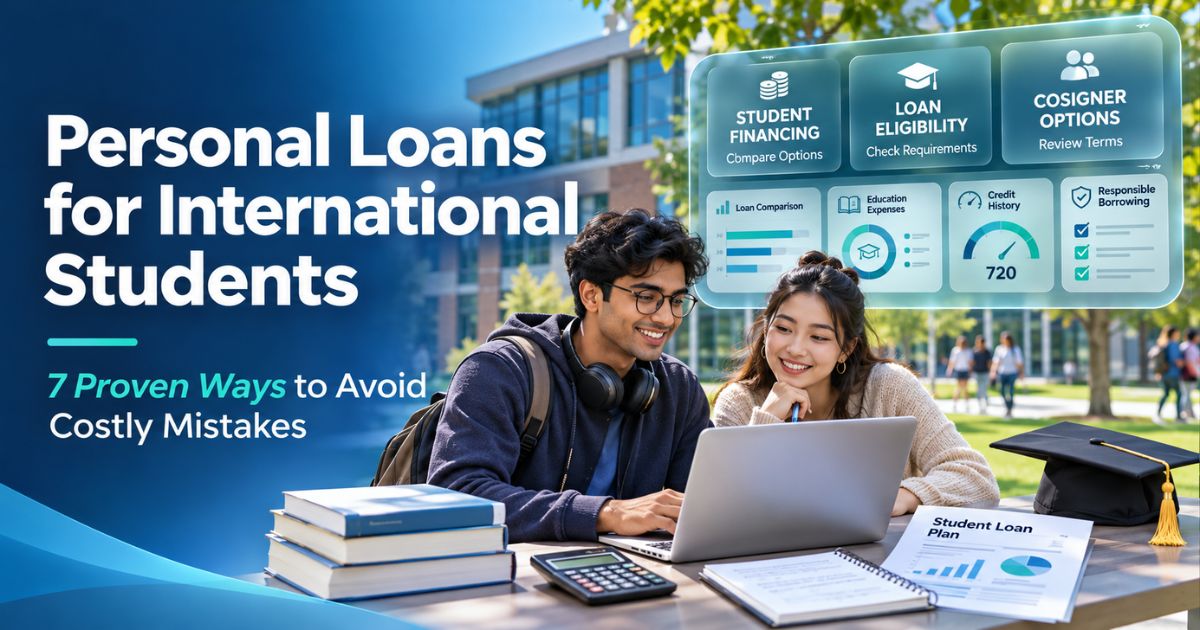
Before considering personal loans for international students, it is important to understand that general-purpose personal loans and private education loans have different eligibility requirements, permitted uses, disbursement procedures, and repayment terms.
Having an F-1 visa or admission to an American university does not guarantee loan approval. Each lender determines whether it accepts international applicants and which documents, credit qualifications, and income sources are required.
This guide explains seven practical steps for comparing financing options, understanding cosigner responsibilities, reviewing immigration-related requirements, evaluating borrowing costs, and preparing a sustainable repayment plan.
For related financial guidance, explore our personal finance guide, personal loan credit score guide, and personal loan fees comparison.
Key Takeaways
- Not every U.S. personal loan lender accepts international students or temporary visa holders.
- International student loan eligibility depends on lender-specific requirements.
- Many traditional private education loans require a creditworthy cosigner, although some specialized programs do not.
- An F-1 visa alone does not qualify a student for federal education loans.
- Private student loans and unsecured personal loans should be compared separately.
- Interest rates, origination fees, and repayment schedules can significantly affect total borrowing costs.
- Scholarships, institutional assistance, and school payment plans may reduce the need to borrow.
- Loan obligations generally continue after graduation or departure from the United States unless the contract provides otherwise.
1. Can You Get Personal Loans for International Students in the U.S.?
Obtaining personal loans for international students is possible through certain financial institutions, but eligibility varies considerably.

Why international applicants face additional requirements
Many personal loan providers rely on U.S. credit reports, income verification, and residency information to assess repayment risk.
Students who recently arrived in the country may not have a credit history with the major U.S. credit bureaus.
Some lenders also restrict personal loan products to U.S. citizens, permanent residents, or borrowers meeting particular residency requirements.
Does an F-1 visa make you eligible?
An F-1 visa establishes a student’s immigration classification for authorized academic study. It does not establish creditworthiness or guarantee access to lending products.
Lenders may request a valid passport, Form I-20, proof of enrollment, residency documents, and evidence of authorized income.
Before applying, confirm whether the financial institution accepts your particular visa classification.
Is U.S. credit history mandatory?
Not for every financing product.
Some specialized education lenders evaluate academic programs, future earning potential, school eligibility, or other financial information instead of requiring a conventional U.S. credit score.
However, many general-purpose personal loan providers expect an established credit record or a qualified joint applicant.
What determines approval?
| Eligibility Factor | What Lenders May Review |
|---|---|
| Immigration Status | Accepted visa and residency documents |
| Enrollment | Eligible school and academic program |
| Credit History | Existing repayment information |
| Income | Documented, qualifying earnings |
| Cosigner | Credit and income qualifications |
| Loan Amount | Borrowing need and repayment capacity |
Understand lender restrictions
A financial institution may approve international students for certain education loans while excluding the same applicants from its general personal loan program.
Before researching personal loans for international students, identify the product you actually need and confirm whether the lender permits the intended expense.
2. Compare Personal Loans and Private Student Loans
One of the most important decisions is choosing the appropriate type of financing.
A general-purpose personal loan and a private education loan can have different legal structures, repayment obligations, and borrower protections.

General-purpose unsecured personal loans
An unsecured personal loan does not require a specific asset as collateral.
Depending on the contract, loan proceeds may be available for permitted general expenses such as certain household purchases or debt consolidation.
However, some lenders prohibit education-related use, including tuition payments.
Never assume that an ordinary personal loan can legally be used for school expenses without checking the loan agreement.
Private education loans
Private education loans are designed to finance qualifying educational expenses.
Eligible costs may include tuition, required fees, books, equipment, and certain living expenses within the school’s approved cost of attendance.
School-certified loans
School certification usually involves confirming enrollment, eligible educational expenses, and the amount of financing permitted under the lender’s requirements.
The lender typically coordinates disbursement with the educational institution.
Cosigned private student loans
Some private lenders require international students to apply with an eligible cosigner.
The cosigner’s income and credit profile can influence eligibility and pricing, although favorable terms are never guaranteed.
Cosigner-free international student loans
Some specialized programs accept eligible international students without a U.S. cosigner.
These products may consider the educational institution, degree program, academic progress, anticipated earnings, and other information.
Availability differs by school, nationality, residency, and lender policy.
Comparison of loan types
| Feature | Personal Loan | Private Education Loan |
|---|---|---|
| Typical Purpose | Permitted general expenses | Eligible education expenses |
| School Certification | Usually not required | Often required |
| Disbursement | Often to borrower | Typically through school |
| Repayment Start | Often soon after funding | Varies by product |
| Cosigner | Depends on lender | Often required |
| Deferment | Often limited | May be available |
These are general product characteristics rather than universal rules.
Which type should you consider first?
For educational expenses, begin with scholarships, institutional assistance, and education-specific financing.
General-purpose personal loans should be considered only when the lender accepts your status, permits the planned use, and offers affordable terms.
When evaluating personal loans for international students, compare products based on eligibility and total cost rather than assuming every loan serves the same purpose.
3. Check Visa, Enrollment, and Income Requirements
International student loan eligibility can depend heavily on immigration documentation and enrollment status.

Verify accepted visa classifications
Some lenders accept specific nonimmigrant classifications, while others do not offer financing to temporary visa holders.
Eligibility for F-1, J-1, M-1, or other classifications should be confirmed directly with the financial institution.
Check enrollment requirements
Education-focused lenders may require enrollment at a participating or otherwise eligible university.
Some products are restricted to graduate students, particular degree programs, or approved fields of study.
Confirm income requirements
Many loan providers request evidence of repayment capacity.
Examples of acceptable documents may include authorized employment records, bank statements, pay stubs, or other financial documentation.
Income from unlawful or unauthorized employment should not be treated as an acceptable borrowing strategy.
Understand F-1 employment restrictions
F-1 students generally face restrictions on employment while school is in session.
Ordinary qualifying on-campus employment is generally limited to 20 hours per week during academic sessions, with exceptions in certain circumstances.
Off-campus employment may require specific authorization. CPT, OPT, economic hardship employment, and other categories have distinct rules.
Consult your designated school official before undertaking employment or relying on anticipated earnings.
Do not assume future income guarantees approval
Some specialized student financing programs may consider future earning potential.
Traditional personal loan lenders may place more weight on verified current income and repayment capacity.
When exploring personal loans for international students, ensure your application accurately reflects your current legal status and finances.
4. Review Your U.S. Credit Profile
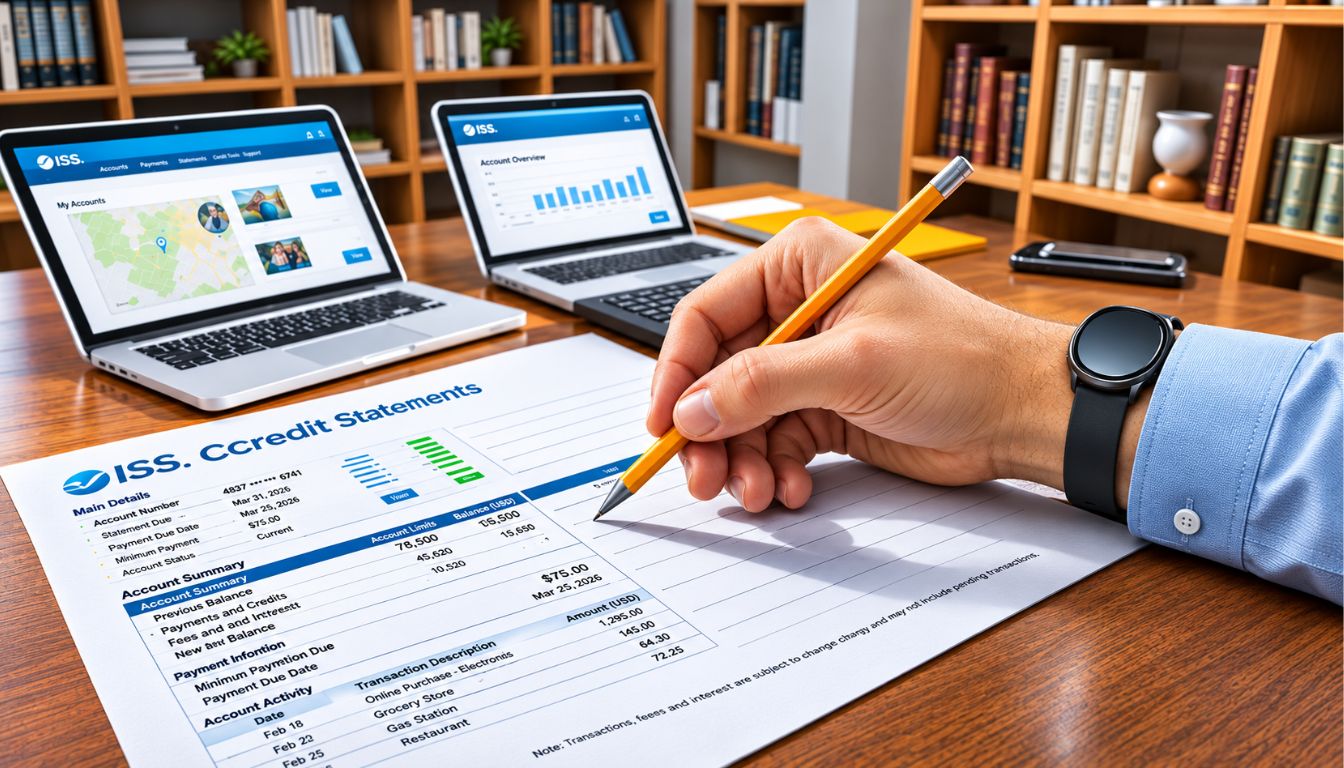
International students may have limited credit history because they have not previously borrowed from U.S. financial institutions.
That does not automatically mean they have poor credit; a missing credit record is different from a history of missed payments.
Check whether you have a credit file
The three major nationwide credit reporting companies are Equifax, Experian, and TransUnion.
You may develop a credit record through financial products that report account activity to these companies.
However, simply opening a checking account or paying ordinary utility bills does not guarantee a conventional credit score.
Understand thin credit files
A thin file contains limited credit account information.
Lenders may find it harder to assess repayment patterns when the applicant has little reported borrowing history.
Review credit report accuracy
When you have a credit report, check for unfamiliar accounts, incorrect balances, or inaccurate payment information.
Genuine errors should be disputed through the appropriate reporting procedures.
Consider responsible credit-building strategies
Depending on eligibility, possible strategies include:
- Using a secured credit card that reports activity.
- Making required payments on time.
- Keeping revolving balances manageable.
- Avoiding unnecessary credit applications.
- Reviewing account statements regularly.
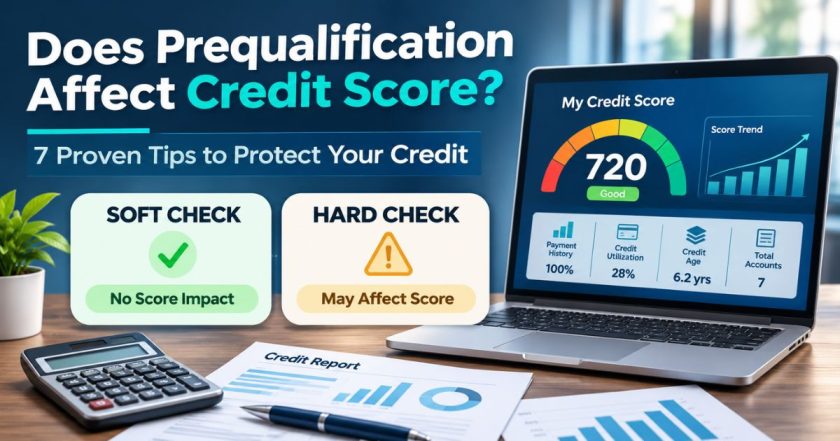
Soft inquiries versus hard inquiries
Checking your own credit report does not reduce your score.
Some lenders also offer prequalification through a soft inquiry. However, a formal application may generate a hard inquiry.
Ask the lender which type of credit check it will perform before submitting an application.
Why credit building takes time
Credit scoring systems generally need sufficient eligible account history before producing certain scores.
No legitimate company can guarantee a specific score increase within a particular number of days.
Applicants considering personal loans for international students should evaluate credit-building opportunities without taking on unnecessary debt simply to create a credit history.
See our credit scoring guide, credit improvement timeline, and prequalification guide.
5. Decide Whether a Cosigner Is Necessary
A qualified cosigner may improve financing access for an international student who has insufficient U.S. credit history or income.
What does a cosigner do?
A cosigner agrees to take legal responsibility for repaying the debt if the primary borrower does not pay according to the loan agreement.
The lender may consider the cosigner’s credit history, income, and debt obligations.
Who can qualify as a cosigner?
Requirements vary. Some lenders require a U.S. citizen or permanent resident who satisfies credit and income standards.
Other providers may impose additional residency, relationship, or underwriting conditions.
Can a cosigner improve interest rates?
A creditworthy cosigner may help an applicant qualify for a lower APR, depending on the lender’s pricing policies.
However, cosigning does not guarantee approval or favorable financing.
Important responsibilities
Cosigners should understand that:
- They may be required to repay the entire outstanding debt.
- Missed payments can affect their credit reports.
- Loan obligations may affect their future borrowing capacity.
- Collection activity can involve the cosigner.
- Release from responsibility is not automatic.
Cosigner release policies
Some lenders provide a procedure for requesting cosigner release after specified conditions are satisfied.
Others do not offer this feature.
Ask about payment history requirements, income verification, credit review, and possible restrictions.
Should you choose cosigner-free financing?
Compare the available APR, total loan cost, repayment flexibility, and eligibility requirements.
When reviewing personal loans for international students, the absence of a cosigner requirement should not be the only consideration.
6. Gather Documents Before Applying
Preparing an accurate application package can reduce avoidable delays.
Document requirements depend on whether you are applying for a general-purpose loan or a specialized education product.
Identity documents
A lender may request your passport, photo identification, residential address, and relevant immigration documentation.
Academic records
Education lenders may require an enrollment letter, Form I-20 or DS-2019 where applicable, tuition information, and an estimate of educational expenses.
Financial records
Depending on underwriting requirements, documents may include bank statements, pay stubs, employment verification, or tax records.
Cosigner documentation
If a cosigner is required, the lender will typically evaluate the cosigner’s identity, income, creditworthiness, and other relevant information.
Common application checklist
| Document | Why It May Be Needed |
|---|---|
| Passport | Identity verification |
| Visa and Status Documents | Eligibility assessment |
| Form I-20 or DS-2019 | Academic immigration records |
| Enrollment Verification | Confirm educational program |
| Bank Statements | Financial assessment |
| Income Evidence | Repayment capacity |
| Cosigner Information | Joint credit evaluation |
Protect sensitive information
Submit documents only through verified lender channels.
Be cautious of companies requesting account passwords, unexplained payments, or documents unrelated to the application.
For personal loans for international students, accurate documentation and legitimate lender verification are essential.
7. Compare APR, Fees, and Repayment Terms
Loan affordability depends on more than whether a lender approves your application.
Before accepting financing, calculate the monthly obligation and total repayment cost.
Understand annual percentage rate
APR generally represents the annualized cost of borrowing, incorporating interest and certain finance charges.
It helps borrowers compare different credit offers using a more consistent measure.
Fixed and variable interest rates
A fixed interest rate generally remains constant during the applicable fixed-rate period.
A variable interest rate can change under the loan’s contract, potentially increasing or decreasing future borrowing costs.
Understand origination fees
Some lenders charge origination fees or other permitted loan charges.
For example, a $10,000 loan with a 5% origination fee deducted upfront may provide only $9,500 in available funds while leaving the borrower responsible for the contractual principal and interest.
Illustrative personal loan comparison
Assume a $10,000 fixed-rate loan repaid over 36 months, with no additional fees and monthly amortization.
| Interest Rate | Approx. Monthly Payment | Approx. Total Interest |
|---|---|---|
| 8% | $313.36 | $1,281 |
| 12% | $332.14 | $1,957 |
| 18% | $361.52 | $3,015 |
These are hypothetical examples, not actual available lender offers. Figures are rounded and exclude additional charges.
Grace periods and deferment
Some private education loans offer in-school payment options, deferment, or post-enrollment grace periods.
Ordinary personal loans often require payments shortly after disbursement.
Do not assume that every student financing product provides the same grace period or repayment schedule.
Understand interest accrual
Interest may accumulate while payments are deferred, depending on the loan agreement.
Unpaid interest can increase overall borrowing costs and may be capitalized under certain contractual terms.
Compare at least a few eligible options
Ask for written disclosures showing:
- APR and interest rate type.
- Principal amount.
- Loan origination charges.
- Monthly payment.
- Repayment start date.
- Loan maturity date.
- Deferment and hardship provisions.
- Prepayment conditions.
- Cosigner obligations.
- Total repayment.
The Consumer Financial Protection Bureau’s student loan comparison guidance explains why borrowers should compare interest rates, repayment flexibility, and cosigner responsibilities before choosing private financing.
When comparing personal loans for international students, focus on sustainable repayment instead of the lowest advertised monthly installment.
Understand Federal Student Aid Eligibility
Federal student aid operates under different eligibility rules from private lending.
Are F-1 students eligible for federal student loans?
Most students holding ordinary F-1 nonimmigrant status are not eligible for U.S. federal student aid based on that status alone.
Federal eligibility generally requires qualifying citizenship or eligible noncitizen status, together with other program requirements.
What about other noncitizens?
Certain lawful permanent residents and other qualifying noncitizens may be eligible for federal aid if they satisfy applicable conditions.
Students should not assume that all noncitizens are either automatically eligible or automatically ineligible.
Verify your actual immigration classification
Read the Federal Student Aid Handbook’s citizenship and eligible noncitizen guidance and consult your school’s financial aid office for individual eligibility questions.
Do not confuse institutional aid with federal aid
An international student who is ineligible for federal loans may still qualify for scholarships, university grants, tuition assistance, or certain privately funded education programs.
Each funding source has its own eligibility criteria.
Plan for Repayment After Graduation
Repayment planning should begin before you accept financing, not after graduation.
Confirm the first payment date
Ask whether your loan requires immediate payments, interest-only payments while enrolled, or payments after an approved deferment period.
Prepare for changes in employment
Graduating does not guarantee a U.S. job offer or continued work authorization.
Build a repayment plan that can withstand delays in employment or lower-than-expected earnings.
Understand visa-related contractual provisions
Some lenders may impose requirements concerning address changes, immigration status, or residency.
Review the specific agreement rather than assuming every loan becomes immediately due when a visa expires.
Payments from outside the United States
Loan obligations generally continue while a borrower lives abroad unless the contract states otherwise.
Confirm accepted international payment methods, banking requirements, conversion costs, and account servicing procedures.
Contact your lender before missing payments
If repayment becomes difficult, contact the loan servicer promptly.
Ask about hardship assistance, deferment eligibility, due-date changes, or other contractual options.
For borrowers considering personal loans for international students, repayment feasibility after a possible move abroad deserves particular attention.
Lower-Cost Alternatives to Borrowing
Taking out a loan should not automatically be the first response to an educational funding gap.
University scholarships
Many universities offer merit-based or department-specific scholarships to eligible international students.
Availability and application deadlines vary.
Institutional grants
Some educational institutions provide need-based or other assistance for eligible international applicants.
Contact the financial aid office to learn which programs support your degree and enrollment status.
Tuition payment plans
Some universities allow students to distribute tuition payments across several installments.
These plans may avoid loan interest but can still include enrollment or administrative fees.
Authorized campus employment
Eligible international students may earn income through authorized employment, subject to visa restrictions and school requirements.
Confirm employment permission with your designated school official before starting work.
Family or sponsor assistance
Where available, financial support from family members or documented sponsors may reduce reliance on expensive credit.
Consider reducing educational expenses
Research institutional housing options, approved meal plans, textbook alternatives, and other legitimate cost-saving opportunities.
Lowering expenses can reduce the amount needed from personal loans for international students or specialized education financing.
Common International Student Loan Mistakes
Assuming an F-1 visa guarantees eligibility
Private lenders establish their own immigration and credit eligibility requirements.
Confusing personal loans with student loans
Loan purpose restrictions and repayment benefits can differ substantially.
Overestimating future income
Projected earnings after graduation are uncertain and should not replace a realistic repayment plan.
Ignoring cosigner liability
A cosigner may be legally responsible for the full debt if the primary borrower fails to pay.
Choosing by monthly payment alone
Longer repayment periods may produce smaller installments but higher total interest costs.
Assuming deferment is interest-free
Some loans continue accumulating interest during periods when payments are postponed.
Overlooking immigration-related conditions
Employment authorization, residence changes, and enrollment status can affect a student’s finances and sometimes relevant contract requirements.
Applying to unverified lenders
Be cautious of guaranteed-approval promises, unexplained advance payments, misleading APR advertisements, and pressure to provide sensitive account information.
These mistakes can make personal loans for international students more expensive or unsuitable than expected.
Seven-Step International Student Financing Checklist
- Identify the funding need: Calculate tuition, approved living expenses, and existing resources.
- Explore scholarships first: Contact your university about grants, assistantships, and tuition assistance.
- Verify eligibility: Confirm that lenders accept your visa, academic program, and residency documentation.
- Review cosigner requirements: Understand legal responsibility and available cosigner-free alternatives.
- Compare borrowing costs: Evaluate APR, origination fees, repayment length, and total repayment.
- Read the agreement: Verify permitted uses, funding procedures, deferment provisions, and payment dates.
- Prepare for repayment: Establish a realistic budget that accounts for possible changes in employment or location.
Related Best Finance Live Guides
- Minimum Credit Score for a Personal Loan
- Personal Loans With No Origination Fee
- 650 Credit Score Personal Loans
- Does Prequalification Affect Credit Score?
- How Credit Scores Are Calculated
- How Long to Raise Your Credit Score
- Highest Credit Score Guide
- Finance Charges Explained
- Debt Consolidation With Bad Credit
- Complete Personal Finance Guide
- Master Your Money
- Top Financial Tips
- First-Time Business Loans
Conclusion
Personal loans for international students may provide financing opportunities for eligible borrowers in the United States, but they are not suitable for everyone.
Approval depends on lender policies, immigration documentation, income, creditworthiness, and sometimes a qualified cosigner.
Before selecting a loan, distinguish between general-purpose personal borrowing and school-certified education financing. These products can differ significantly in permitted uses, repayment schedules, and borrower protections.
Prioritize scholarships, institutional funding, and other lower-cost resources where available.
If borrowing remains necessary, compare APR, fees, total repayment costs, and the consequences of missed payments or changes in residency.
Ultimately, choosing personal loans for international students responsibly means finding financing that supports your education without creating an unmanageable financial obligation after graduation.