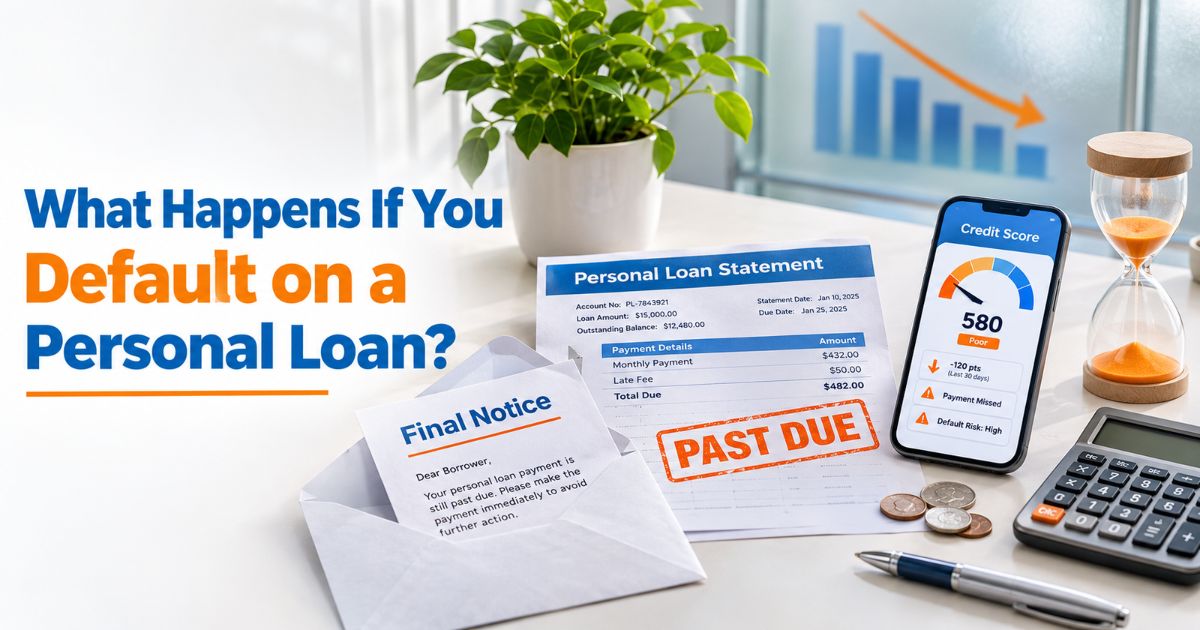
Understanding what happens if you default on a personal loan matters because delinquency and default are not always the same event. A payment can be late before the creditor considers the agreement in default. A charge-off also does not automatically cancel the money owed.
This U.S.-focused guide explains seven important risks and practical responses. For basic financial planning, see our money management guide and personal loan fundamentals.
Key Takeaways
- A missed payment can create fees before a formal default occurs.
- Negative credit reporting often begins after a payment is at least 30 days late, depending on reporting practices.
- Charge-off does not mean debt forgiveness.
- Third-party collectors are subject to federal and sometimes stronger state protections.
- A collection lawsuit requires attention even if the balance is disputed or very old.
- Ordinary unsecured creditors generally need a judgment or another valid legal basis before garnishing wages.
- Contacting the lender early and obtaining changes in writing may reduce harm.
1. What Happens If You Default on a Personal Loan? Understand the Timeline
When asking what happens if you default on a personal loan, start with the due date and the default provision in your contract. A payment can be delinquent immediately after the deadline, but the lender may have a separate grace period for assessing fees.

For context on payment obligations, see our personal loan approval and repayment guide.
When is a payment delinquent?
Delinquency generally means a scheduled payment has not been received as required. Your agreement may specify a grace period before a late fee is charged. A grace period does not necessarily mean the due date has changed.
To understand what happens if you default on a personal loan, separate the missed due date from any subsequent formal default notice.
Can one missed installment trigger default?
Some contracts permit default after a single missed obligation; others provide additional notices or cure periods. Do not assume every lender waits 90 or 180 days. Read acceleration language carefully because it may allow a lender to demand the remaining balance after a qualifying default.
Illustrative delinquency timeline
| Stage | Possible Development | Practical Response |
|---|---|---|
| Due date missed | Reminder or contractual late status | Check statement and contact lender |
| First several weeks | Late fee or interest accrual | Ask about a cure or hardship arrangement |
| 30+ days overdue | Potential negative credit reporting | Check payment status and credit files |
| Prolonged delinquency | Acceleration, collections or charge-off possible | Request written accounting and assistance |
| Later collection stage | Collector contacts or possible lawsuit | Verify debt; respond to court papers |
There is no single universal sequence. To understand what happens if you default on a personal loan, compare the timeline above with your specific loan documents. Our personal loan rate guide and loan fee comparison explain additional contract costs.
What to do during the first week
Confirm the missed amount, due date, and whether an automatic debit failed. Contact the lender using its verified phone number, explain what you can genuinely afford, and request a written breakdown of catch-up options. Do not assume a partial payment stops late reporting unless the lender confirms how it will be applied.
If you are trying to establish what happens if you default on a personal loan, request a dated statement before assuming every billed fee is authorized.
2. Understand Late Fees, Interest and Acceleration
Borrowing costs can increase while payments remain unpaid. The main question behind what happens if you default on a personal loan is not only the missed installment but also how the contract treats overdue principal, interest, and authorized fees.
Late charges and continuing interest
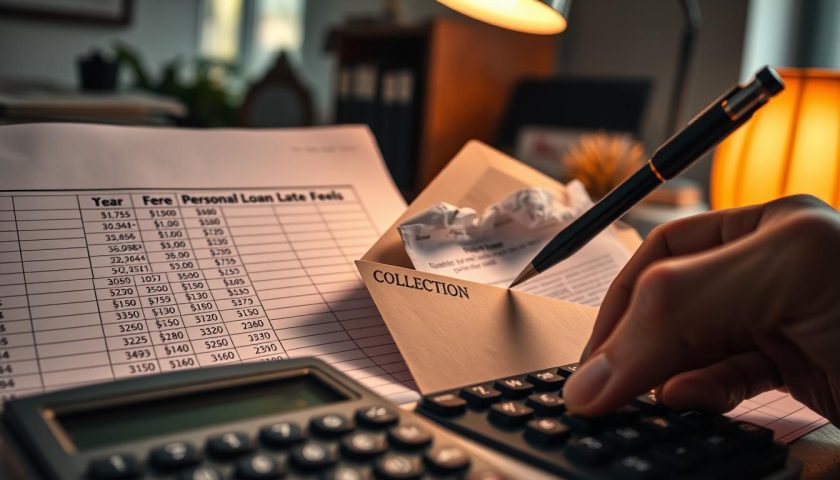
The lender may assess a contractual late fee when permitted by applicable law. Interest may continue accruing on outstanding principal. Whether interest is added to unpaid interest, or whether a default rate applies, depends on the agreement and governing rules.
Some borrowers searching what happens if you default on a personal loan overlook acceleration clauses that may increase the immediately payable amount.
Acceleration of the remaining loan
An acceleration clause can permit a lender to declare the remaining balance due following certain defaults. This does not mean every missed payment automatically triggers acceleration. Read any notice and any available opportunity to cure the default.
Example of catch-up costs
Suppose a borrower misses two $250 installments and owes a permitted $20 late fee for each missed installment. The overdue installments and illustrative fees total $540, before any other contractually and legally permitted charges. This is only an example, not a standard fee schedule.
Compare alternatives on total cost
Ask for a written payment breakdown and compare it with possible modified terms. A new consolidation loan could lower the installment but increase total repayment through a longer term or origination fees. Explore debt consolidation with bad credit and consolidation loan considerations.
Understanding what happens if you default on a personal loan requires comparing the cost of restoring the current account with the cost of replacing it, rather than choosing only the smallest monthly payment.
The question what happens if you default on a personal loan includes how payments are allocated, because a partial payment may leave the account delinquent.
3. Learn How Default Affects Your Credit Report
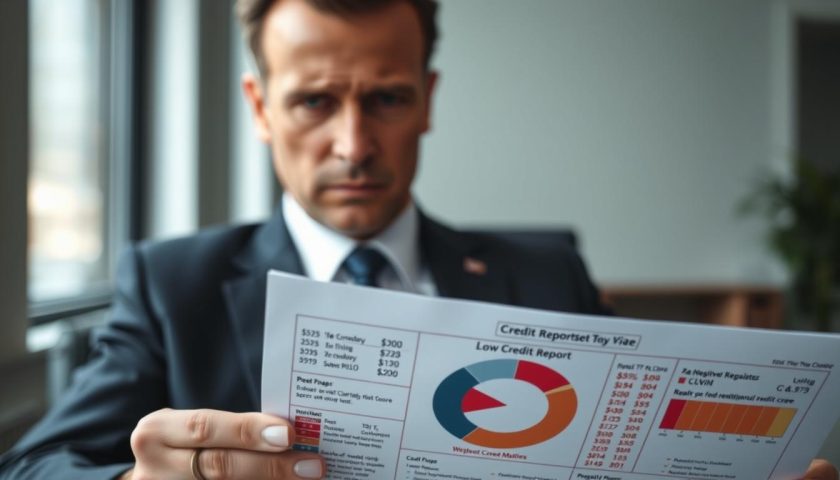
Negative credit reporting is a common reason people search what happens if you default on a personal loan. A lender that furnishes data may report delinquent payments, account status changes, and charge-offs under applicable reporting rules.
When a late payment may appear
Many lenders report a payment as 30 days late once it meets their reporting criteria. A payment that is only a few days overdue may generate a fee without appearing as a 30-day delinquency. Policies differ and no particular credit-score drop is guaranteed.
Credit reporting is a central part of what happens if you default on a personal loan, but no responsible guide can guarantee a specific score decrease.
Why repeated late payments matter
Scoring systems evaluate payment history as well as other credit-file information. Repeated or longer delinquencies can make new credit more expensive or harder to obtain. The exact effect varies by scoring model and the rest of a borrower’s credit history.
See also our bad credit borrowing cost guide.
What is a charge-off?
A charge-off is an accounting classification showing that the creditor regards the account as unlikely to be collected under ordinary terms. It does not erase the underlying debt. The creditor may continue legally permitted collections or transfer the account to another entity.
How long negative information can remain
Most negative payment information can generally remain on consumer credit reports for up to seven years, with specific reporting rules affecting the starting date for charged-off and collection accounts. A later payment does not necessarily erase the earlier record.
Review and dispute inaccuracies
Check credit reports for incorrect balances, duplicate accounts, wrong delinquency dates, and accounts that do not belong to you. Dispute errors with the credit reporting agency and, where appropriate, the data furnisher. For more, see how credit scores are calculated and soft versus hard credit checks.
Knowing what happens if you default on a personal loan can help you monitor your credit while avoiding unnecessary applications for expensive replacement debt.
Credit files do not tell the whole story of what happens if you default on a personal loan; a written lender explanation may clarify disputed account information.
4. Know Your Rights When Debt Collectors Contact You
After extended delinquency, the original lender may use its own recovery team, hire a collection company, or sell the debt. A clear understanding of what happens if you default on a personal loan includes knowing which company currently owns the account and what it is entitled to collect.

Verify the company and claimed balance
Ask for the collector’s legal identity, current creditor, account identification, and itemization of the amount claimed. Do not share passwords, one-time security codes, or sensitive banking credentials with an unverified caller.
Understanding what happens if you default on a personal loan includes the right to question an incorrect balance without immediately agreeing to pay it.
Validation notice and written dispute
Debt collectors covered by federal debt collection rules generally must provide validation information about the debt. If you dispute the debt in writing within the applicable 30-day validation period, collection generally must pause until the collector provides verification responsive to the dispute.
Our credit card debt recovery guide discusses related collection risks.
Federal protections
The Fair Debt Collection Practices Act prohibits covered collectors from using harassment, threats, or deceptive claims. Its coverage and rules differ from those applying to an original creditor collecting its own debt, although other federal and state laws may apply.
Contact restrictions
Covered collectors generally cannot contact you at unusual or inconvenient hours, ordinarily before 8 a.m. or after 9 p.m. local time unless an exception applies. Workplace-contact restrictions and written requests to cease communication also have legal rules; stopping contacts does not cancel the debt.
Keep a communication record
Save letters and emails, log calls, record the amount claimed, and document any disputes or settlement negotiations. Official guidance is available in the CFPB explanation of debt validation notices.
One of the most useful steps after learning what happens if you default on a personal loan is to verify each claim before agreeing to new payment terms. Our consumer debt management guide and credit balance planning article provide related budgeting context.
When considering what happens if you default on a personal loan, confirm whether a collector owns the debt or merely works for the original creditor.
5. Respond to Lawsuits, Judgments and Garnishment Notices
A collection lawsuit is possible, but it is not automatic. The legal aspects of what happens if you default on a personal loan depend on the debt, creditor, evidence, court procedures, and state law.
What to do when you receive court papers
Read the summons and complaint immediately. Note the deadline to respond and verify the court. A creditor or collector may seek a default judgment if you fail to answer on time, even when you have a potentially valid defense.
For anyone researching what happens if you default on a personal loan, court-ordered remedies and voluntary collection communications should not be confused.
What a judgment can authorize
A judgment may allow lawful collection remedies such as wage garnishment, bank levies, or property liens, subject to federal and state protections. Ordinary unsecured creditors generally need a judgment or other legal authority before garnishing wages.
Wage garnishment versus bank levy
| Remedy | What It Targets | Important Protection |
|---|---|---|
| Wage garnishment | A portion of future disposable earnings | Federal and state limits or exemptions |
| Bank levy | Qualifying money held in an account | Protected benefits and applicable exemptions |
| Property lien | Specified property rights | State procedures and exemptions |
Government benefits and joint accounts
Some federal benefits receive specific legal protections from creditors, and the rules governing automatic protection and exemption claims can be complex. Joint accounts can raise additional ownership and exemption questions. Do not assume all funds are protected without checking the governing law.
Seek legal assistance quickly
Speak with a qualified consumer-law attorney or local legal aid organization if you receive a lawsuit, garnishment order, or levy notice. The FTC guidance on responding to debt collection lawsuits explains why responding to court papers matters.
If you are concerned about what happens if you default on a personal loan, do not ignore legal notices while negotiating informally with the creditor. For other debt structures, see unsecured versus secured personal loans and personal loans for bad credit.
For people wondering what happens if you default on a personal loan, court deadlines are separate from lender negotiations and require independent attention.
6. Contact Your Lender and Compare Hardship Options
Borrowers who act before multiple payments are missed may have more opportunities to request a workable arrangement. One practical answer to what happens if you default on a personal loan is that early communication may sometimes prevent avoidable escalation.
For borrowing comparisons, see fees and loan costs.
Ask what assistance is available
A lender might consider a changed due date, short-term deferment, modified installment, temporary hardship arrangement, or another option. Assistance is not guaranteed, and each option may affect interest, loan maturity, or credit reporting.
Calculate a realistic payment
Start with take-home income and essential costs such as housing, food, healthcare, utilities, and transportation. Include existing loan obligations and a reasonable allowance for unexpected expenses before proposing an amount.
Ask the lender these questions
- How much is overdue today?
- What fees or interest continue to accrue?
- Will the account be reported delinquent during an arrangement?
- Does the agreement extend the maturity date?
- When will the account be considered current?
- Can you send all changes in writing?
A useful response to what happens if you default on a personal loan may involve free or lower-cost budgeting support before taking additional debt.
Consider nonprofit credit counseling
A reputable nonprofit credit counselor may help evaluate your budget, creditors, and potential repayment plans. Ask about fees and whether a proposed debt management plan actually covers your type of personal loan; not every creditor participates.
For alternatives, review our personal loan early payoff article, rate comparison guide, and household budget planning.
When evaluating what happens if you default on a personal loan, document every discussion and never assume a verbal conversation has legally changed your payment obligation.
One way to limit what happens if you default on a personal loan is to propose payments that are feasible without sacrificing food, housing, or essential healthcare.
7. Compare Settlement, Consolidation and Bankruptcy Carefully
When normal repayment is no longer feasible, borrowers may explore debt settlement, consolidation, structured counseling, or legal relief. Each has different risks; understanding what happens if you default on a personal loan helps you judge offers more carefully.
For related budgeting choices, explore early personal loan payoff planning.
Debt settlement
A creditor may agree to resolve a balance for less than the amount claimed, but it is not required to accept an offer. Missed payments during negotiations can worsen credit, increase collection pressure, and lead to litigation. Forgiven debt may have tax consequences depending on applicable exclusions and circumstances.
Debt consolidation
Consolidation replaces qualifying balances with another obligation. Compare new APR, origination charges, repayment length, total cost, and whether the loan is secured. A smaller monthly payment alone does not guarantee savings.
Because what happens if you default on a personal loan varies across states, obtain individualized legal advice rather than relying on any nationwide guarantee.
Bankruptcy
Bankruptcy can provide court-supervised relief for eligible debts, but qualification, asset protections, costs, and consequences depend on legal circumstances. Consult a qualified bankruptcy attorney rather than relying on generalized promises that all debt will disappear.
Compare your options
| Approach | Potential Benefit | Principal Risk |
|---|---|---|
| Hardship arrangement | Possible temporary breathing room | Approval and reporting vary |
| Credit counseling | Budget and repayment support | Fees or creditor eligibility limits |
| Consolidation | Potentially simpler payments | New fees and longer repayment |
| Settlement | Possible negotiated reduction | Credit, tax and lawsuit risks |
| Bankruptcy | Potential legal relief | Complex qualification and consequences |
For deeper comparisons read bad-credit consolidation options, personal loans for card debt, and secured versus unsecured borrowing.
Rather than assuming that what happens if you default on a personal loan has only one outcome, compare realistic solutions based on actual monthly affordability, total cost, and legal exposure.
Evaluating what happens if you default on a personal loan also means checking whether any proposed agreement changes your original rights and obligations.
Statute of Limitations: Important Special Considerations
The time allowed to sue for a debt varies by state, debt type, contract terms, and legal events. A debt becoming time-barred does not necessarily remove it from your records or automatically eliminate every nonjudicial collection possibility.
Can old debt still lead to a lawsuit?
Under federal debt-collection rules, covered collectors may not sue or threaten to sue to collect time-barred debt. Nevertheless, if someone files a lawsuit, you should respond and raise available defenses; courts may not automatically apply the time limit without a response.
Can a payment restart the clock?
In some states, a partial payment, written acknowledgment, or new promise can affect the limitations period. Obtain state-specific legal advice before making a payment on an old disputed obligation. See our debt management overview and credit reporting guide.
Legal rules about what happens if you default on a personal loan are especially important for old accounts; the date of the last payment is not the only relevant factor.
Practical 30-Day Recovery Checklist
- Confirm the exact past-due amount and original contract provisions.
- Review interest, late charges, and any acceleration notice.
- Contact the lender using independently verified contact details.
- Ask about hardship, modification, or catch-up arrangements.
- Request any agreed changes in writing.
- Prioritize essential living expenses.
- Check credit reports for accuracy.
- Verify any third-party collection company and claimed balance.
- Dispute inaccurate collection information within applicable deadlines.
- Respond promptly to summonses or court orders.
- Ask qualified legal counsel about exemptions and old debts.
- Compare relief strategies by total cost, not monthly payment alone.
Taking these steps early may limit some consequences of what happens if you default on a personal loan, although no particular outcome is guaranteed. Our loan terms guide and loan fee guide offer more context.
Use this checklist to document what happens if you default on a personal loan in your circumstances, including actual notices received rather than hypothetical events.
Frequently Asked Questions
What happens if you default on a personal loan?
Possible consequences include contractual charges, negative credit information, collection efforts, charge-off, and a lawsuit. The timing and remedies depend on the contract and law.
Does one missed payment always mean default?
No. Delinquency begins when a required payment is not made, but the contract controls when the lender may declare default and exercise particular remedies.
Will my credit score fall?
Reported late payments can hurt a credit score, but the size of the change cannot be predicted universally. Confirm reporting dates and dispute factual inaccuracies.
Does a charge-off mean I no longer owe the debt?
No. A charge-off is an accounting event rather than automatic forgiveness. Collection may continue where legally permitted.
Can a collector contact me at work?
Federal restrictions may prohibit covered collectors from contacting you at work when they know or have reason to know your employer disallows such contacts. Other restrictions may apply.
Can a lender garnish wages without suing?
For ordinary unsecured private loan debts, wage garnishment generally requires a judgment or another applicable legal authority. Exceptions and protections vary.
What if I receive a court summons?
Read the deadline immediately, respond through the appropriate court procedures, and seek consumer-law help. Ignoring the papers can result in a default judgment.
Does debt settlement stop collection lawsuits?
Not automatically. A settlement proposal does not compel the creditor to pause legal action or accept a reduced amount.
Can a consolidation loan fix a default?
New financing may repay certain balances, but only if approved and affordable. Higher fees, longer terms, or pledged collateral may make the financial position worse.
Does the statute of limitations erase a loan?
Not automatically. It generally limits legal actions to recover qualifying debt, and the rules differ by state and circumstances.
Conclusion
What happens if you default on a personal loan? Consequences can include additional costs, credit damage, collection activity and potentially court-enforced recovery. A charge-off does not cancel the obligation, and ignoring legal documents can make a difficult situation worse.
Check your contract, calculate what you can afford, contact the lender early, and document any revised arrangements. If a third-party collector contacts you, verify the debt and understand your dispute rights. If court action begins, seek qualified legal assistance quickly.
Understanding what happens if you default on a personal loan is a starting point for choosing an affordable and legally informed response—not a reason to accept expensive new borrowing or promises of guaranteed debt relief.