
Quick answer: There is no special federal loan program for teachers, but personal loans for teachers work like any personal loan: banks, credit unions and online lenders approve you based on credit, income and existing debt, not your job title. Many educators can get fair offers because school pay is steady, yet the best deal usually comes from comparing APR, fees and a payment you can still make in summer.
This guide explains when borrowing makes sense, how lenders read a 10-month salary, what a realistic loan costs, and which cheaper options (grants, tax deductions, forgiveness programs) to check first. It is educational information for U.S. borrowers, not financial advice.

Key Takeaways
- Lenders price personal loans for teachers on credit score, debt-to-income ratio and income stability; being an educator alone does not lower your rate.
- The Federal Reserve reported an average 11.90% rate on 24-month bank personal loans in August 2026; your offer may be higher or lower.
- A $5,000 loan at 12% costs about $166 a month over 36 months (about $979 interest) or $111 a month over 60 months (about $1,673 interest).
- Plan payments around summer: if your district pays over 10 months, save for July and August payments in advance.
- Federal teacher loan forgiveness and PSLF apply only to eligible federal student loans, never to a new personal loan.
- For classroom supplies, check grants, district reimbursement and the 2026 educator expense deduction before borrowing.
What Are Personal Loans for Teachers?
A personal loan is a fixed lump sum you repay in equal monthly installments, usually over 12 to 84 months. Most are unsecured, so no car or home is pledged. “Personal loans for teachers” is a marketing label rather than a separate product: a few credit unions that serve school employees advertise educator perks, but the loan contract, interest and legal protections are the same as any other installment loan.
That matters because a lender that says it is “for teachers” can still charge a high APR or a large origination fee. Judge the offer, not the label. Our guide on how to get a personal loan covers the basic process step by step.
When does a personal loan make sense for an educator?
Borrowing tends to fit a defined, necessary cost that savings cannot cover: an urgent car repair you need to get to school, a medical bill, a move to a new district, or consolidating higher-rate card balances. It fits poorly when the purpose is recurring, such as covering every month’s classroom supplies, because the cost returns next year while the debt remains.
| Situation | Personal loan a good fit? | Usually better first step |
|---|---|---|
| Emergency car or medical bill | Often, if the payment is affordable | Emergency fund, payment plan with provider |
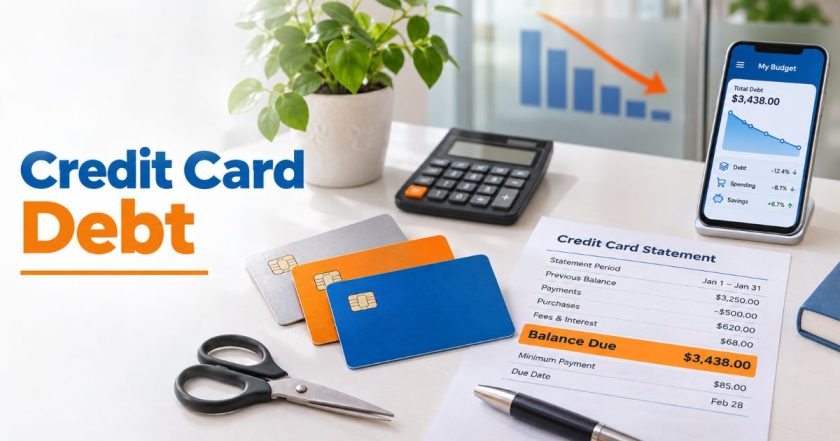
| Paying off credit cards at 20%+ APR | Can be, if the new APR is clearly lower | Compare a balance transfer offer |
| Classroom supplies | Rarely | Grants, district reimbursement, tax deduction |
| Summer cash gap | Rarely | 12-month pay option or savings plan |
| Relocation for a new teaching job | Sometimes | Ask about district relocation assistance |
How Do Lenders Evaluate Personal Loans for Teachers?
Underwriting for personal loans for teachers follows the same rules as for any applicant. Lenders look at four main factors.
1. Credit score and history
Your score shapes both approval and price. Many prime lenders look for scores in the mid-600s or higher, while applicants with lower scores often face higher APRs or need a co-signer. See our breakdown of the minimum credit score for a personal loan and how credit scores are calculated.
2. Income and how it is paid
Public school pay is predictable, which lenders like. If your district pays over 10 months, lenders usually look at annual salary from pay stubs, an offer letter or a W-2. Stipends, coaching pay, tutoring and summer school can count if you can document them; irregular cash income often does not.
3. Debt-to-income ratio (DTI)
DTI is your monthly debt payments divided by gross monthly income. Example: a teacher earning $60,000 a year ($5,000 a month) who pays $350 on a car, $250 on student loans and $1,200 on rent has a DTI of 36% before the new loan. Adding a $166 payment raises it to about 39%. Lenders set their own limits, and lower is safer.
4. Employment stability
Tenure or several years with the same district can help, but a new contract is usually enough if income is verified. A pending move between districts may delay approval until the new offer letter arrives.
What Do Personal Loans for Teachers Cost?
Cost depends on your rate, term and fees. For context, the Federal Reserve’s G.19 release showed an average 11.90% finance rate for 24-month personal loans at commercial banks in August 2026. Online lenders quote a much wider range, often from single digits for excellent credit to well above 30% for weak credit. Check our personal loan rate guide for how lenders set pricing.
Worked example: same loan, two terms
| Loan amount | APR | Term | Monthly payment | Total interest |
|---|---|---|---|---|
| $5,000 | 12% | 36 months | $166 | $979 |
| $5,000 | 12% | 60 months | $111 | $1,673 |
| $3,000 | 12% | 24 months | $141 | $389 |
The longer term lowers the payment by $55 but adds almost $700 in interest. These are illustrative calculations, not lender quotes; actual personal loans for teachers vary by lender and credit profile.
Watch the origination fee
Many lenders deduct an origination fee, often 1% to 10%, from the money you receive. With a 5% fee on $5,000, you get $4,750 but repay the full $5,000 plus interest. If you need exactly $5,000 in hand, you would have to borrow more. Compare options in our guide to personal loans with no origination fee.
Fixed or variable rate?
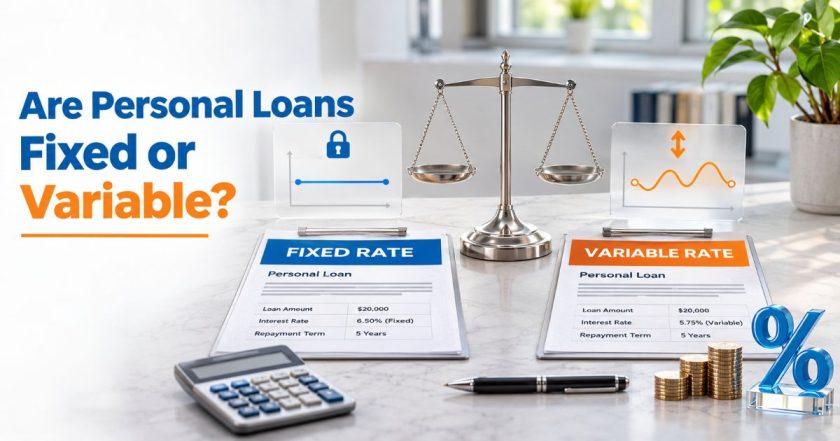
Most personal loans have fixed rates, which keeps the payment the same every month and suits a fixed teacher salary. Read more on whether personal loans are fixed or variable.
Where to Find Personal Loans for Teachers

| Source | Strengths | Watch out for |
|---|---|---|
| Educator or school-employee credit unions | Often lower rates; federal credit unions cap most loan APRs at 18% | Membership rules; slower funding |
| Banks | Relationship discounts, branch support | Stricter credit requirements |
| Online lenders | Fast decisions, soft-pull prequalification | Origination fees, wide APR ranges |
| Secured loans (share or CD-secured) | Easier approval, lower rates | Your savings are pledged as collateral |
Many credit unions that serve school staff offer personal loans for teachers and are worth checking first. If you are weighing collateral, compare unsecured vs secured personal loans. Nurses face a similar shift-based income question, covered in our personal loans for nurses guide.
Planning Personal Loans for Teachers Around Summer Pay
Summer is the most common reason personal loans for teachers become hard to manage. If your district pays over 10 months, you receive no paycheck in July and August, but the lender still expects two payments.
Simple fix: divide the two summer payments across your school-year paychecks. For a $166 payment, set aside $332 over 10 months, about $33 per paycheck, in a separate savings account. Alternatively, ask HR whether you can switch to 12-month pay distribution, which spreads the same salary evenly.
- Choose a due date a few days after payday.
- Use autopay only if your account always covers the draft; many lenders offer a small autopay rate discount.
- Ask the lender in writing about hardship options before you miss a payment, not after.

Cheaper Alternatives to Personal Loans for Teachers
Educator expense deduction (2026)
Eligible K-12 teachers, counselors, principals and aides can deduct up to $350 of unreimbursed classroom expenses for tax year 2026 (up from $300 for 2025), even without itemizing. Starting in 2026, qualifying expenses above that amount may also be claimed as an itemized deduction. A deduction lowers taxable income; it does not refund the full cost. Confirm current rules on the IRS educator expense page.
Grants and reimbursement for supplies
Teachers reported spending an average of $895 of their own money on supplies in the 2024-25 school year, according to an AdoptAClassroom.org survey. Before borrowing for that, ask your principal about reimbursement, PTA funds, union grants and crowdfunding platforms for classrooms.
Loan forgiveness covers student loans only
Teacher Loan Forgiveness can cancel up to $17,500 of eligible federal Direct or FFEL loans after five consecutive years at a qualifying low-income school, and Public Service Loan Forgiveness covers eligible Direct Loans after 120 qualifying payments. Neither program pays off a bank or online personal loan. See Federal Student Aid’s teacher forgiveness page. Interest on a personal loan is generally not tax-deductible either; see whether personal loan interest is tax deductible.
How to Apply for Personal Loans for Teachers: 6 Steps
- Set the amount. Borrow only the cost you documented, plus any origination fee.
- Check your credit reports for free at AnnualCreditReport.com and dispute errors.
- Prequalify with 2 to 4 lenders. Most use a soft check; see whether prequalification affects your credit score.
- Compare APR, fees, term and total repayment, not just the monthly payment.
- Gather documents: ID, two recent pay stubs or contract, W-2, bank statements.
- Read the final agreement for prepayment, late-fee and arbitration terms, then submit one full application.
Avoid any lender that guarantees approval or asks for an upfront fee before funding; the FTC’s guide to advance-fee loan scams lists these warning signs.
Personal Loans for Teachers With Fair or Poor Credit
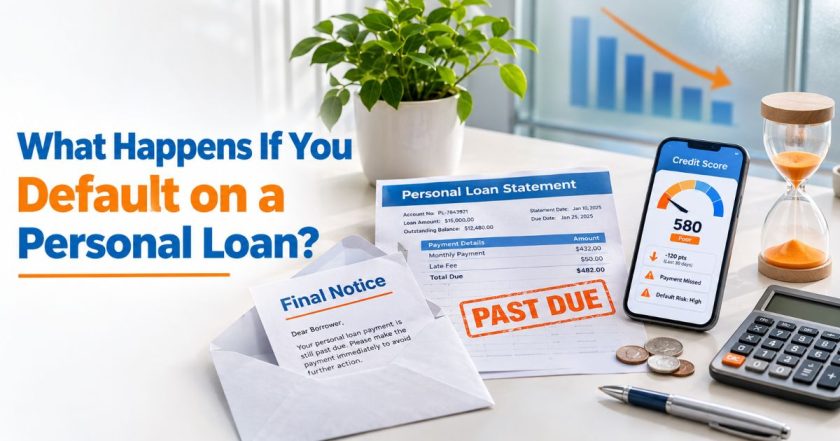
Options include a credit union share-secured loan, a co-signer, or a smaller loan you can repay quickly. Compare costs carefully in our guide to personal loans for bad credit. If the goal is combining card debt, read debt consolidation with bad credit first. Paying early can cut interest when there is no prepayment penalty; see paying off a personal loan early. If repayment becomes difficult, learn what happens if you default and contact the lender early.
Frequently Asked Questions
Are there special personal loans for teachers?
No federal program exists. Some school-employee credit unions advertise educator perks, but approval and pricing still depend on credit, income and debt.
Do personal loans for teachers require tenure?
No. New teachers can often qualify if they can show a signed contract or recent pay stubs and have acceptable credit. Some lenders want a short history of paychecks first.
How do lenders treat a 10-month teacher salary?
Most use your annual salary. You still owe payments in summer, so set aside money during the school year or choose 12-month pay distribution.
Will teacher loan forgiveness pay off a personal loan?
No. Teacher Loan Forgiveness and PSLF apply only to eligible federal student loans.
What is a good APR on personal loans for teachers?
It depends on credit. The Federal Reserve reported an 11.90% average for 24-month bank loans in August 2026; an offer well below your alternatives, such as credit card APRs, is generally a better deal.
Should teachers use a personal loan for classroom supplies?
Usually not. Grants, reimbursement and the educator expense deduction cost less than paying interest on supplies that are used up within a year.
Bottom Line
Personal loans for teachers can be a reasonable tool for a one-time, necessary expense, as long as the payment fits your take-home pay in every month of the year, including summer. Prequalify with a few lenders, compare APR and fees, and check grants, deductions and district help before taking on new debt.
Sources
- Federal Reserve G.19 via FRED: 24-month personal loan rate
- IRS Topic 458: Educator expense deduction
- Federal Student Aid: Teacher Loan Forgiveness
- AdoptAClassroom.org 2025 Teacher Spending Survey
Rates, tax rules and program terms change. Figures were checked in November 2026; confirm current terms with the lender or agency before you apply.