Paying off a car loan early can reduce future interest, remove a monthly payment, and simplify your budget. But the actual benefit depends on your interest method, remaining balance, contract terms, available cash, and whether a prepayment penalty applies.
Before sending a large payment, review your loan agreement and request an official payoff amount from the lender or servicer. Your normal account balance may not equal the amount required to satisfy the loan because interest, fees, credits, or other adjustments can affect the final figure.
You should also consider the effect on your emergency savings and other debts. Eliminating a low-rate vehicle loan may be less urgent than paying expensive credit-card debt or protecting enough cash for unexpected expenses.
This guide explains paying off a car loan early step by step, including interest savings, prepayment terms, payoff statements, principal payments, lien release, credit reporting, and alternatives such as refinancing.
For broader vehicle-financing guidance, review our auto finance calculator guide, auto finance options, and auto finance deals guide.
Key Takeaways
- Check your loan contract before making an early payoff.
- A prepayment penalty may apply depending on the contract and state law.
- Simple-interest loans can generally produce greater interest savings from faster principal reduction.
- Request an official payoff amount instead of sending the balance shown on a normal statement.
- Protect adequate emergency cash before using a large lump sum.
- Confirm the loan reaches a zero balance and the lien is released.
- Check your credit reports later for accurate paid-account reporting.
1. How Paying Off a Car Loan Early Can Save Money
The primary financial reason for paying off a car loan early is to stop or reduce future interest.
How interest savings work
Most auto-loan payments include both principal and interest. Principal is the amount you borrowed, while interest is the cost of borrowing.
When principal falls faster, there is generally less balance on which future interest can be charged.
The CFPB explains that auto-loan payments generally go first to applicable fees, then accrued interest, and then principal. It also advises borrowers to review their loan documents or contact the servicer to understand how payments are applied.
See the official CFPB guidance on principal and interest.
Simple interest auto loans
A simple interest auto loan calculates interest using the outstanding principal balance, commonly on a daily or monthly basis.
When you reduce principal sooner, future interest generally falls as well.
Precomputed interest loans
With precomputed interest, the total interest is calculated at the beginning of the contract and allocated across scheduled payments.
The CFPB describes precomputed interest as less common than simple interest and notes that paying early may provide less benefit than with a simple-interest structure.
Review the official CFPB comparison of simple and precomputed interest.
| Feature | Simple Interest | Precomputed Interest |
|---|---|---|
| Interest Basis | Outstanding principal | Calculated in advance |
| Extra Payment Benefit | Can reduce future interest | May provide less savings |
| Early Payoff | Often more beneficial | Review contract carefully |
Near the end of the loan
If only a few payments remain, the amount of future interest left to avoid may be relatively small.
This is why the decision should be based on actual remaining costs rather than the emotional appeal of becoming debt-free immediately.
2. Decide Whether an Early Car Loan Payoff Fits Your Finances
Before paying off a car loan early, compare the potential savings with what else the money could do for your household.

Protect your emergency fund balance
Your emergency fund balance provides liquidity for expenses such as:
- medical bills;
- temporary income loss;
- home repairs;
- vehicle repairs;
- insurance deductibles;
- and other unexpected costs.
There is no universal cash-reserve amount that fits every household. Job stability, expenses, family responsibilities, insurance, and access to other resources all matter.
Do not automatically drain savings simply because the money is technically available.
For broader budgeting guidance, see our Master Your Money guide and complete personal finance guide.
Compare other high-cost debt
If you carry high-interest credit-card debt, using extra money there may produce greater savings than eliminating a lower-rate car loan.
Read our credit-card debt guide and finance charge guide when comparing debt costs.
Consider upcoming expenses
Effective cash flow planning should include irregular expenses, not just normal monthly bills.
Consider:
- insurance premiums;
- vehicle maintenance;
- property taxes;
- medical expenses;
- planned travel;
- and other major obligations.
Compare the loan rate with your alternatives
If the auto loan carries a relatively low rate, preserving cash or using money for higher-priority goals may be reasonable.
There is no universal answer because taxes, investment risk, liquidity, and personal goals differ.
3. Review Your Contract for a Prepayment Penalty
One of the most important steps before paying off a car loan early is checking whether your agreement contains a prepayment penalty.

Prepayment penalties depend on the contract and law
The CFPB states that whether you can prepay an auto loan without penalty depends on the loan contract and applicable state law.
Some states prohibit certain prepayment penalties, while some contracts may permit them.
Review the official CFPB prepayment guidance.
Check your Truth in Lending disclosures
Your contract and lending disclosures should provide important information about:
- APR;
- finance charge;
- amount financed;
- payment schedule;
- total of payments;
- and applicable prepayment provisions.
Do not assume every loan allows penalty-free payoff
A previous loan with one lender does not prove that another loan works the same way.
Always review the specific contract you signed.
How extra payments are applied
Extra money may first cover unpaid fees and accrued interest before reaching principal.
If you want to make an extra payment, ask the lender or servicer how it will be allocated.
Principal-only payment instructions
A principal-only payment may reduce the loan balance faster when the contract and servicing system permit that treatment.
Do not assume writing “principal only” on a check automatically overrides the loan agreement or servicer’s procedures.
Follow the lender’s current instructions and confirm the allocation afterward.
4. Calculate Your Potential Car Loan Interest Savings
Before paying off a car loan early, calculate the likely benefit using your actual loan numbers.

Review your loan amortization schedule
A loan amortization schedule shows how scheduled payments are divided between principal and interest.
The CFPB explains that in an amortizing loan, a greater portion of earlier payments generally goes toward interest, while a greater portion of later payments goes toward principal.
See the official CFPB amortization explanation.
Compare future scheduled payments with payoff
A basic comparison can include:
- remaining number of payments;
- scheduled monthly payment;
- official payoff amount;
- any applicable payoff fee or penalty;
- and the amount of cash required today.
Use an auto finance calculator for estimates
Our auto finance calculator guide can help you understand loan amount, rate, term, and estimated interest.
Calculator estimates should not replace the lender’s actual payoff quote.
Do not use an unrealistic savings table
Your actual savings depend on when you pay, the loan’s interest method, and the contract.
Generic examples should therefore be treated only as illustrations.
| Item to Compare | Why It Matters |
|---|---|
| Remaining Principal | Core unpaid loan balance |
| Future Interest | Potential amount that may be avoided |
| Prepayment Penalty | Can reduce payoff savings |
| Available Cash | Determines liquidity after payoff |
5. Request an Official Payoff Statement
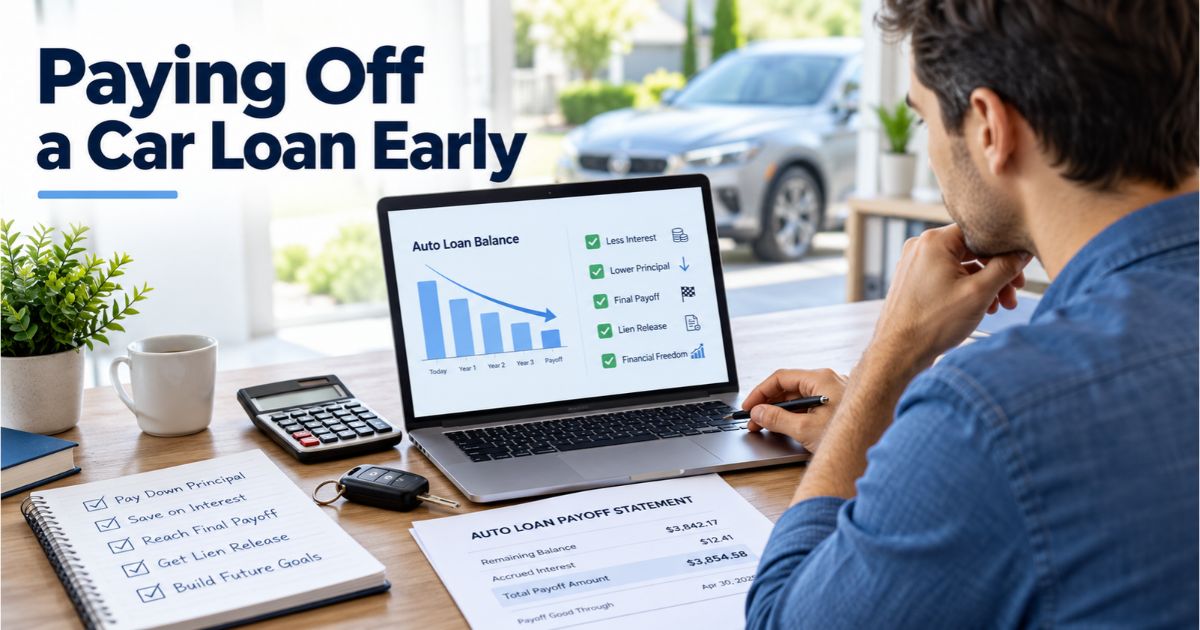
An official payoff statement or payoff quote is one of the most important documents when paying off a car loan early.
Why the current balance may not be enough
The CFPB notes that a loan payoff amount can differ from the outstanding balance shown on a statement because of interest calculations, late fees, charges, or other reasons.
This distinction also matters when selling or trading a financed vehicle.
Review the CFPB’s guidance on auto-loan payoff amounts.
Request the quote through an official channel
Use:
- the lender’s official website;
- secure account portal;
- a verified phone number;
- or contact information shown on your statement.
Avoid sending money based on instructions from unsolicited texts or emails.
Check the good-through date
Payoff quotes often apply through a stated date.
If your loan accrues daily interest and payment arrives after that date, you may need a revised payoff amount.
Review all components of the quote
Check:
- principal;
- accrued interest;
- fees;
- credits;
- payment instructions;
- and quote expiration date.
Confirm accepted payment methods
Your lender may have special procedures for final payments.
Ask whether the payoff must be made by:
- online transfer;
- ACH;
- wire transfer;
- cashier’s check;
- certified check;
- or another approved method.
6. Follow the Correct Auto Loan Payoff Process
Once you decide that paying off a car loan early fits your financial plan, follow the lender’s instructions carefully.
Step 1: Confirm available cash
Make sure the payoff will not leave you unable to cover essential bills or foreseeable expenses.
Step 2: Request the final payoff amount
Use the official quote rather than guessing from the normal account balance.
Step 3: Review payment instructions
Confirm exactly where and how the payment must be sent.
Step 4: Send payment before the quote expires
Allow enough time for processing.
Step 5: Keep documentation
Save:
- the payoff quote;
- payment receipt;
- confirmation number;
- bank transaction record;
- and relevant correspondence.
Step 6: Confirm a zero balance
After processing, verify that the account shows no remaining amount due.
Step 7: Confirm lien release
The process for releasing the lender’s lien and updating the vehicle title varies by state and by whether the state uses paper or electronic titles.
Follow the instructions provided by your lender and your state’s motor-vehicle agency.
If you may sell the vehicle instead of keeping it, see our guide to selling a financed car.
7. What Happens After Paying Off a Car Loan Early?
The process does not necessarily end when the payment leaves your bank account.
Confirm the account is closed or paid
Check your lender portal and final documentation.
Obtain lien-release documentation
Keep any lien-release letter or electronic confirmation provided by the lender.
Follow your state’s title procedure
Some states process lien releases electronically, while others may require paper documents.
Do not assume the process is identical nationwide.
Update insurance information when appropriate
After the lien is released, contact your insurance company about updating lienholder or loss-payee information.
Do not reduce insurance coverage automatically. Consider:
- state minimum requirements;
- the vehicle’s value;
- your ability to replace the car after a loss;
- and your broader financial risk.
How Paying Off an Auto Loan Can Affect Your Credit
The credit score impact of paying off a car loan early can vary.
A paid loan can remain on your credit report
The CFPB notes that positive account information may remain on a credit report after a loan has been paid off and closed.
See the CFPB’s credit-report retention guidance.
Your score may change
Closing an installment loan can change the information available to a scoring model, including active account mix and outstanding debt.
There is no universal number of points by which a score will rise or fall.
For a detailed explanation, read our credit-score calculation guide.
Check reporting after payoff
After enough time has passed for reporting to update, review your credit reports to confirm that the balance and status are accurate.
Use AnnualCreditReport.com to access official reports.
Dispute inaccurate reporting
If a paid loan continues to show an incorrect balance or status, the CFPB recommends disputing inaccurate information with both the credit reporting company and the company that furnished the information.
See the CFPB credit-report dispute guide.
Should You Make Extra Principal Payments Instead?
You do not necessarily have to make one large lump-sum payment.
Recurring extra payments
If your lender permits extra principal reduction, smaller recurring payments can gradually shorten repayment.
Verify how the servicer applies them
The CFPB advises borrowers to check their loan documents and monthly statements to confirm how payments are applied.
Some servicing systems may advance the due date or apply funds in a particular order.
Do not assume every payment goes directly to principal
Fees and accrued interest may be paid before principal under the contract.
Should You Refinance Instead of Paying Off the Loan?
Refinancing may be an alternative when:
- your credit has improved;
- your current APR is high;
- another lender offers significantly better pricing;
- and fees do not erase the savings.
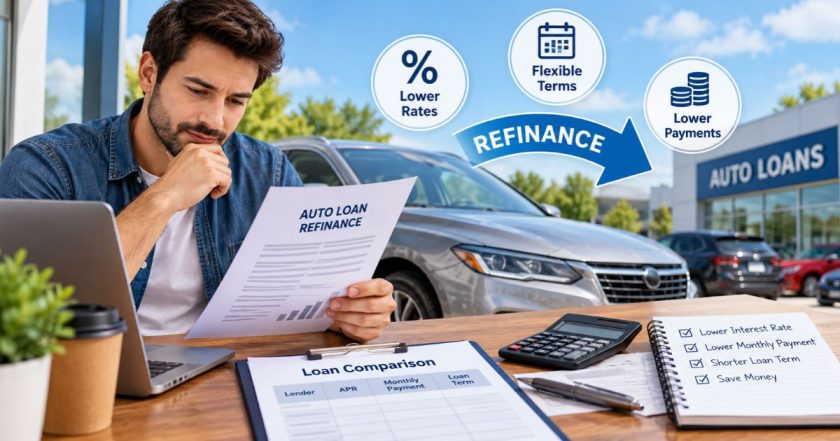
Use our auto loan refinancing guide before replacing an existing loan.
Also compare our affordable auto loan guide and best auto finance deals.
Do not refinance only to lower the payment
A lower payment obtained by extending the term can increase total interest.
Our 96-month auto loan guide explains the risks of very long financing terms.
How Early Payoff Compares With Other Financial Priorities
Before paying off a car loan early, compare the opportunity with other goals.
Credit-card debt
High-rate revolving debt may deserve priority.
See our average credit-card debt guide.
Emergency savings
Adequate cash can prevent you from returning to expensive borrowing after an unexpected expense.
Personal loans
Compare the rates and costs of any other installment debt using our personal loan rates guide.
Borrowers with weaker credit can also review personal loans for bad credit.
Secured debt
Our secured personal loan guide and secured vs unsecured loans guide explain how collateral changes borrowing risk.
What to Do With the Former Car Payment
After paying off a car loan early, your monthly cash flow changes.
Rebuild emergency savings
If the payoff reduced your cash reserve, rebuilding liquidity may deserve priority.
Pay down higher-cost debt
Redirecting the former payment toward expensive debt can accelerate repayment.
Save for vehicle maintenance
Owning the vehicle outright does not eliminate:
- maintenance;
- repairs;
- insurance;
- registration;
- tires;
- or eventual replacement costs.
Save for the next vehicle
A dedicated replacement fund can reduce how much you need to borrow when you eventually purchase another car.
Common Mistakes When Paying Off a Car Loan Early
Sending only the statement balance
The payoff amount may differ from the account balance.
Ignoring a prepayment penalty
Review both your contract and applicable state rules.
Assuming extra payments automatically reduce principal
Verify payment allocation with the lender.
Draining emergency savings
Debt reduction should not create an immediate liquidity crisis.
Missing the payoff quote expiration date
A stale quote may leave a residual balance.
Failing to confirm lien release
Keep documentation proving the security interest has been released.
Ignoring credit-report errors
Check the account status later and dispute inaccurate information if necessary.
Questions to Ask Your Auto Lender Before Payoff
- What is my exact payoff amount?
- How long is the quote valid?
- Does the loan have a prepayment penalty?
- How is interest calculated?
- How are extra payments applied?
- Can I request principal reduction?
- What payment methods are accepted for payoff?
- How long does processing normally take?
- How will I receive the lien release?
- What is the title-release process?
- When will the account be reported as paid?
- Who should I contact if a small balance remains?
Related Auto Finance Guides
Continue your research with these Best Finance Live resources:
- Auto Finance Calculator
- Top Auto Finance Options
- Best Auto Finance Deals
- Affordable Auto Loans
- First-Time Auto Loan
- Refinance Auto Loan
- 96-Month Auto Loan
- How to Sell a Financed Car
- Exeter Finance Guide
- Capital One Auto Finance
- California Auto Finance
- Finance Charges Explained
- How a Credit Score Is Calculated
- Master Your Money
- Top Financial Tips
Conclusion
Paying off a car loan early can be financially useful when it reduces meaningful future interest without creating problems elsewhere in your budget.
Before making the payoff, review your contract, check for a prepayment penalty, understand the loan’s interest method, protect enough emergency cash, and request an official payoff quote.
If you proceed, follow the lender’s payment instructions carefully and keep proof of the transaction. Afterward, confirm the account reaches a zero balance, obtain the lien release, follow your state’s title procedure, and review your credit reports for accurate reporting.
Remember that eliminating debt is only one financial goal. If paying off a car loan early would drain savings or prevent you from addressing much higher-cost debt, a slower repayment strategy may be more appropriate.
The best decision is the one that reduces unnecessary borrowing costs while preserving enough financial flexibility for emergencies and other important goals.