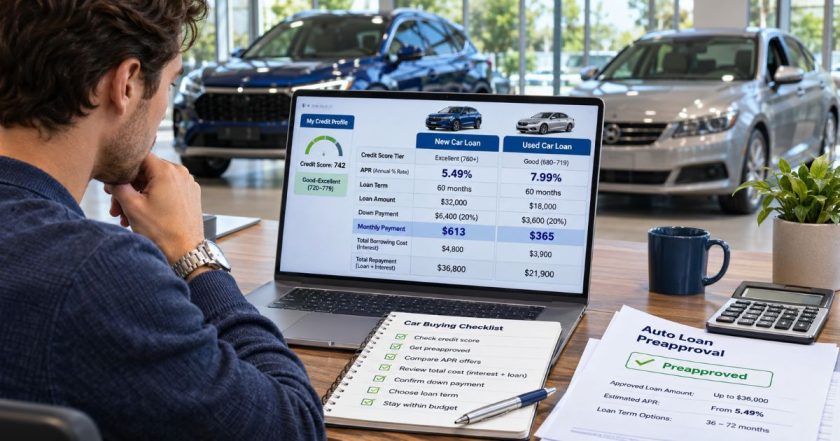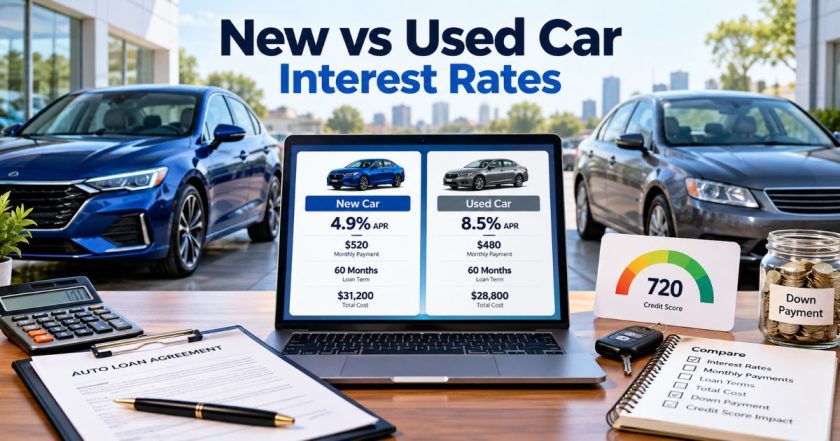

Choosing the right auto finance option can affect both your monthly car payment and the total amount you pay over the life of the loan. U.S. car buyers can arrange financing through banks, credit unions, dealerships, manufacturer-affiliated finance companies, online lenders and other finance companies.
The right option depends on your credit profile, income, down payment, vehicle, loan term and the offers available when you apply. Instead of choosing financing based only on the monthly payment, compare the APR, interest rate, amount financed, loan term and total cost.
Quick Answer: What Are the Main Auto Finance Options?
The main auto financing options include banks, credit unions, dealer-arranged financing, manufacturer or captive financing, online lenders and other finance companies. Buyers who already have a vehicle loan may also consider refinancing, while drivers who want to keep a leased vehicle may need lease-buyout financing.
There is no single financing source that is best for every borrower. Getting multiple offers before finalizing a vehicle purchase can help you compare the actual terms available to you.
| Financing Option | Potential Advantage | What to Check |
|---|---|---|
| Bank | Direct financing and preapproval | APR, term, eligibility and fees |
| Credit union | Member-focused loan options | Membership requirements and actual rate |
| Dealer financing | Convenience at the dealership | Rate markup, add-ons and final terms |
| Manufacturer financing | Possible promotional offers | Model and credit qualifications |
| Online/nonbank lender | Digital applications and comparison | APR, fees and lender terms |
| Lease buyout loan | Finance the purchase of a leased car | Buyout price and total financing cost |
| Refinancing | Replace an existing auto loan | New APR, term, fees and total savings |
Before choosing an option, you can also explore our Auto Finance Center for related car-financing guides.
1. Bank Auto Loans
Banks are one of the most familiar sources of direct auto financing. You apply with the bank, and if approved, the lender provides the terms under which it is willing to finance your vehicle.
You do not necessarily have to use the bank where you already keep your checking or savings account. Comparing multiple banks can give you a better picture of the rates and loan terms available for your financial profile.
Why consider bank financing?
- You may be able to get preapproved before visiting a dealership.
- A preapproval gives you a financing offer to compare with dealer-arranged financing.
- You can review the rate, loan term and maximum approved amount before negotiating the vehicle purchase.
Do not assume your existing bank automatically has the lowest rate. Compare the complete offer rather than relying on an existing banking relationship.

2. Credit Union Auto Loans
Credit unions are another direct financing option. Some borrowers may find competitive terms through a credit union, but rates and eligibility vary, so it is better to compare an actual offer rather than assume a credit union will always be cheaper than a bank.
Membership requirements can also apply. If you are eligible to join, consider requesting a quote or preapproval and comparing it with offers from other lenders.
What should you compare?
- APR and interest rate
- Loan term
- Maximum amount financed
- Down-payment requirements
- Fees and other loan costs
- New- versus used-vehicle eligibility
If you are primarily looking for lower borrowing costs, our guide to affordable auto loans and low interest rates explains additional factors to consider.
3. Dealer-Arranged Auto Financing
Dealer financing is convenient because you can select a vehicle and arrange financing at the same location. However, convenience should not replace comparison shopping.
With dealer-arranged financing, the dealership may submit your application to banks, credit unions or other auto finance companies. A lender can quote a rate to the dealer, and the rate ultimately offered to you may be higher. For that reason, having a direct-lender preapproval before visiting the dealership can provide a useful comparison point.
Questions to ask before accepting dealer financing
- What is the APR?
- What is the interest rate?
- How long is the loan term?
- What is the total amount financed?
- Are optional products or add-ons included?
- Is the financing final before I take the vehicle home?
The Consumer Financial Protection Bureau explains that consumers can finance directly through a bank or credit union or use dealer-arranged financing, and that comparing offers can help borrowers evaluate the terms available to them. Read the CFPB guidance on auto financing options.
4. Manufacturer and Captive Auto Financing
Automakers may offer financing through affiliated finance companies, often called captive finance companies. These programs can be especially relevant when buying or leasing a new vehicle.
Manufacturer incentives can sometimes include promotional financing on specific models for qualifying customers. A heavily advertised promotional APR, however, does not mean every buyer or every vehicle qualifies.
Compare promotional financing with any cash rebate or other incentive you may have to give up to receive the special financing rate. The better choice depends on the actual numbers in your transaction.
For examples of brand-specific financing, see our guides to Subaru Finance and Subaru Motors Finance.
5. Online and Nonbank Auto Lenders
Online and nonbank lenders can make it convenient to research or apply for financing without visiting a physical branch. Some lenders specialize in vehicle purchases, refinancing or particular borrower profiles.
Do not assume an online lender automatically has lower fees, faster approval or a better rate. Those details depend on the lender and your application.

Before choosing an online lender, check:
- The lender’s identity and contact information
- APR and interest rate
- Origination or other applicable fees
- Loan term
- Vehicle restrictions
- Down-payment requirements
- Prepayment terms
A brand-specific lender can have its own eligibility and application rules. For example, our Capital One car loan guide explains how that lender’s purchase-financing process works.
6. Lease Buyout Financing
If your lease is ending and you want to keep the vehicle, lease-buyout financing may allow you to borrow the money needed to purchase it. Whether a buyout makes financial sense depends on the lease agreement, buyout amount, vehicle value and financing terms available to you.
Do not assume a lease-buyout loan will have a lower rate than a standard vehicle loan. Compare the actual APR and total financing cost before deciding.
Questions to consider before a lease buyout
- What is the contractual buyout price?
- What is the vehicle currently worth?
- Are taxes or other charges due?
- What APR and loan term can you qualify for?
- How does buying the vehicle compare with returning or replacing it?
7. Auto Loan Refinancing
Refinancing replaces an existing auto loan with a new loan. It may be worth considering if you can qualify for more favorable terms, but a lower monthly payment by itself does not necessarily mean the refinance saves money.
For example, extending the repayment period can reduce the monthly payment while increasing the amount of interest paid over time.
Compare the new APR, remaining balance, fees, new term and total expected cost. Our Capital One auto refinance guide provides an example of lender-specific refinancing rules.
If you are considering refinancing shortly after purchasing a vehicle, also review our guide on how soon you can refinance a car loan and the requirements that can affect timing.
Why Auto Loan Preapproval Can Help
Getting preapproved by one or more lenders before visiting a dealership can make auto finance comparison easier. A preapproval may show the interest rate, loan term and maximum amount a lender is willing to offer based on its review of your application.
You can then compare that offer with financing presented by the dealership rather than evaluating the dealer’s offer without a benchmark.
CFPB guidance also notes that rate shopping for the same type of loan within a limited period is generally treated more favorably by credit-scoring models. The exact treatment can vary, so avoid unnecessarily spreading applications over a long period.
What Determines Your Auto Finance Rate?
Your advertised rate and your actual approved rate can be different. Auto lenders generally consider several borrower, loan and vehicle factors when determining an offer.
Important factors can include:
- Credit score and credit history: Your past use of credit can affect lender pricing and approval.
- Income and existing debts: Lenders may evaluate your ability to repay the proposed loan.
- Loan amount: The amount you need to borrow can affect available terms.
- Down payment: A larger down payment reduces the amount financed and may reduce the loan-to-value ratio.
- Loan term: The repayment period affects both the monthly payment and total borrowing cost.
- Vehicle: New versus used status and other vehicle characteristics can affect lender terms.
Before accepting a loan, understand the difference between the vehicle price, amount financed and finance charge. Our guide to what a finance charge is on a loan explains this cost in more detail.
Short vs. Long Auto Loan Terms
Loan term is one of the most important parts of an auto finance offer. A longer term can reduce your required monthly payment, but it generally means paying interest for a longer period.
It can also keep you exposed to negative equity for longer—the situation where you owe more on the vehicle than it is worth.
| Shorter Loan Term | Longer Loan Term |
|---|---|
| Usually higher monthly payment | Usually lower monthly payment |
| Less time paying interest | More time paying interest |
| Can reduce total borrowing cost | Can increase total borrowing cost |
| Balance falls faster | Greater potential for prolonged negative equity |
Use our auto finance calculator guide to understand how rate, term and amount financed can affect payments.
How to Compare Auto Finance Offers
Do not compare car loans using the monthly payment alone. Two loans can have similar monthly payments but very different total costs.
Compare these figures side by side:
- Vehicle price: Keep the vehicle negotiation separate enough that you understand what you are paying for the car.
- Down payment: Know how much cash or trade-in value you are contributing.
- Amount financed: Confirm exactly how much you are borrowing.
- APR: Use APR as an important measure when comparing borrowing costs.
- Interest rate: Review the contractual rate separately.
- Loan term: Compare the number of months required to repay the loan.
- Monthly payment: Make sure it fits your budget without ignoring total cost.
- Optional add-ons: Identify warranties, protection products or other extras being financed.

Common Auto Financing Mistakes to Avoid
Shopping only by monthly payment
A lower monthly payment can result from a longer loan term. That may make the payment easier to manage while increasing total interest.
Arriving without a financing comparison
A bank, credit union or other lender preapproval gives you another offer to compare with dealer financing.
Assuming an advertised rate is guaranteed
Promotional rates can have credit, vehicle, term or other eligibility requirements. Your approved offer may differ from the advertisement.
Financing add-ons without checking the cost
Optional products added to the amount financed can increase both the loan balance and the interest paid on that balance.
Ignoring negative equity
If you owe more than your current vehicle is worth, rolling that balance into another auto loan increases the amount you need to finance. Read our guide on how to sell a financed car before selling or trading a vehicle with an outstanding loan.
Not understanding your exit options
Financing a vehicle creates a contractual debt obligation. You generally cannot simply return a financed vehicle because you no longer want the payments. Our guide on returning a financed car explains the main issues to consider.
Auto Finance Checklist Before You Sign
- Check your credit reports before applying.
- Set a realistic vehicle and monthly budget.
- Request offers from more than one financing source.
- Compare APR, rate, amount financed and term.
- Calculate the total cost, not just the payment.
- Review optional add-ons separately.
- Ask whether any prepayment penalty applies.
- Confirm the financing is final before taking the vehicle home.
- Read the loan agreement before signing.
If you are researching a particular type of lender, you can also read our CarMax Auto Finance guide for another example of how vehicle financing can differ by provider.
Frequently Asked Questions About Auto Finance
What is auto finance?
Auto finance refers to borrowing or other financing arrangements used to purchase or refinance a vehicle. Financing may be obtained directly from a bank, credit union or finance company, or arranged through a dealership.
Which auto finance option has the lowest interest rate?
There is no financing source that always provides the lowest rate. Your actual offer depends on factors such as credit history, income, debt, down payment, loan amount, term and vehicle. Comparing several offers is more useful than assuming one lender type will always be cheapest.
Is a bank or credit union better for an auto loan?
Either can be competitive. Compare the actual APR, interest rate, term, fees, eligibility requirements and total loan cost offered to you.
Is dealership financing a bad option?
Not necessarily. Dealer-arranged financing can be convenient, and manufacturer-affiliated programs may sometimes provide promotional offers to qualifying borrowers. However, compare the dealer’s offer with direct financing because the dealer-arranged rate can include additional markup.
Should I get preapproved before shopping for a car?
Preapproval can be useful because it gives you a financing offer to compare against dealership financing and can help establish a borrowing limit before you negotiate a vehicle purchase.
Does a longer auto loan lower the monthly payment?
A longer repayment term generally reduces the required monthly payment when other loan factors are held constant, but it can increase the total interest paid and keep you at risk of negative equity for longer.
Can I refinance an auto loan?
Yes, refinancing may be possible if a lender is willing to replace your existing loan. Whether it makes financial sense depends on the new rate, fees, remaining balance, loan term and total expected cost.
What should I compare between auto loan offers?
Compare the amount financed, APR, interest rate, loan term, monthly payment, fees and total expected cost. Also check whether optional products have been included in the financed amount.
Final Takeaway
The strongest auto finance strategy is not automatically choosing a bank, credit union, dealer or online lender. It is getting comparable offers and understanding what each one will cost.
Start with your budget and credit profile, consider preapproval, and compare APR, interest rate, amount financed, loan term and total cost before signing. A convenient monthly payment matters, but it should not hide a substantially more expensive loan.
Continue with our Auto Finance Center for more guides on car loans, refinancing, loan costs and vehicle financing.