Nissan Auto Finance can include manufacturer-backed financing and leasing through Nissan Motor Acceptance Company (NMAC), dealer-arranged financing, or an auto loan from a bank, credit union, or other lender. The right choice depends on the vehicle, available offers, your credit profile, loan or lease terms, and total cost.
Instead of choosing financing based only on the monthly payment, compare the APR, amount financed, loan term, finance charge, total payments, down payment, and any optional products included in the transaction.
This guide explains nine practical steps for comparing Nissan financing, evaluating current Nissan offers, deciding between buying and leasing, and managing your account after the transaction.
What Is Nissan Auto Finance?
Nissan Auto Finance is a broad term consumers may use when looking for financing for a Nissan vehicle. In the United States, Nissan North America provides financial services through Nissan Motor Acceptance Company, commonly called NMAC.
NMAC services Nissan vehicle financing and leases, while buyers may also have financing alternatives from banks, credit unions, other finance companies, or lenders arranged through a dealership.
Understanding these alternatives before visiting a dealership can make it easier to compare the actual cost of borrowing.
For a broader overview of vehicle financing, visit our Auto Finance Center.
1. Decide Whether to Finance or Lease Your Nissan
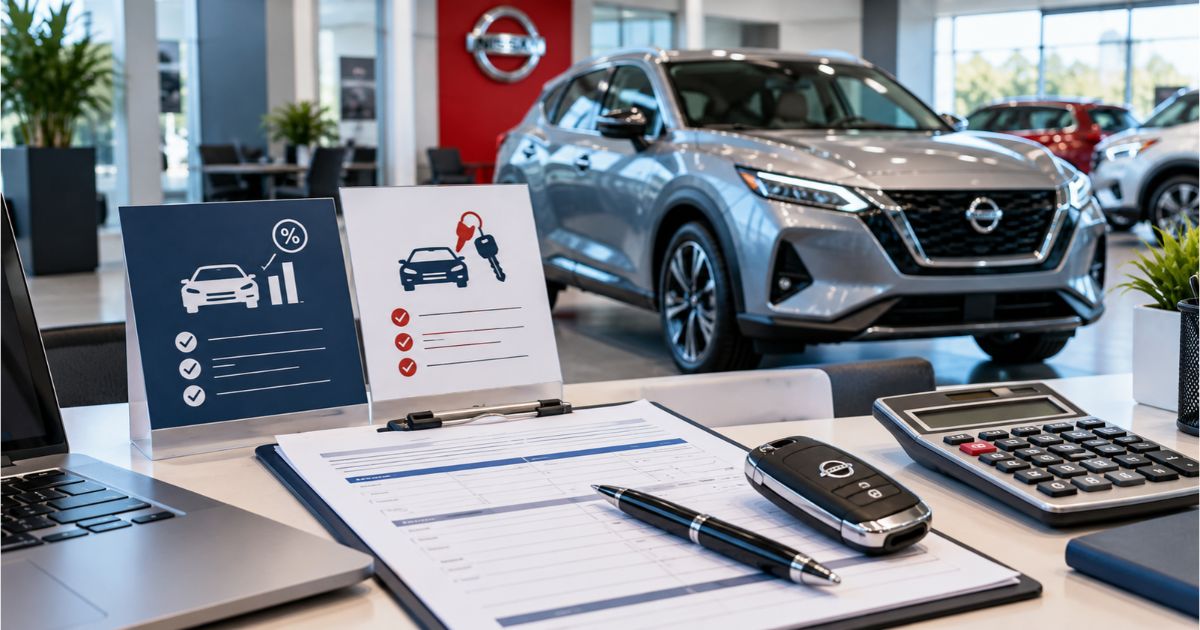
The first decision is whether purchasing with financing or leasing better matches your needs.
Financing a Nissan
When you finance a vehicle purchase, you borrow money to pay for the vehicle and repay the amount according to the financing agreement. Once the debt is satisfied and other applicable requirements are completed, you retain ownership of the vehicle.
Financing may make sense when you:
- want to keep the vehicle for many years;
- prefer ownership rather than returning the vehicle;
- do not want lease mileage restrictions;
- want flexibility over how long you keep the vehicle.
If this will be your first vehicle loan, our first-time auto loan guide explains the process in more detail.
Leasing a Nissan
A lease is different from a purchase loan. Instead of borrowing to purchase the entire vehicle, you make payments according to a lease agreement for the right to use the vehicle during the lease term.
Lease agreements can include mileage limits, vehicle-condition requirements, end-of-lease obligations, and other charges specified in the contract.
Nissan currently provides end-of-lease resources for NMAC customers, so anyone considering a Nissan lease should review both the initial lease terms and end-of-lease requirements before signing.
2. Set a Realistic Vehicle Budget
Before comparing Nissan Auto Finance offers, determine what vehicle cost and monthly obligation comfortably fit your budget.
Do not base affordability on the advertised monthly payment alone.
Include the Full Cost of Vehicle Ownership
Your budget may need to account for:
- monthly financing or lease payment;
- down payment or amount due at signing;
- taxes and registration costs;
- insurance;
- fuel or charging costs;
- maintenance;
- repairs;
- parking or other recurring costs.
A vehicle can have an affordable-looking monthly payment while still placing too much pressure on your overall budget.
Use our auto finance calculator guide to understand how loan amount, rate, and term affect payments.
3. Check Your Credit Before Applying
Your credit history can affect the financing terms available to you. Lenders may also consider income, amount borrowed, down payment, loan term, and other factors when evaluating an application.
Review Your Credit Reports
Before shopping for financing, check your credit reports for inaccurate information and dispute legitimate errors where appropriate.
Knowing your credit position also gives you better context when reviewing an offered APR.
Do Not Assume a Particular Score Guarantees a Rate
There is no single credit score that guarantees a particular Nissan loan rate. Promotional financing may also have eligibility requirements.
Instead of relying on generic credit-score-to-interest-rate charts, compare the actual written offers available to you.
For more information about shopping for competitive financing, see our guide to affordable auto loans with low interest rates.
4. Consider Preapproval Before Visiting the Dealership
Getting preapproved by a bank, credit union, or other lender can give you a financing benchmark before you negotiate at a dealership.
A preapproval may show the amount you can potentially borrow, an interest rate or APR, and a proposed loan term subject to the lender’s conditions.
Why Preapproval Can Help
Having another financing offer gives you something concrete to compare with dealer-arranged or manufacturer-supported financing.
It can also help separate two important negotiations:
- the price of the Nissan;
- the cost of financing it.
The CFPB recommends shopping around and notes that consumers are not required to obtain their auto loan through the dealership.
Our car finance options guide explains banks, credit unions, dealer financing, and other alternatives.
5. Compare Nissan Financing With Banks and Credit Unions
Do not assume that one financing source will always be cheapest.
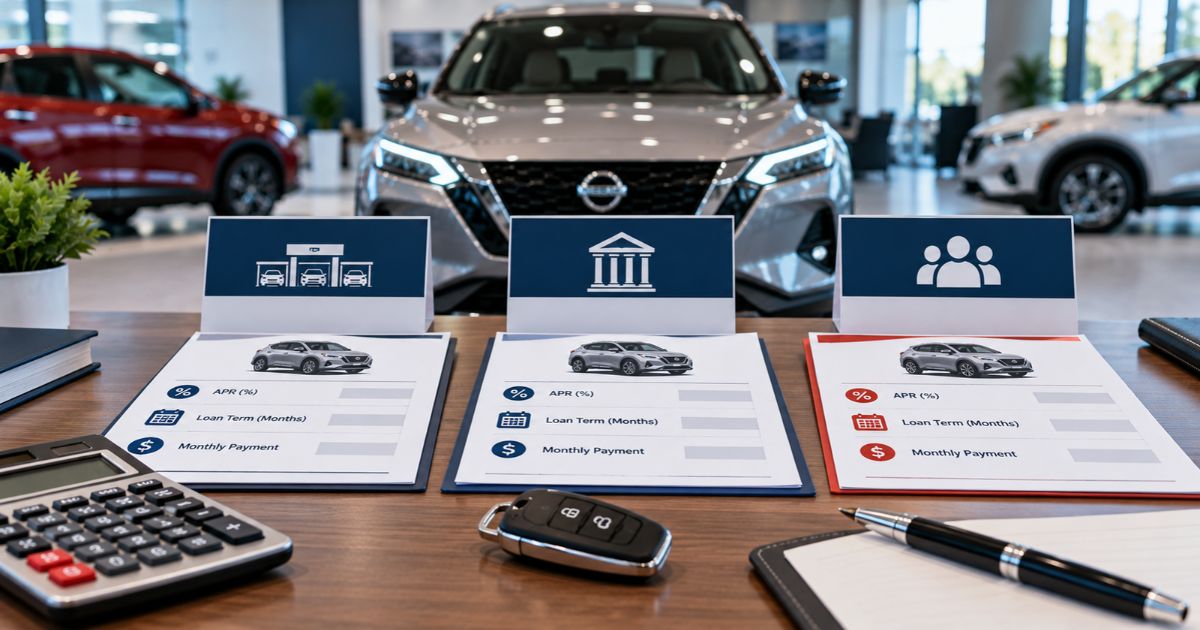
Nissan financing may be attractive when a qualifying manufacturer-sponsored promotion is available, while a bank or credit union may provide competitive terms in other circumstances.
NMAC or Nissan Dealer Financing
Potential advantages can include convenience and access to qualifying Nissan-specific promotions or lease programs.
However, current offers should always be checked for the specific vehicle and location because incentives can change.
Bank or Credit Union Financing
Direct lenders can provide a useful competing offer before you enter the dealership.
Having a preapproval does not prevent you from accepting a better qualifying offer at the dealership. It simply gives you another option to compare.
Compare the Same Numbers
When comparing offers, keep the vehicle price and down payment as consistent as possible and compare:
- amount financed;
- APR;
- interest rate;
- loan term;
- monthly payment;
- finance charge;
- total of payments;
- applicable fees and optional products.
Our top auto finance guide provides additional information about comparing financing sources.
6. Understand APR, Interest Rate and Loan Term
APR and interest rate are related, but they are not identical.
The interest rate represents the cost charged for borrowing principal. APR provides a broader annual measure of credit cost that incorporates the interest rate and applicable loan fees.
Why APR Matters
APR gives consumers a standardized measure for comparing the cost of credit. When comparing loans, compare APR with APR rather than comparing one lender’s APR with another lender’s interest rate.
For a deeper explanation, read our guide to the finance charge on a loan.
Be Careful With Longer Loan Terms
A longer loan term can reduce the scheduled monthly payment because repayment is spread over more months.
But that does not necessarily make the loan cheaper. Depending on the rate and other terms, extending repayment can increase total interest and keep you in debt longer.
Choose a term based on both monthly affordability and total borrowing cost.
7. Check Current Nissan Finance Offers Carefully
Nissan publishes financing, lease, and other offers, but these promotions can vary by model, location, event, eligibility, and time period.
That means an offer visible today should not be treated as a permanent Nissan financing rate.
Low or 0% APR Offers
Nissan currently promotes low and, at times, 0% APR financing for well-qualified buyers on eligible offers. Availability and qualifications can change.
Before choosing promotional financing, verify:
- eligible vehicle and trim;
- required credit approval;
- loan term;
- expiration date;
- location restrictions;
- whether another incentive is available instead;
- the total transaction cost.
If you are considering zero-interest financing, read our 0 APR car finance guide.
Compare Financing With Cash Incentives
If a transaction offers a choice between promotional financing and another incentive, compare the total cost under each option rather than automatically choosing the lowest advertised APR.
The best choice depends on the actual vehicle price, amount financed, term, available incentive, and alternative financing rate.
See our best auto finance deals guide for additional factors to compare.
8. Get the Nissan’s Out-the-Door Price in Writing
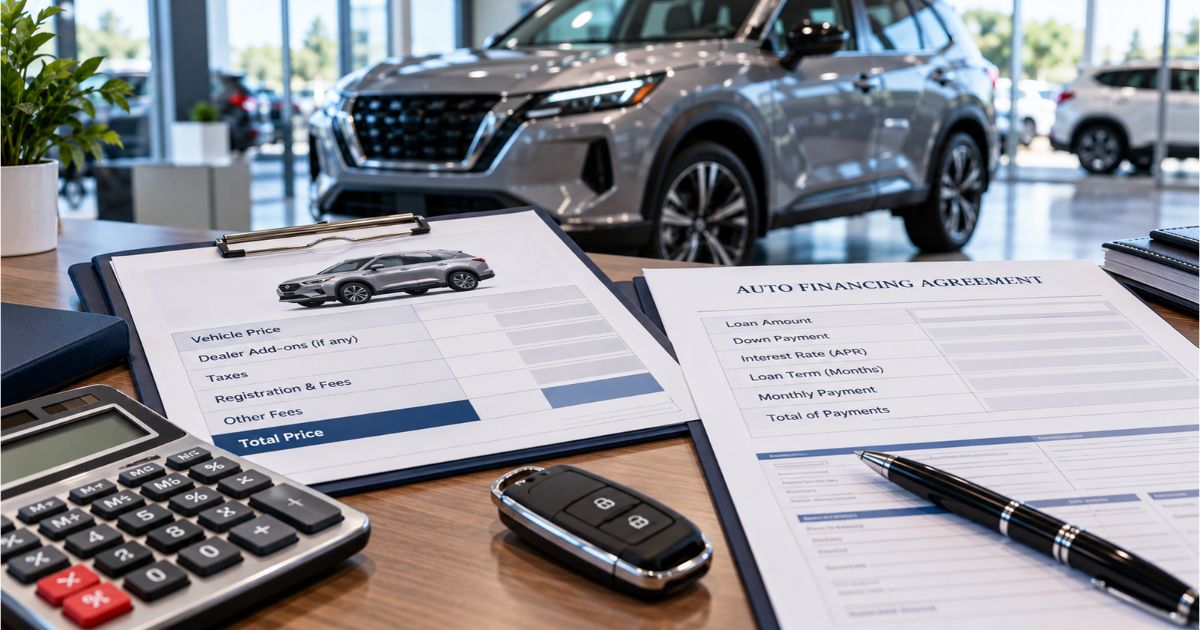
Before focusing on monthly payments, ask for the vehicle’s out-the-door price in writing.
The FTC recommends getting this figure before visiting the dealership and before discussing dealer financing. Doing so can make it easier to compare competing offers and identify additional charges.
Separate Vehicle Price From Financing
A low monthly payment does not necessarily mean you received a low vehicle price or inexpensive financing.
For example, a payment can be lowered by:
- increasing the down payment;
- extending the loan term;
- changing the amount financed;
- using a different financing structure.
Evaluate the vehicle price and financing terms separately before looking at the combined monthly payment.
Review Optional Add-Ons
Dealership transactions may include optional products or services. Before agreeing to an add-on, ask what it costs, whether it is optional, what it covers, and whether its price will be financed.
Financing an optional product increases the amount borrowed and can increase your total borrowing cost.
9. Review the Contract Before Signing
Before finalizing Nissan Auto Finance or another financing offer, carefully review the written agreement.
Confirm that the numbers match the deal you agreed to.
Check These Items
| Item | What to Review |
|---|---|
| Vehicle price | Does it match the agreed purchase price? |
| Down payment | Is the amount correct? |
| Amount financed | How much are you actually borrowing? |
| APR | What is the annual cost of credit? |
| Finance charge | What does the contract disclose as the dollar cost of credit? |
| Loan term | How many months will you make payments? |
| Monthly payment | Does it match what you expected? |
| Total of payments | How much will scheduled payments total? |
| Add-ons | Were optional products included? |
Do not sign a contract containing terms you do not understand. Ask questions before completing the transaction.
Nissan Auto Finance Payment Options
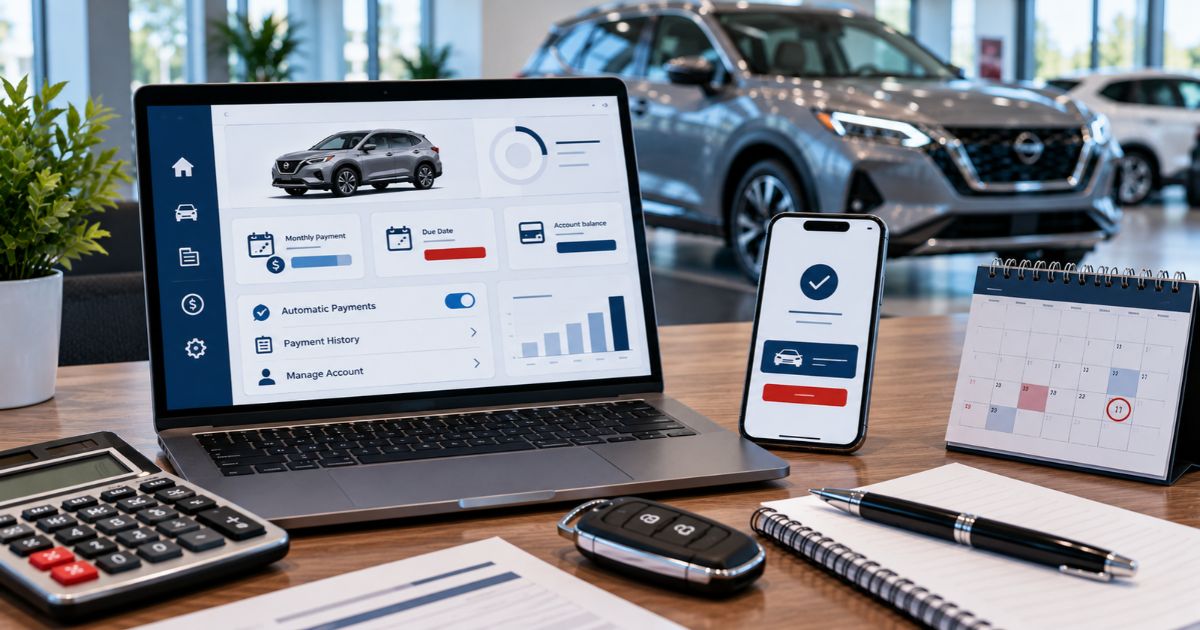
If your purchase or lease is financed through NMAC, Nissan currently provides several payment methods.
According to Nissan’s current finance resources, options include automatic recurring payments, one-time payments, certain third-party payment services, and payment by mail or money order.
Automatic Payments
Nissan says NMAC customers can use the Finance Account Manager to enroll in recurring payments.
Even when using automatic payments, regularly check your account to confirm that payments are processing correctly.
One-Time Payments
Nissan also lists one-time payment options. Because payment procedures and service providers can change, use Nissan’s current finance portal or official instructions rather than relying on an old address or payment method from a third-party article.
Nissan Auto Finance Login and Account Management
Existing NMAC customers can use Nissan’s finance resources to access account-management and payment tools.
Use Nissan’s official finance portal rather than entering financial credentials into an unfamiliar third-party website.
Account-management tools can help customers review relevant account information and available payment options.
If you also manage financing from another manufacturer, our Kia Finance login guide covers that separate platform.
Can You Refinance Nissan Auto Finance?
Refinancing generally means replacing an existing auto loan with a new loan from a lender.
Do not assume that a general Nissan promotional financing program is automatically a refinancing program for your existing vehicle. If you want to refinance an existing Nissan loan, compare current refinance options available from eligible lenders and review your existing account and payoff requirements.
When Refinancing May Be Worth Comparing
Potential reasons to investigate refinancing include a change in your credit profile or access to a more competitive financing offer.
Compare:
- remaining loan balance;
- current APR;
- new APR;
- fees;
- remaining term;
- new term;
- monthly payment;
- total remaining cost.
A lower monthly payment is not necessarily a saving if it comes mainly from extending the debt for significantly longer.
Financing a Used Nissan
You do not have to purchase a new Nissan to use vehicle financing. Used Nissan buyers can compare dealer-arranged financing with banks, credit unions, and other legitimate lenders.
Used-Car Financing Considerations
For a used Nissan, consider:
- vehicle price;
- age and mileage;
- condition;
- vehicle history;
- loan APR and term;
- insurance costs;
- expected maintenance and repairs.
Our used car loan guide explains the process in greater detail.
How Down Payments Affect Nissan Financing
A down payment reduces the amount you need to finance.
For example, if two otherwise similar transactions have different down payments, the transaction with more money paid upfront generally requires a smaller amount financed.
However, there is no universal down-payment percentage that is automatically right for every Nissan buyer.
Consider your savings, emergency fund, vehicle price, financing terms, and overall budget before deciding how much cash to put down.
What If You Have Trouble Making Nissan Payments?
If you are struggling to make payments on an NMAC-financed vehicle, do not simply ignore the account.
Review your contract and contact the appropriate account servicer promptly to discuss what options, if any, may be available for your situation.
Available assistance is not guaranteed and can depend on the account and circumstances.
Consider the Consequences Before Giving Up the Vehicle
Returning or surrendering a financed vehicle does not automatically eliminate the debt. Depending on the situation, a borrower may still face a remaining balance and credit consequences.
Before taking that step, read our guide on returning a financed car and the alternatives to consider.
If selling the vehicle is an option, our guide to selling a financed car explains payoff amounts, liens, and equity.
Common Nissan Auto Finance Mistakes to Avoid
Shopping Only by Monthly Payment
A low payment can hide a longer loan term or a larger total borrowing cost. Review APR, amount financed, term, finance charge, and total payments.
Not Getting Competing Financing Offers
Entering the dealership without another financing quote makes it harder to know how competitive the offered financing really is.
Assuming Every Nissan Promotion Applies to You
Nissan offers can vary by model, location, event, and credit approval. Read the current eligibility terms before including a promotion in your budget.
Confusing Interest Rate With APR
These figures are related but not identical. Use APR when comparing the annual cost of competing credit offers.
Extending the Loan Just to Lower the Payment
A longer term can make the monthly payment look more affordable while potentially increasing total interest cost.
Ignoring Add-Ons
Optional products added to the financed amount can increase both the principal borrowed and the overall cost.
Signing Before Financing Is Final
Confirm the financing terms and approval status before signing and taking the vehicle. The FTC recommends asking whether the terms are final and fully approved.
How to Compare Two Nissan Financing Offers
| Financing Factor | Offer A | Offer B |
|---|---|---|
| Vehicle Price | _____ | _____ |
| Down Payment | _____ | _____ |
| Amount Financed | _____ | _____ |
| APR | _____ | _____ |
| Interest Rate | _____ | _____ |
| Loan Term | _____ | _____ |
| Monthly Payment | _____ | _____ |
| Finance Charge | _____ | _____ |
| Total of Payments | _____ | _____ |
| Optional Products | _____ | _____ |
This side-by-side approach makes it easier to see whether a lower monthly payment is actually associated with better financing or simply a longer repayment period.
You can also compare broader auto financing deals before committing to one lender.
Frequently Asked Questions
What is Nissan Auto Finance?
Nissan Auto Finance commonly refers to financing or leasing a Nissan vehicle. Nissan North America provides financial services through Nissan Motor Acceptance Company (NMAC), while consumers can also consider financing from banks, credit unions, and other lenders.
What is NMAC?
NMAC stands for Nissan Motor Acceptance Company. Nissan identifies NMAC as the company providing financial services for Nissan vehicle financing and leasing in the United States.
Does Nissan offer 0% APR financing?
Nissan may offer low or 0% APR promotions for well-qualified buyers on eligible vehicles. Offers are time-sensitive and can vary by model, location, and eligibility, so check current terms before purchasing.
Should I get preapproved before visiting a Nissan dealer?
Preapproval from a bank, credit union, or other lender can provide a useful benchmark for comparing the financing offered at the dealership.
Is Nissan financing always cheaper than a bank?
No. The better offer depends on the actual APR, amount financed, term, fees, incentives, and other transaction terms available to you.
Can I finance a used Nissan?
Yes. Used Nissan buyers can consider dealer-arranged financing as well as loans from banks, credit unions, and other lenders, subject to lender and vehicle requirements.
How can I make an NMAC payment?
Nissan currently lists several NMAC payment methods, including recurring automatic payments, one-time payments, certain payment services, and mail or money-order options. Verify current instructions through Nissan’s official finance resources.
Does a longer Nissan loan reduce the cost?
Not necessarily. A longer term can lower the scheduled monthly payment but may increase total interest and extend the amount of time you remain in debt.
What should I compare before accepting Nissan financing?
Compare the vehicle price, down payment, amount financed, APR, interest rate, loan term, monthly payment, finance charge, total payments, and optional products.
Official Resources
- Nissan USA – Finance Tools & Resources
- Nissan USA – NMAC Payment Options
- Nissan USA – Current Deals, Incentives & Offers
- Consumer Financial Protection Bureau – Auto Loans
- Federal Trade Commission – Financing or Leasing a Car
Key Takeaways
- Nissan Auto Finance can include NMAC financing or leasing as well as financing from other lenders.
- Decide whether buying or leasing better matches your long-term plans before comparing offers.
- Set a complete vehicle budget instead of shopping only by monthly payment.
- Check your credit and consider obtaining financing preapproval before visiting a dealership.
- Compare NMAC or dealer financing with banks, credit unions, and other legitimate alternatives.
- Compare APR, amount financed, term, finance charge, monthly payment, and total payments.
- Nissan promotions can change by vehicle, location, time period, and credit eligibility.
- Get the out-the-door vehicle price in writing before focusing on financing.
- Review optional add-ons and the final contract carefully before signing.
- NMAC customers should use Nissan’s current official finance resources for payment and account-management instructions.
Final Thoughts
Nissan Auto Finance should be evaluated as part of the complete vehicle transaction rather than simply by asking which option produces the lowest monthly payment.
Before financing or leasing a Nissan, determine your budget, check your credit, consider preapproval, compare competing offers, and review the current Nissan incentives available for the specific vehicle and location.
Most importantly, compare the vehicle’s out-the-door price separately from the financing. Then review the amount financed, APR, term, finance charge, monthly payment, total payments, and optional products before signing.
For additional research, continue with our guides to auto financing, car finance options, first-time auto loans, used car loans, and finance charges.