
The National Finance Commission (NFC) serves as a cornerstone of monetary governance in federated countries, particularly in Pakistan, wherein provincial and federal governments collaborate to ensure the equitable distribution of sources. Its constitutional framework establishes the ideas and mechanisms for dividing monetary resources among the relevant government and provinces. This distribution guarantees balanced improvement, promotes regional fairness, and strengthens national harmony. The NFC is vital to fostering financial balance and empowering provinces to cope with their specific socio-economic challenges.
In this exact article, we delve into the National Finance Commission, examining its shape, goals, evolution, challenges, and its pivotal role in shaping monetary and developmental landscapes. By understanding its complexities and contributions, policymakers and stakeholders can beautify its effectiveness, making sure it serves its intended purpose successfully.
Understanding the National Finance Commission (NFC)

The National Finance Commission is a constitutional frame tasked with determining the monetary distribution among the federal and provincial governments. In Pakistan, Article a hundred and sixty of the Constitution mandates the formation of the NFC. This fee is accountable for proposing and periodically revising the formula that governs the allocation of resources accrued via federal taxes.
At the heart of the NFC is the intention of making sure fairness and fairness. Federal tax sales—comprising income tax, income tax, customs responsibilities, and excise duties—are accumulated on the country wide level. These revenues are then disbursed among provinces to finance essential offerings, which include healthcare, training, and infrastructure improvement.
The NFC operates at the precept of cooperative federalism, fostering collaboration and believe among the vital and provincial governments. By addressing the financial needs of provinces and empowering them with financial autonomy, the NFC lays the muse for balanced countrywide development.
Key Objectives of the National Finance Commission
The National Finance Commission performs a essential function in strengthening the economic material of federated countries. Its primary goals include:
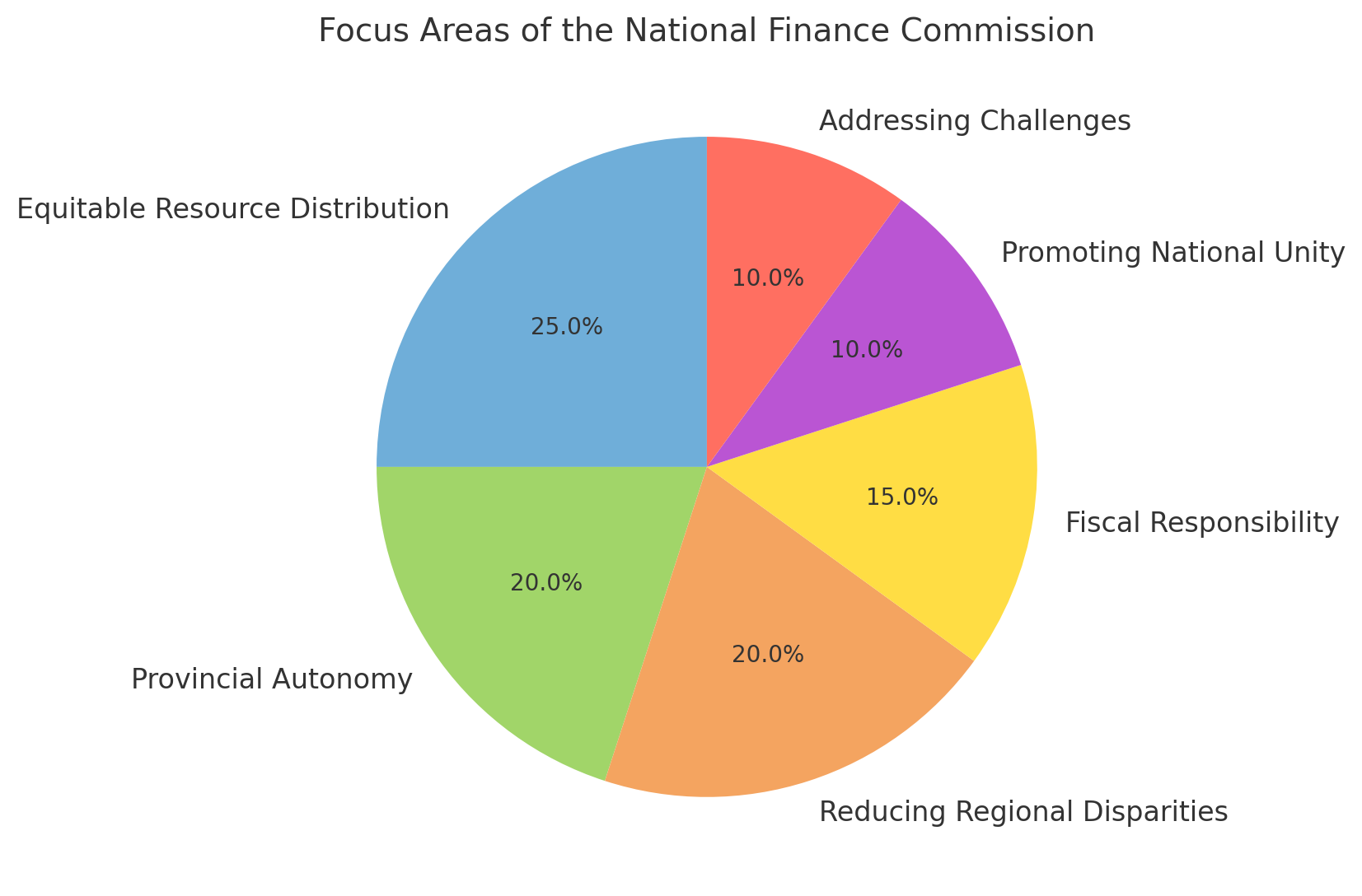
1. Equitable Distribution of Resources in National Finance Commission
The NFC ensures that financial resources are disbursed amongst provinces in a manner that displays their needs, challenges, and contributions. This allocation pursuits to reduce monetary disparities and promote social fairness.
2. Enhancing Provincial Autonomy in National Finance Commission
By supplying provinces with a truthful percentage of federal revenues, the NFC enables them to independently layout and put in force rules tailor-made to their specific desires. This autonomy strengthens the overall federal structure.
Addressing Regional Disparities in National Finance Commission
One of the center objectives of the NFC is to deal with inequalities amongst provinces. This is accomplished by using allocating a bigger proportion of resources to underdeveloped areas, allowing them to invest in infrastructure and human improvement.
Promoting Fiscal Responsibility in National Finance Commission
Through its method and procedures, the NFC encourages each the federal and provincial governments to undertake fiscally responsible practices. By linking sales technology to resource allocation, the NFC incentivizes efficient tax collection and monetary management.
Strengthening National Unity in National Finance Commission
By fostering collaboration and trust among extraordinary levels of presidency, the NFC contributes to political stability and country wide concord. Its equitable method guarantees that no province feels marginalized.
The Historical Evolution of the NFC in Pakistan

The National Finance Commission has advanced significantly on the grounds that its inception, reflecting the changing political, financial, and social landscapes. Each NFC award represents a milestone in the journey towards financial decentralization and local fairness.
The First NFC Award (1974)
The inaugural NFC award in 1974 mounted the foundation for resource distribution in Pakistan. Under this award, population became the only criterion for dividing federal revenues. While this approach turned into simple and simple, it didn’t account for different essential factors consisting of poverty, economic output, and local disparities.
Subsequent NFC Awards
Over the decades, next NFC awards have introduced adjustments to enhance the fairness and effectiveness of useful resource allocation:
1991 Award: This award expanded the provincial share of sales but continued to rely on population because the primary determinant.
1997 Award: Marking a shift towards more provincial autonomy, this award incentivized sales technology with the aid of allocating sources based totally on provincial contributions to the federal pool.
2006 Award: Although not on time, this award added measures to cope with local inequalities, laying the basis for greater inclusive criteria.
2009 Award: Widely seemed as a landmark agreement, the 2009 NFC award increased the method to encompass additional factors including poverty, sales collection, and inverse population density. This multi-standards approach aimed to balance fairness and performance.
Challenges in Implementing NFC Awards
While the NFC has done considerable milestones, the implementation of its awards often faces delays because of political disagreements, statistics barriers, and administrative inefficiencies. These challenges underscore the want for continuous reform and innovation.
How the NFC Revenue Sharing Formula Works

The sales-sharing components underneath the NFC is the valuable mechanism for determining how federal assets are disbursed among provinces. Initially, population was the sole criterion for allocation, but next awards have incorporated additional elements to ensure extra fairness and inclusivity.
Key Components of the NFC Formula
Population: Despite the inclusion of new elements, population remains the most enormous criterion, reflecting its direct effect on carrier shipping requirements.
Poverty and Backwardness: Provinces with better ranges of poverty and underdevelopment acquire a larger proportion to cope with their socio-financial demanding situations.
Revenue Collection and Generation: Provinces that contribute more to federal sales are rewarded with better allocations, incentivizing monetary pastime and efficient tax series.
Inverse Population Density: Sparsely populated provinces face precise logistical challenges and higher charges of service transport. This element ensures that those areas get hold of additional resources.
The Role of the NFC in National Development
The National Finance Commission is instrumental in shaping a nation’s socio-financial landscape. By promoting financial decentralization and equitable resource distribution, the NFC drives countrywide development inside the following methods:
1. Empowering Provinces
Through equitable economic allocations, provinces are empowered to deal with their unique developmental priorities. This includes investments in crucial sectors which include education, healthcare, and infrastructure.
2. Reducing Regional Disparities
By prioritizing underdeveloped provinces, the NFC facilitates bridge the space between affluent and deprived areas. This promotes balanced country wide growth and social brotherly love.
3. Enhancing Service Delivery
With get right of entry to ok financial sources, provinces can improve the high-quality and accessibility of public services. This at once influences the well-being of residents and enhances human improvement indicators.
4. Strengthening Fiscal Responsibility
The NFC incentivizes provinces to undertake fiscally accountable practices through linking resource allocation to revenue generation and green control.
5. Promoting National Unity
By addressing local grievances and fostering accept as true with among the principal and provincial governments, the NFC contributes to political balance and national integration.
Challenges Faced through the National Finance Commission

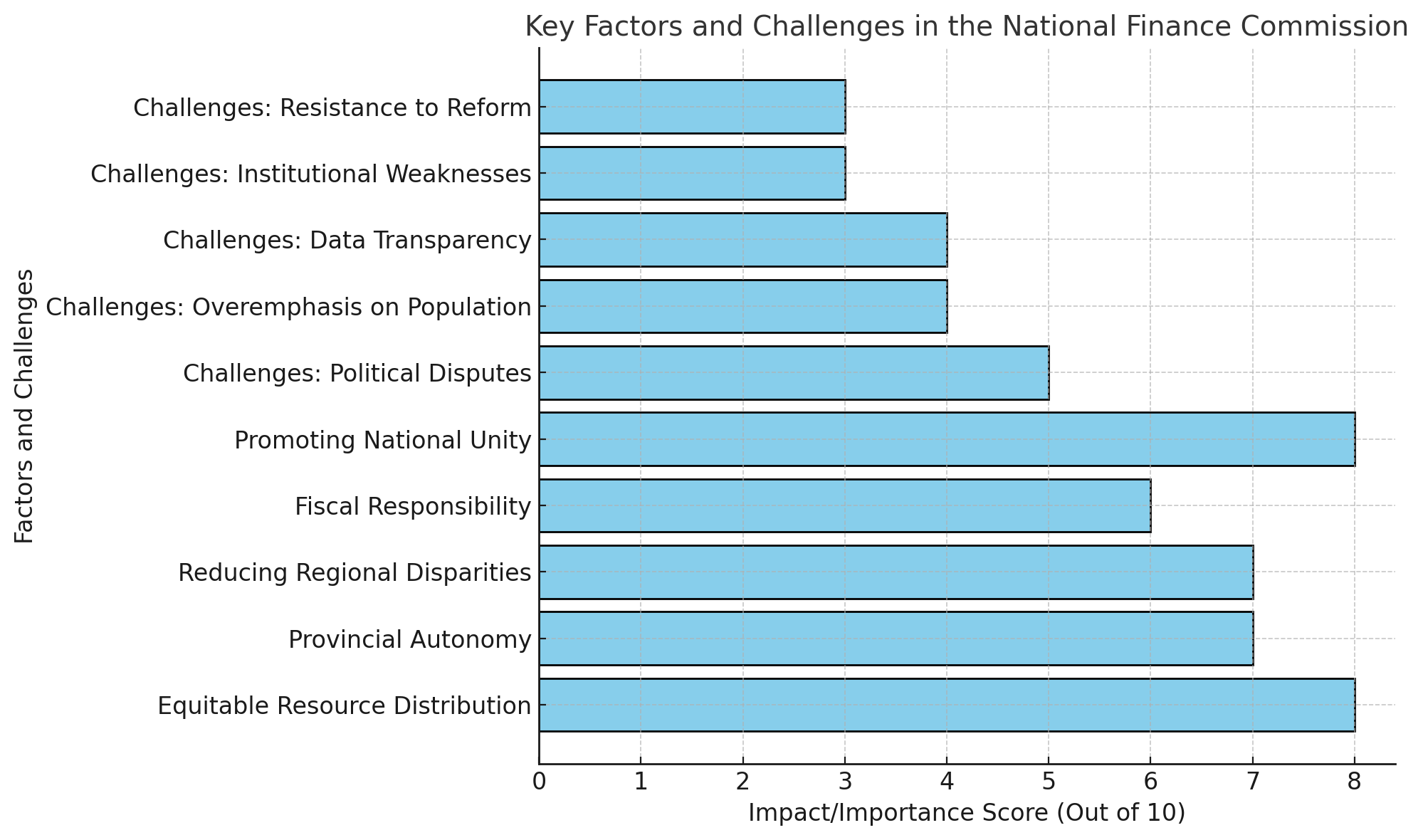
Despite its essential position, the National Finance Commission faces numerous challenges that undermine its effectiveness and timely implementation. These challenges are both structural and operational:
1. Political Disputes
The NFC awards frequently grow to be entangled in political disagreements among the federal and provincial governments. Conflicting priorities and vested pastimes can postpone negotiations, affecting governance and useful resource distribution.
2. Overemphasis on Population
While population is a critical issue, its dominance within the NFC method overlooks different essential standards including environmental sustainability, urbanization, and financial output. This can result in inequities in useful resource allocation.
3. Limited Data Transparency
Accurate and up to date records is crucial for equitable useful resource distribution. However, discrepancies in census figures, financial information, and socio-economic signs frequently complicate the NFC procedure.
4. Institutional Weaknesses
Some provinces lack the institutional capacity to successfully make use of their allotted sources. Issues such as corruption, mismanagement, and insufficient planning restrict the powerful implementation of improvement applications.
5. Resistance to Reform
Efforts to introduce new criteria or revise existing ones often face resistance from stakeholders who fear losing their percentage. This resistance hampers the NFC’s potential to conform to changing realities.
The Future of the National Finance Commission
As economic and social situations evolve, the National Finance Commission have to adapt to address emerging demanding situations and opportunities. The destiny of the NFC lies in its capacity to turn out to be extra dynamic, inclusive, and responsive.
Recommendations for Reform
Expand Criteria: The NFC components have to include additional factors inclusive of environmental impact, climate vulnerability, and urbanization to reflect contemporary demanding situations.
Enhance Data Systems: Investing in robust facts collection and analysis structures is critical for informed choice-making and equitable aid allocation.
Build Provincial Capacity: Strengthening provincial establishments thru education, transparency measures, and anti-corruption initiatives can improve the performance of resource usage.
Foster Collaboration: The NFC process need to inspire open talk and consensus-constructing amongst stakeholders to limit delays and conflicts.
Periodic Reviews: Given the dynamic nature of socio-economic situations, the NFC awards need to be reviewed and up to date extra often to stay applicable.
Leveraging Technology
The adoption of technology can revolutionize the NFC system. Digital structures and information analytics can enhance transparency, streamline negotiations, and improve duty in resource distribution.
Key Takeaways
The National Finance Commission (NFC) is a constitutional mechanism designed to allocate economic assets equitably among the federal and provincial governments in federated structures.
- It objectives to deal with local disparities, empower provinces, and sell balanced countrywide improvement.
- Ensures equitable resource distribution.
- Strengthens provincial autonomy.
- Reduces socio-financial disparities among provinces.
- Encourages economic responsibility and sales technology.
- The NFC has gone through numerous revisions in Pakistan because its inception in 1974.
- Early awards relied totally on population for sales allocation, while later awards incorporated additional factors like poverty, revenue era, and inverse population density.
- Population: Still the primary criterion.
- Poverty and Backwardness: Allocates more to underdeveloped areas.
- Revenue Generation: Incentivizes provinces contributing extra to federal revenues.
- Inverse Population Density: Addresses logistical challenges in moderately populated areas.
- Political disputes delay negotiations.
- Overemphasis on populace overlooks different vital elements like environmental sustainability and urbanization.
- Limited statistics transparency and institutional weaknesses restrict efficient implementation.
- Resistance to reform from stakeholders slows progress.
- Empowers provinces to design vicinity-specific rules.
- Reduces regional disparities and complements public provider shipping.
- Strengthens economic obligation and countrywide unity.
- Expand the standards for resource allocation to consist of cutting-edge factors like environmental impact and urbanization.
- Enhance facts series and transparency for knowledgeable choice-making.
- Build provincial institutional potential to optimize useful resource utilization.
- Foster collaboration between federal and provincial governments to streamline strategies.
- Periodic reviews of the NFC awards to reflect evolving socio-economic realities.
- Leveraging technology for obvious and efficient resource distribution.
- Strengthening the NFC’s adaptability to cope with rising demanding situations.
- Encouraging cooperative federalism to foster national brotherly love and sustainable development.
Related post:
- American First Finance: The Ultimate Guide to Flexible and Inclusive Financing
- Capital One Auto finance: A Complete Guide to Financing Your Next Vehicle
Conclusion
The National Finance Commission is a critical pillar of financial governance in federated structures. By making sure the fair and equitable distribution of resources, it empowers provinces, reduces nearby disparities, and strengthens national unity. However, its effectiveness depends on addressing its challenges and adopting reforms that beautify its efficiency and inclusivity.
In nations like Pakistan, where socio-monetary inequalities persist, the NFC need to play a proactive role in promoting financial equity and fostering country wide development. Policymakers and stakeholders must prioritize institutional reforms, stakeholder engagement, and progressive answers to make certain the NFC fulfills its constitutional mandate.