Affordable Auto Loans are about more than getting the smallest monthly payment. A car loan should fit your budget while keeping the APR, repayment term, fees, amount financed, and overall borrowing cost manageable.
Your credit profile, vehicle price, down payment, lender, and repayment period can all influence the financing terms available to you. Comparing these factors before signing can help you make a more informed decision.
This guide explains nine practical ways to compare car financing, look for competitive rates, and avoid common borrowing mistakes.
What Makes Affordable Auto Loans Truly Affordable?
A vehicle loan is affordable when both its monthly payment and overall borrowing cost work within your financial situation.
Important figures to consider include:
- Vehicle purchase price
- Amount financed
- Down payment
- Interest rate
- APR
- Loan term
- Monthly payment
- Fees and financed add-ons
- Total repayment
A smaller monthly payment does not necessarily mean a cheaper loan. Extending repayment over additional months can lower the payment while increasing the total interest paid.
The Consumer Financial Protection Bureau explains how to compare auto loan offers, including APR, interest rate, loan length, amount financed, and monthly payment.
You can also use our auto finance calculator guide to understand how the amount borrowed, rate, and term affect a payment.

1. Check Your Credit Before Applying
Your credit profile can influence the auto loan rates and terms lenders offer.
Reviewing your credit before shopping gives you a better idea of your financial position and an opportunity to identify potential errors before applying.
A stronger credit profile can improve your chances of receiving competitive terms, but no particular credit score guarantees a specific interest rate. Each lender has its own underwriting standards.
If you are borrowing for your first vehicle, our first-time auto loan guide explains the process in more detail.
2. Establish a Realistic Car Budget
Before searching for affordable car loans, decide how much vehicle you can reasonably afford.
Remember that the loan payment is only one part of vehicle ownership. Your budget may also need to cover:
- Auto insurance
- Fuel
- Registration
- Taxes
- Maintenance
- Repairs
- Parking and other recurring costs
A less expensive vehicle or larger down payment can reduce the amount you need to borrow.
Try to determine your budget before visiting a dealership rather than allowing the maximum loan approval to determine how much you spend.
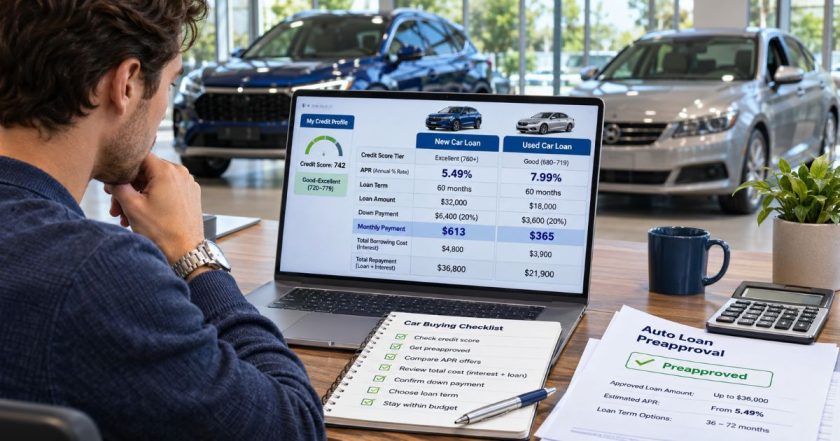
3. Consider Auto Loan Preapproval
Auto loan preapproval can provide a useful financing benchmark before you negotiate with a dealership.
Depending on the lender and application process, a preapproved offer may indicate a potential APR, repayment term, or borrowing limit subject to final verification and approval.
Having an outside financing offer gives you something concrete to compare with dealership financing.
Preapproval should not be treated as guaranteed final financing. The lender may still need to verify your information, vehicle, and transaction.
4. Compare Multiple Financing Sources
Do not automatically accept the first financing offer you receive.
Depending on your circumstances, compare quotes from:
- Banks
- Credit unions
- Online auto lenders
- Dealership financing departments
- Manufacturer-affiliated finance companies
The Federal Trade Commission’s car financing guidance recommends shopping around and comparing financing terms before making a decision.
For a broader explanation of dealership financing, read our Auto Finance Center guide.
You can also compare the major choices in our car finance options guide.
5. Compare APR and Interest Rate
When researching low interest auto loans, do not judge an offer solely by its advertised interest rate.
The interest rate represents the cost of borrowing the principal, while APR provides a broader annualized measure of borrowing cost that can include certain fees.
That makes APR particularly useful when performing a car loan comparison.
For example, two loans could advertise similar interest rates but have different APRs because of differences in applicable financing charges.
Review our guide explaining what a finance charge on a loan means for more information about borrowing costs.

6. Consider Your Down Payment
A larger down payment reduces the amount of money you need to finance.
If two buyers purchase similarly priced vehicles but one borrows less because of a larger down payment, that buyer has a smaller principal balance to repay.
However, avoid using all of your available cash simply to maximize a vehicle down payment. Consider emergency savings and other financial obligations as well.
The right down payment depends on your budget, available savings, vehicle price, and financing terms.
7. Choose the Loan Term Carefully
The repayment period can significantly affect both your monthly payment and overall borrowing cost.
A shorter term generally produces larger monthly payments but may reduce total interest costs. A longer term can make the payment smaller while keeping you in debt for additional years.
For example, CFPB consumer guidance demonstrates that, with the same loan amount and interest rate, extending repayment from 36 months to 72 months lowers the monthly payment but substantially increases total interest.
Compare both:
- Monthly affordability: Can you comfortably make the required payment?
- Total affordability: How much will you repay over the complete loan term?
If a payment only becomes manageable after extending the loan substantially, reconsider whether the vehicle itself fits your budget.
8. Review Optional Dealer Add-Ons
A dealership may offer additional products during the financing process, including:
- GAP products or coverage
- Service contracts
- Extended warranties
- Maintenance plans
- Tire and wheel protection
- Other vehicle protection products
Ask whether each product is optional and what it costs before agreeing to finance it.
If an add-on is rolled into the loan, the amount financed increases. Depending on the financing arrangement, you may also pay interest on that additional amount.
Evaluate each product based on its total cost and usefulness rather than only how much it changes the monthly payment.
9. Review the Contract Before Signing
Even when you believe you have found suitable Affordable Auto Loans, verify the written agreement before signing.
Check the:
- Vehicle purchase price
- Down payment
- Trade-in credit
- Amount financed
- Interest rate
- APR
- Finance charge
- Monthly payment
- Number of payments
- Loan term
- Fees
- Optional products
If the paperwork differs from what you expected, ask questions before signing.
The written agreement should reflect the transaction you actually intend to accept.
Why Low Interest Car Loans Matter
The interest cost on a vehicle loan accumulates over time. Therefore, even a difference in rate can affect the total amount repaid over a multi-year term.
However, a low advertised rate should be considered alongside the loan term, amount financed, fees, and other conditions.
A low rate combined with an unnecessarily expensive vehicle or very long repayment period may still result in a costly transaction.
Our guide to low interest car financing can be used alongside a loan calculator when comparing different scenarios.
Where Can You Look for Competitive Car Financing?
Credit Unions
Credit unions are one financing source worth checking. Rates and membership requirements vary, so obtain an actual quote rather than assuming any particular institution will automatically be cheapest.
Banks
Traditional banks can provide direct vehicle loans and may allow you to seek financing before visiting the dealership.
Online Lenders
Online applications can make it easier to research multiple financing options. Before applying, review the lender, loan terms, privacy practices, and credit inquiry information.
Dealership Financing
Dealerships may arrange financing through third-party lenders or manufacturer-affiliated finance companies.
Dealer financing can be convenient, but compare it with outside financing before deciding.
See our top auto finance guide for additional considerations.
Can 0% APR Financing Be Cheaper?
Manufacturers sometimes advertise promotional 0% APR car financing for qualifying buyers and eligible vehicles.
Such an offer can significantly reduce financing costs, but qualification requirements and promotional conditions can apply.
Check whether the promotion is limited by vehicle model, repayment term, location, credit qualification, or offer period.
Also compare whether choosing promotional financing affects other incentives that may be available.
Our 0 APR car finance guide explains these offers in greater detail.
Affordable Auto Loans With Bad Credit
Bad credit auto loans may be available, but weaker credit can result in more expensive financing terms.
Approval by itself does not make a loan affordable.
Compare the APR, required down payment, repayment period, fees, monthly payment, and overall borrowing cost.
If the available offers are too expensive, alternatives could include considering a lower-priced vehicle, increasing your down payment, or waiting while improving your financial profile.
If you are considering dealership-provided credit, read our in-house financing guide.
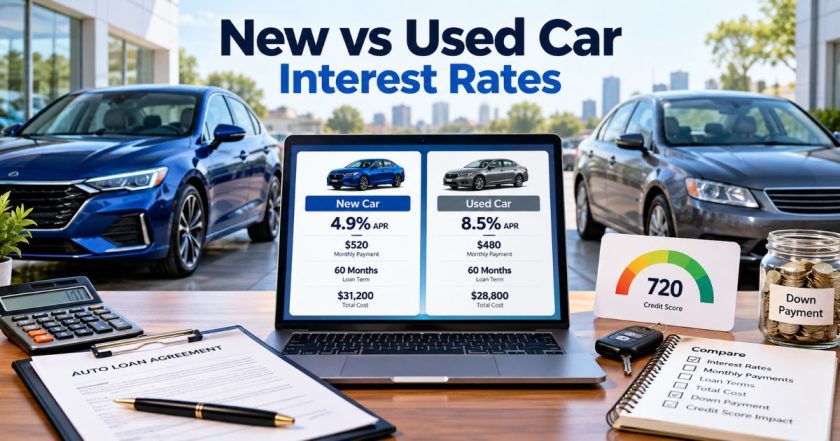
New Car Loans vs. Used Car Loans
New car loans and used car loans can differ in available rates, vehicle prices, lender requirements, and promotional programs.
New vehicles may occasionally qualify for manufacturer-sponsored incentives. Used vehicles can have lower purchase prices but may receive different financing terms.
Compare the entire transaction instead of assuming either a new or used vehicle will automatically be cheaper.
For pre-owned vehicles, see our used car loan guide.
Should You Refinance a Car Loan?
Auto loan refinancing replaces an existing vehicle loan with new financing.
Borrowers sometimes investigate refinancing after their credit profile improves or when different rates become available.
Before refinancing, compare:
- Current outstanding balance
- Existing APR
- New APR
- Remaining loan term
- Proposed new term
- Fees
- Monthly payment
- Estimated total remaining repayment
Reducing the monthly payment by extending repayment for many additional months does not necessarily mean you will save money overall.
Common Car Loan Mistakes to Avoid
Focusing Only on the Monthly Payment
A smaller payment may simply reflect a longer loan term. Compare the APR, amount financed, repayment period, and total cost as well.
Accepting the First Offer
Obtaining multiple quotes gives you a better basis for evaluating whether the terms offered to you are competitive.
Financing Unwanted Add-Ons
Optional products can increase both the amount borrowed and the overall transaction cost.
Ignoring Negative Equity
If you owe more on your current vehicle than its trade-in value, adding that unpaid balance to a new loan increases the amount you are financing.
If you are considering selling your current vehicle instead, read our guide on how to sell a financed car.
Not Reading the Final Contract
Check that the vehicle price, APR, loan term, payment, fees, add-ons, and other figures match what you agreed to before signing.
Affordable Car Financing Checklist
- Set a realistic vehicle budget.
- Review your credit before applying.
- Consider preapproval.
- Compare multiple lenders.
- Compare APR as well as interest rate.
- Choose the repayment term carefully.
- Consider an appropriate down payment.
- Review dealer add-ons individually.
- Understand any trade-in or negative equity.
- Read the complete agreement before signing.
You can also explore our best auto finance deals guide when researching vehicle financing.

Frequently Asked Questions About Affordable Auto Loans
What makes a car loan affordable?
An affordable loan should have a manageable monthly payment and reasonable overall borrowing cost. Compare APR, amount financed, term, fees, down payment, and total repayment.
How can I look for a lower auto loan rate?
Review your credit, compare several lenders, consider preapproval, evaluate your down payment, and compare different repayment terms. The actual rate available to you depends on lender requirements and your financial profile.
Should I compare APR or interest rate?
Compare both. The interest rate reflects the cost of borrowing principal, while APR provides a broader measure that can incorporate certain financing fees.
Is a larger down payment better?
A larger down payment reduces the amount you need to finance, but it should still fit your overall financial situation. Avoid leaving yourself without adequate savings simply to maximize the down payment.
Are longer car loans cheaper?
They can produce smaller monthly payments, but longer terms can increase total interest and keep you in debt for additional years. Compare the total cost as well as the payment.
Should I get preapproved before visiting a dealership?
Preapproval can provide a useful outside financing offer that you can compare with dealer-arranged financing. Final approval can still depend on lender verification and the vehicle transaction.
Can I get affordable financing with bad credit?
Financing may be available to borrowers with weaker credit, but rates and other terms can be more expensive. Compare offers carefully and focus on affordability rather than approval alone.
Final Thoughts
Finding Affordable Auto Loans requires more than searching for the smallest monthly payment.
Review your credit, establish a realistic budget, compare multiple lenders, understand APR, evaluate the loan term, consider your down payment, and review optional products before accepting an offer.
Most importantly, compare the complete borrowing cost. A loan that looks inexpensive each month can become costly when stretched across a long repayment period.
Continue with our Auto Finance Center guide, explore car finance options, or review our auto finance deals guide before choosing a financing route.
Best Finance Live provides general educational information and does not provide individualized financial, legal, tax, or investment advice. Loan availability, rates, fees, promotional offers, and qualification requirements vary by lender, borrower, vehicle, and transaction.