

Mastering business finance is important for the achievement of any employer. Whether you are an entrepreneur handling a startup or a seasoned government leading a longtime business enterprise, economic understanding guarantees the stability and increase of your commercial enterprise. From coins flow control to securing investment and monitoring key metrics, commercial enterprise finance encompasses severa obligations that together drive fulfillment. This guide delves into actionable strategies and gear to help you excel in coping with your corporation’s price range.
What Is Business Finance?

Business finance involves the acquisition, control, and allocation of monetary assets to achieve a enterprise’s targets. It includes a whole lot of responsibilities along with budgeting, forecasting, investment management, securing loans, and tracking overall performance metrics.
Why Is Business Finance Critical?
The importance of business finance lies in its capability to:
Ensure Operational Efficiency: Proper cash go with the flow management guarantees clean day-to-day operations.
Drive Growth: Strategic economic making plans lets in for investment in innovation and growth.
Minimize Risks: Sound financial management facilitates discover and mitigate potential demanding situations earlier than they amplify.
Core Principles of Business Finance
Effective financial management is rooted in numerous fundamental standards:
Accuracy: Maintain precise and up to date economic information.
Consistency: Implement trendy procedures for dealing with price range.
Transparency: Share clean financial information with relevant stakeholders.
Adaptability: Adjust strategies in reaction to converting market conditions.
Laying the Foundation for Financial Success
Before diving into superior techniques, corporations want a sturdy monetary foundation. Key steps encompass:
Setting Financial Goals: Define clean and measurable targets for the fast and long term.
Investing in Accounting Systems: Utilize generation to streamline economic tactics.
Conducting Regular Audits: Evaluate monetary performance periodically to discover strengths and weaknesses.
Creating a Business Finance Plan
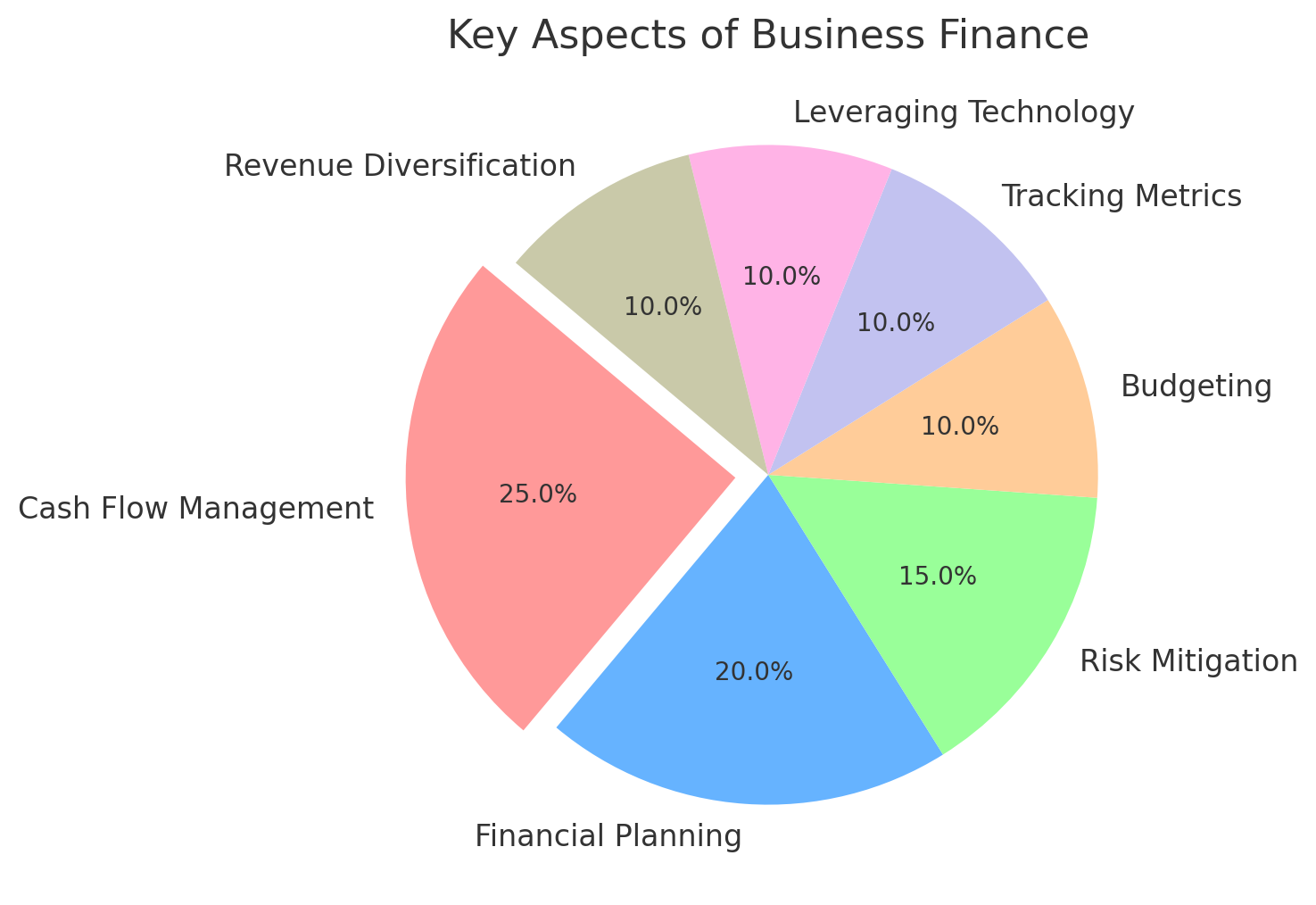
A strong financial plan acts as a roadmap to achieve business dreams. Essential additives include:
Revenue Targets: Project profits based on past performance and market tendencies.
Expense Management: Categorize and manipulate constant and variable costs.
Budget Allocations: Distribute funds across departments and tasks.
Risk Mitigation Strategies: Incorporate contingency plans to address uncertainties.
Setting SMART Financial Goals

SMART economic goals (Specific, Measurable, Achievable, Relevant, and Time-bound) provide path and clarity. Examples consist of:
- Increase annual sales by way of 15%.
- Reduce working fees by 10% within six months.
- Allocate 20% of earnings to research and improvement.
Budgeting for Success
A properly-crafted finances facilitates agencies allocate assets efficiently while minimizing waste. It serves as a device for monetary control and overall performance assessment.
Steps to Create an Effective Budget
- Identify profits streams and their reliability.
- Categorize charges as constant, variable, and discretionary.
- Allocate sources based totally on priority and go back on funding.
- Review and adjust the price range periodically to reflect modifications.
Forecasting Business Finance Performance
Forecasting permits corporations to anticipate future economic conditions and make knowledgeable selections. Accurate forecasting relies on:
- Historical Data: Analyze past developments to predict destiny consequences.
- Market Analysis: Monitor enterprise tendencies and competitor overall performance.
- Scenario Modeling: Prepare for satisfactory-case, worst-case, and most-probably eventualities.
The Importance of Cash Flow Management
Cash flow is the lifeblood of any enterprise, ensuring liquidity for every day operations and investments. Managing coins float correctly requires balancing earnings and charges.
How to Improve Cash Flow
- Accelerate Receivables: Offer incentives for early bills from customers.
- Control Payables: Negotiate favorable price phrases with providers.
- Maintain Reserves: Keep an emergency fund to address surprising costs.
Leveraging Technology for Cash Flow Management
Modern equipment simplify the complexities of coping with cash glide:
- QuickBooks: Automates cash go with the flow monitoring and reporting.
- Xero: Integrates with banking systems for real-time updates.
- Fresh Books: Focuses on invoicing and payment monitoring.
Exploring Business Financing Options

Access to ok investment is essential for boom and stability. Businesses can discover more than one financing alternatives:
- Bank Loans: Suitable for hooked up agencies with proper credit.
- Angel Investors: Ideal for startups looking for seed investment.
- Venture Capital: Provides vast investments for high-boom capacity corporations.
- Crowd funding: Leverages public contributions for particular projects.
- Government Grants: Supports groups in precise sectors or industries.
Preparing for a Financing Application
Securing funding requires thorough practice:
- Draft a Detailed Business Plan: Clearly define your dreams, strategies, and financial projections.
- Maintain Accurate Financial Records: Show creditors or buyers your profitability and cash go with the flow.
- Build Credibility: Demonstrate a robust credit score records and reimbursement capability.
Managing Debt Effectively
Debt is a treasured tool while used wisely. Mismanagement, however, can lead to monetary stress. To control debt efficiently:
- Avoid taking over extra debt than your enterprise can pay off.
- Focus on repaying excessive-hobby loans first.
- Refinance current loans to secure higher phrases.
Risk Management in Business Finance
Every enterprise faces economic dangers, which include:
- Market Risks: Uncertainty due to marketplace volatility.
- Operational Risks: Inefficiencies in procedures or sudden disruptions.
- Credit Risks: Losses as a consequence of consumer charge defaults.
How to Minimize Risks in Business Finance
- Diversify profits streams to reduce dependency on a unmarried source.
- Purchase adequate insurance to protect assets.
- Develop contingency plans for capability disruptions.
Tracking Financial Metrics
Monitoring key metrics helps gauge the health and overall performance of your enterprise:
- Net Profit Margin: Measures profitability.
- Operating Cash Flow: Indicates liquidity and operational performance.
- Debt-to-Equity Ratio: Evaluates economic leverage.
- Customer Acquisition Cost: Assesses the performance of marketing techniques.
Maximizing Profitability in Business Finance
Increasing profitability is a primary purpose of business finance. Strategies encompass:
- Streamlining operations to reduce prices.
- Offering top class products or services to reinforce margins.
- Implementing dynamic pricing based on marketplace demand.
Diversifying Revenue Streams
Relying on a single supply of income can be volatile. Diversification techniques include:
- Launching complementary services or products.
- Expanding into new geographic markets.
- Forming strategic partnerships to create joint ventures.
Building an Emergency Fund
An emergency fund affords a safety internet at some point of unforeseen situations. Businesses ought to purpose to save sufficient to cover 6–12 months of running prices.
The Role of Financial Leadership in Business Finance

Strong management drives economic fulfillment by using aligning strategies with business dreams. Responsibilities of monetary leaders include:
- Setting clean monetary rules.
- Ensuring transparency in economic reporting.
- Driving innovation via strategic investments.
Training Employees in Financial Literacy
Educating employees about monetary standards fosters better selection-making across all levels of the enterprise. Training must cowl:
- Basics of budgeting and price control.
- Reading and deciphering monetary reviews.
- Understanding the effect in their movements on the company’s finances.
Harnessing Financial Technology
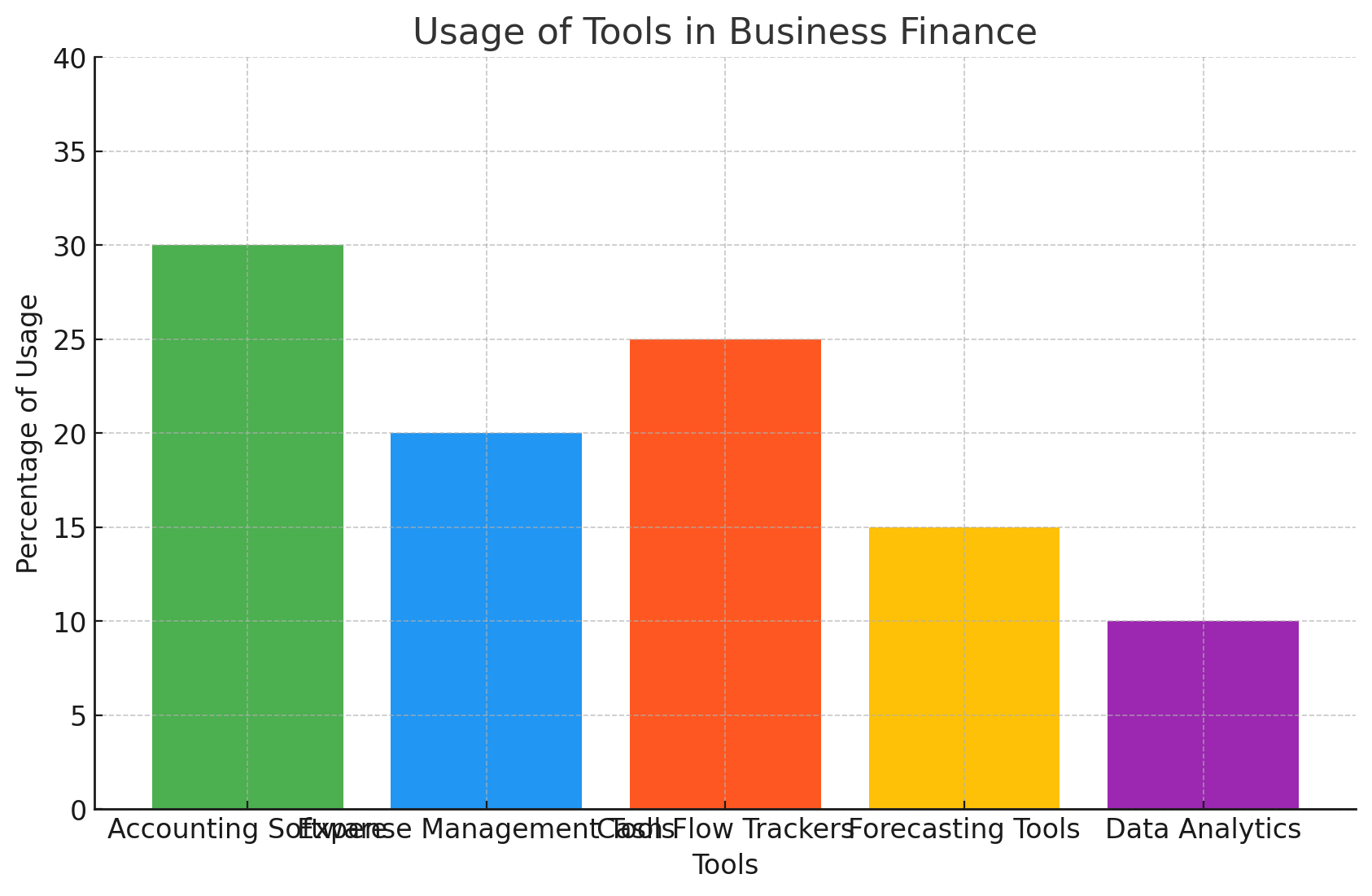
Technology streamlines monetary operations, improves accuracy, and saves time. Key tools encompass:
- Accounting Software: Automates bookkeeping and tax guidance.
- Expense Tracking Apps: Simplifies the approval technique.
- Data Analytics Platforms: Provides insights into monetary trends and performance.
Staying Compliant with Financial Regulations
Compliance with economic guidelines guarantees criminal protection and boosts credibility. Best practices for staying compliant encompass:
- Conducting everyday audits.
- Maintaining accurate financial statistics.
- Staying updated on industry-specific legal guidelines and policies.
Monitoring Market Trends
Staying knowledgeable approximately market traits permits agencies to adapt and stay competitive. Key regions to screen encompass:
- Changes in client conduct.
- Industry innovations and technological improvements.
- Economic regulations affecting the world.
Sustainability in Business Finance
Incorporating sustainability into financial techniques advantages the surroundings and strengthens brand recognition. Examples encompass:
- Investing in electricity-efficient technologies.
- Sourcing substances from sustainable suppliers.
- Supporting network tasks.
Achieving Long-Term Financial Success
Achieving financial balance requires subject, adaptability, and forward-thinking. Focus on:
- Reinvesting earnings into growth possibilities.
- Building strategic partnerships for expansion.
- Continuously comparing and improving monetary tactics.

Key Takeaways
- Business finance entails managing monetary assets to reap employer goals.
- It guarantees operational performance, helps growth, and minimizes dangers.
- Accuracy, consistency, transparency, and flexibility are crucial for effective financial management.
- Set clear economic dreams, put money into accounting systems, and behavior normal audits.
- Include revenue objectives, price management strategies, budget allocations, and hazard mitigation processes.
- Goals need to be Specific, Measurable, Achievable, Relevant, and Time-certain to make sure clarity and recognition.
- A well-established finances helps allocate assets, track expenses, and limit waste.
- Use historic data, marketplace evaluation, and scenario modeling to count on destiny monetary trends.
- Ensure liquidity by means of accelerating receivables, negotiating payable phrases, and maintaining an emergency reserve.
- Tools like QuickBooks, Xero, and Fresh Books simplify cash float management and improve accuracy.
- Businesses can secure price range thru bank loans, angel investors, challenge capital, crowd investment, and authority’s offers.
- Avoid over borrowing, attention on high-hobby repayments, and refinance to stable better phrases while feasible.
- Diversify sales streams, buy coverage, and create contingency plans to minimize monetary risks.
- Monitor metrics like net income margin, operating cash float, debt-to-fairness ratio, and purchaser acquisition fees.
- Streamline operations, optimize pricing, and recognition on high-margin services or products.
- Reduce dependency on single income sources through expanding product offerings and coming into new markets.
- Save enough to cowl 6–three hundred and sixty five days of working prices to handle unexpected demanding situations.
- Strong management drives financial success via transparency, innovation, and aim alignment.
- Train employees in financial fundamentals to beautify decision-making and performance throughout departments.
- Leverage tools for accounting, expense tracking, and records analytics to streamline operations.
- Stay updated on monetary laws and conduct regular audits to keep away from consequences and maintain credibility.
- Stay competitive by observing adjustments in consumer conduct, enterprise innovations, and monetary policies.
- Integrate sustainability thru power-efficient practices, ethical sourcing, and network support.
- Focus on reinvesting income, building partnerships, and continuously enhancing economic processes.
- Adjust monetary plans to mirror changes in market situations and organizational needs.
- Prioritize disciplined execution, strategic reinvestment, and resilience-building for long-term achievement.
Related post:
- Exeter Finance: The Ultimate Guide to Auto Financing Solutions
- Google finance: The Ultimate Guide to Mastering Financial Tools
Conclusion
Mastering business finance is a adventure that requires careful planning, powerful execution, and adaptableness. By implementing the strategies outlined on this guide, agencies can obtain monetary stability, maximize increase, and build resilience against challenges. Success in commercial enterprise finance isn’t pretty much handling money it’s approximately shaping the destiny of your commercial enterprise.


